
A retail platform processes orders in eu-west-1 and runs analytics in us-east-1 under a separate analytics account. Order events must route reliably across accounts and Regions, support schema filtering, and allow replay for new consumers without custom polling. Which EventBridge pattern provides cross-account and cross-Region event routing?
Select an answer to reveal the explanation.
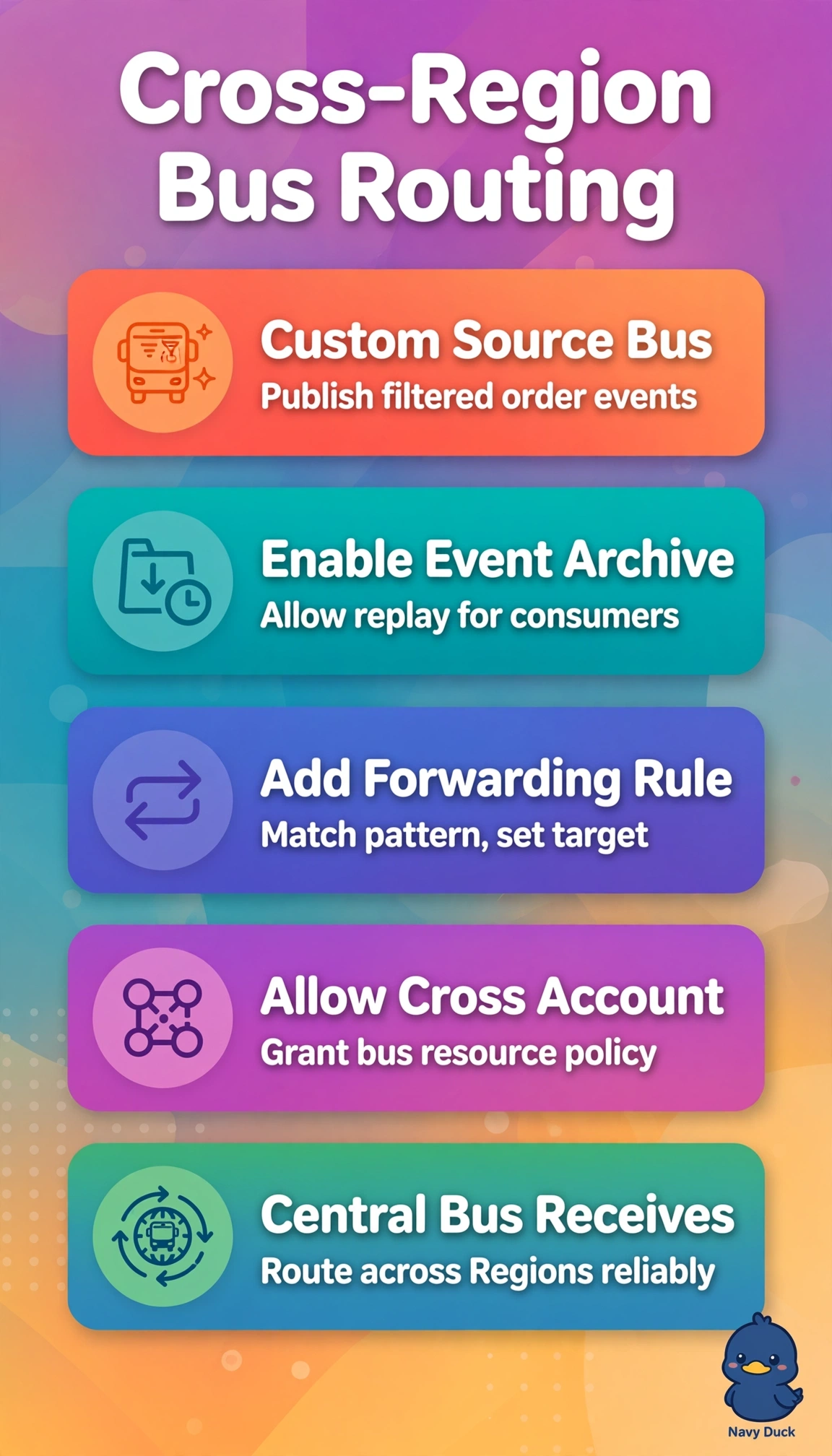
Short Explanation
You've got orders in one corner and analytics in another, like sorting mail for overseas delivery. You'll publish to your source bus with an archive, then let event forwarding rules filter and route them across accounts and Regions to the central bus for easy replay.
Full Explanation
The correct pattern works because a custom source bus in eu-west-1 isolates order events, event patterns provide server-side schema and content filtering, a bus resource policy allows PutEvents to the central analytics bus in us-east-1 in the separate account, native cross-account cross-Region targets remove polling, and archive preserves history for replay to new consumers. The local-routing choice fails by scope because archive and filtering remain intact but delivery stays within eu-west-1 targets and never reaches the separate analytics account and Region, so centralization is unmet. The forwarding-without-archive choice fails by durability because filtering and cross-account cross-Region delivery work but without archive there is no native replay, forcing backfill or dual-running producers for each new consumer. The unfiltered-forwarding choice fails by selectivity because archive and cross-account cross-Region delivery are present but sending all events bypasses pattern filtering, increasing cost and coupling downstream. Exam caveat is to distinguish EventBridge archive replay from queue retention or log storage, since only archive enables time-bounded replay to a bus with filtering preserved. Practical check is to verify the destination bus policy, confirm archive retention, deploy one filtered rule per consumer, and replay a small time window to a test target to validate filtering and delivery.