
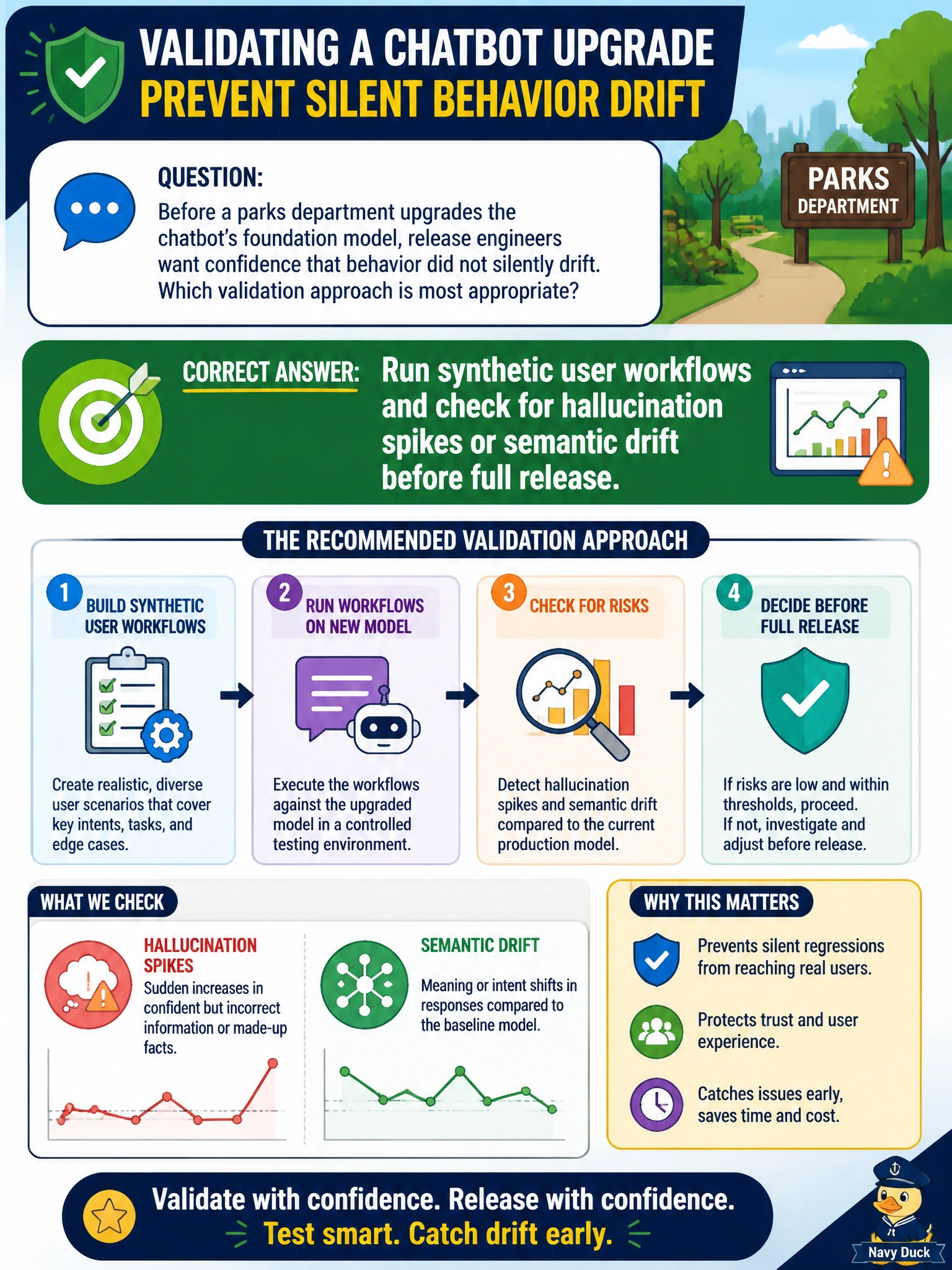
Before a parks department upgrades the chatbot’s foundation model, release engineers want confidence that behavior did not silently drift. Which validation approach is most appropriate?
Select an answer to reveal the explanation.
Short Explanation
Upgrading the parks bot’s brain is like swapping the tour guide mid-season. Synthetic walk-throughs catch weird new answers—and semantic drift—before festival weekend kiosks surprise visitors.
Full Explanation
Running synthetic user workflows and checking for hallucination spikes or semantic drift before full release is the validation approach most appropriate before a parks department upgrades the chatbot’s foundation model. Model upgrades can change wording, invent amenities, or alter policy tone without failing health checks; synthetic workflows that exercise kiosk and web paths surface those behavioral shifts—including hallucination spikes and semantic drift—before festival visitors see them. Pre-release behavioral validation contains blast radius. Shipping the upgrade to all kiosks with no behavioral checks fails by concept and risk: untested FM cutovers can broadcast new errors citywide instantly. Validating only that the new model’s marketing name is longer fails by concept: naming is not behavioral evidence. Skipping testing because foundation-model upgrades never change outputs fails by concept—model versions routinely change outputs even with similar prompts. Exam caveat: FM upgrade questions expect behavioral/synthetic validation for drift and hallucinations, not marketing checks or “never changes” assumptions. Operational check: script synthetic parks visitor workflows (hours, permits, trail rules), score answers pre/post upgrade for hallucination and semantic drift, set go/no-go thresholds, canary a subset of kiosks if needed, and retain comparison artifacts for the parks release record.