
A telecom wants to track both the progress and the long-term value of its AI-based customer-churn prediction initiative as it scales. Select the two practices that best support this goal. (Select 2.) (Select TWO.)
Select all correct answers, then click Submit.
Short Explanation
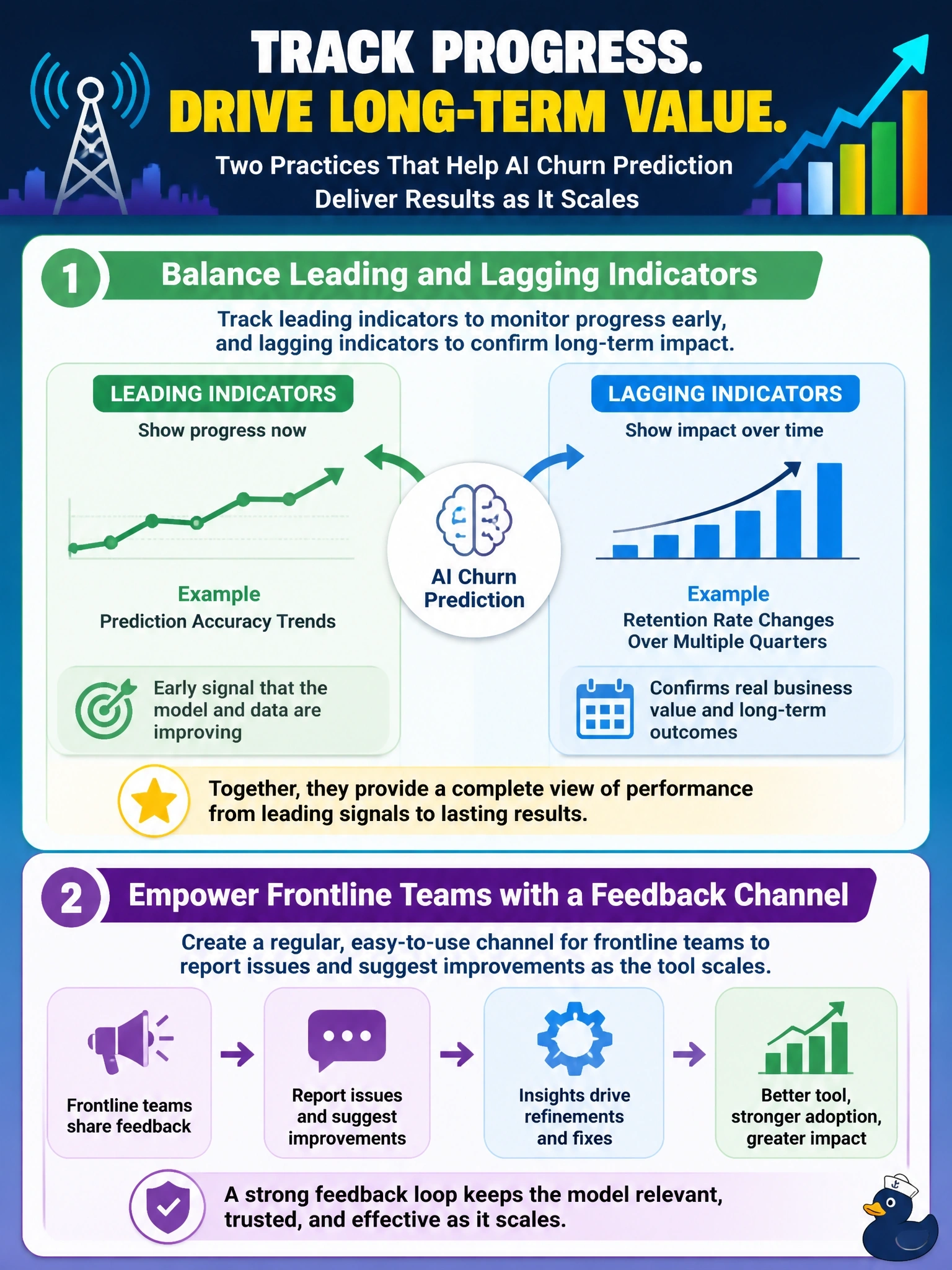
You need an early warning and a real outcome, side by side — accuracy trends tell you something's working now, retention over a few quarters tells you it actually mattered. Add a live channel for frontline feedback and you've got a measurement system that doesn't go stale.
Full Explanation
Defining leading indicators such as prediction accuracy trends alongside lagging indicators such as retention rate changes over multiple quarters gives both an early signal and a confirmed business outcome over time, and creating a regular channel for frontline teams to report issues and suggest improvements keeps that measurement grounded in what's actually happening as the tool scales. Discontinuing metric collection once the tool reaches full enterprise deployment removes measurement exactly when the tool has its largest footprint and the stakes of losing track of performance are highest, defeating the purpose of continuous tracking. Measuring success only by the number of regions where the tool has been deployed tracks rollout breadth, which is an output of the deployment process, not evidence of progress toward or achievement of long-term value. Relying solely on the vendor's published benchmark accuracy figures instead of internal measurement substitutes a generic external number for measurement grounded in this organization's own data, customer base, and operating conditions, which won't reflect how the tool is actually performing internally. The operational check: tracking both progress and long-term value requires pairing leading and lagging indicators with an ongoing internal feedback channel, sustained through full-scale deployment rather than stopped early or outsourced to a vendor's own figures.