
A state government agency wants to accelerate AI literacy across departments with varying levels of technical comfort. The transformation office is designing a workforce-development approach. Select the TWO elements most likely to build lasting, enterprise-wide AI literacy. (Select TWO.)
Select all correct answers, then click Submit.
Short Explanation
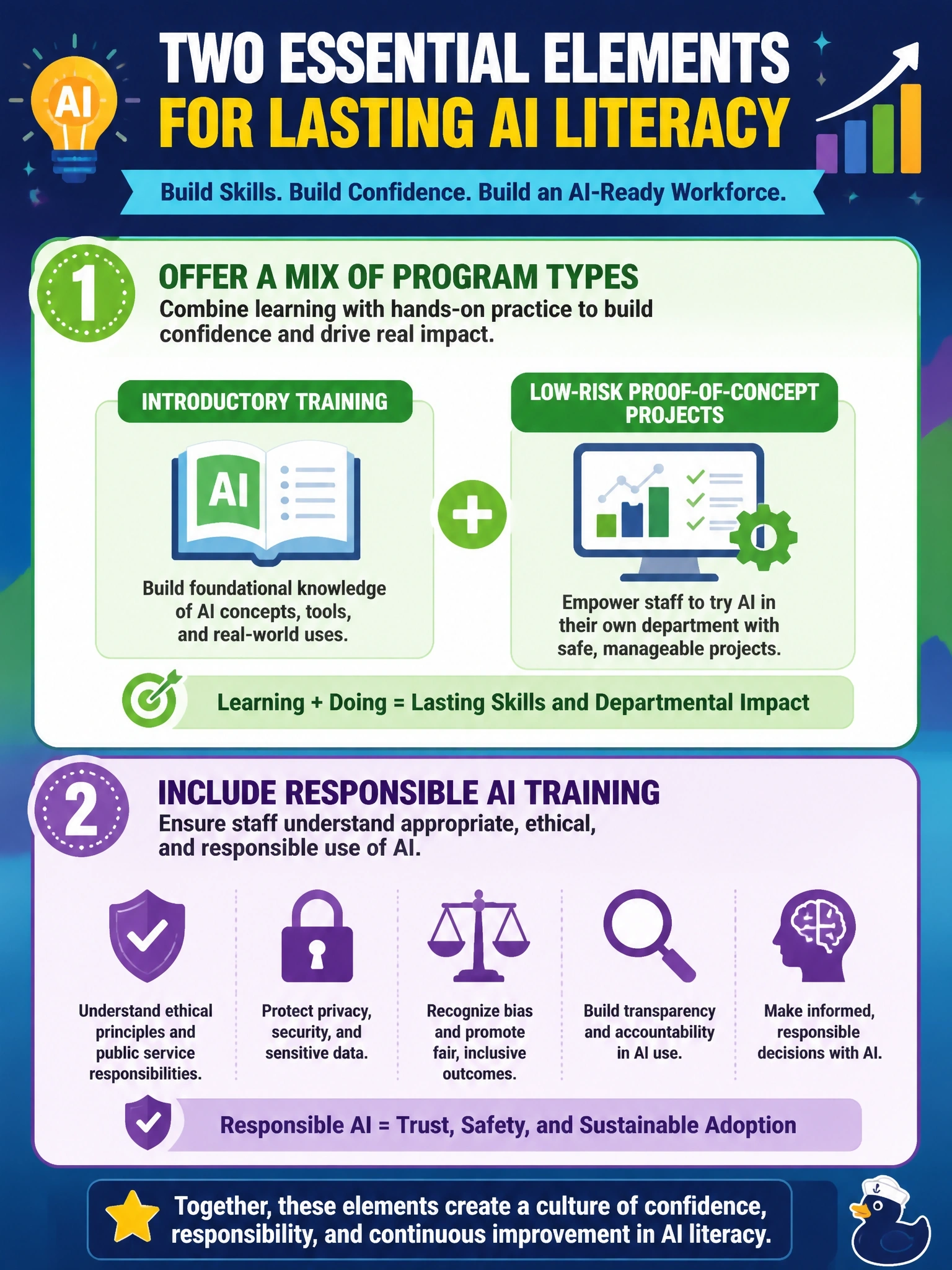
One-size-fits-all training falls apart the moment your departments start at different comfort levels, so you mix formats — introductory sessions paired with a low-risk project staff can try in their own corner — and build in responsible AI training from day one. That combination is what actually sticks enterprise-wide, not a fixed calendar or a self-paced module with no hands-on practice.
Full Explanation
Offering a mix of program types, such as introductory training paired with low-risk proof-of-concept projects staff can try in their own department, accommodates the varying comfort levels across departments while building practical skill, and including responsible AI training alongside technical literacy ensures staff understand appropriate and ethical use as they gain that skill. Limiting AI literacy programs to IT staff directly contradicts the enterprise-wide goal and ignores that other departments, with their own varying comfort levels, need literacy just as much. Requiring every department to reach the same milestones on the same fixed calendar date regardless of starting point is likely to fail for departments that begin with less technical comfort, since it treats unequal starting positions as if they were equal. Relying entirely on self-paced online modules with no hands-on practice component tends to produce weaker practical literacy than programs that combine instruction with applied, hands-on practice. The operational check: enterprise-wide literacy requires accommodating different starting points through mixed formats and embedding responsible AI training throughout, not a single fixed schedule or a program limited to one audience.