
A general contracting firm's estimating team is resistant to using an AI tool for cost estimation, citing multiple stories of estimators elsewhere losing credibility after an AI-generated estimate was wrong in front of a client. The firm's leadership wants to reduce this resistance without dismissing the team's concerns. Select the TWO leadership interventions most likely to help. (Select TWO.)
Select all correct answers, then click Submit.
Short Explanation
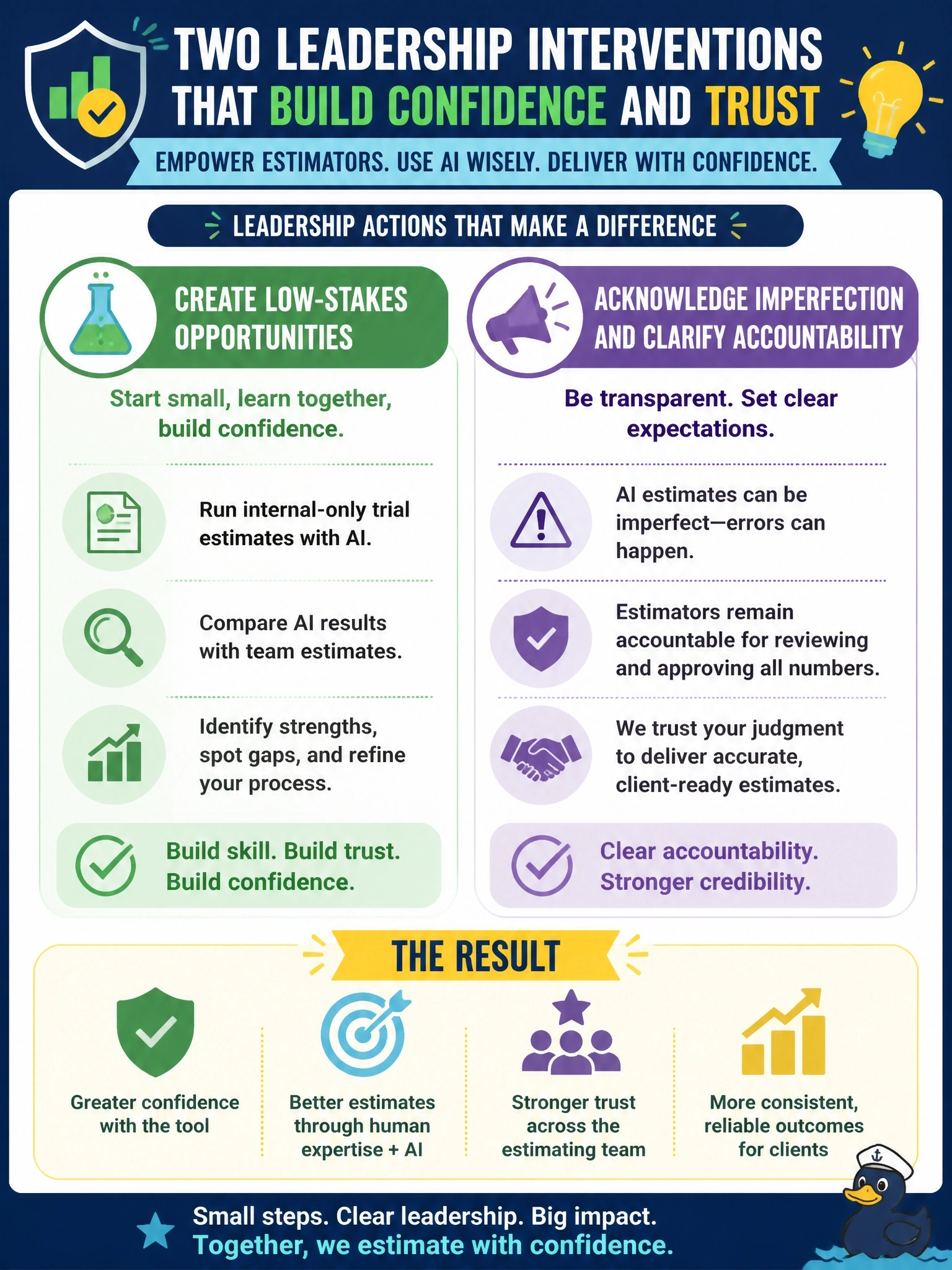
You don't build trust in a new tool by telling people their fear is silly, and you don't build it by taking away their ability to push back on a bad number either. Let them practice somewhere low-stakes first, and be honest that the tool can be wrong while making clear they're still accountable for the final estimate.
Full Explanation
Creating low-stakes opportunities, such as internal-only trial estimates, lets the team build confidence with the tool before anything client-facing is at stake, and publicly acknowledging that AI estimates can be imperfect while clarifying that estimators remain accountable for reviewing and approving final numbers preserves the professional judgment the team is afraid of losing. Telling the team that concerns about AI accuracy are exaggerated and not worth further discussion dismisses a legitimate, evidence-based fear and damages trust rather than reducing resistance. Requiring every estimator to use AI-generated numbers exactly as produced, with no ability to adjust them, removes the very judgment and control that would let estimators catch an error before it reaches a client, which increases the fear of losing credibility rather than easing it. Quietly stopping discussion of the tool and hoping the resistance fades on its own leaves the underlying risk-aversion unaddressed, and unaddressed risk aversion tends to calcify into permanent avoidance rather than resolve itself. The operational check: interventions for risk aversion should combine honest acknowledgment of the real risk with structured, low-stakes ways to build competence, while keeping the human accountable for the final call.