
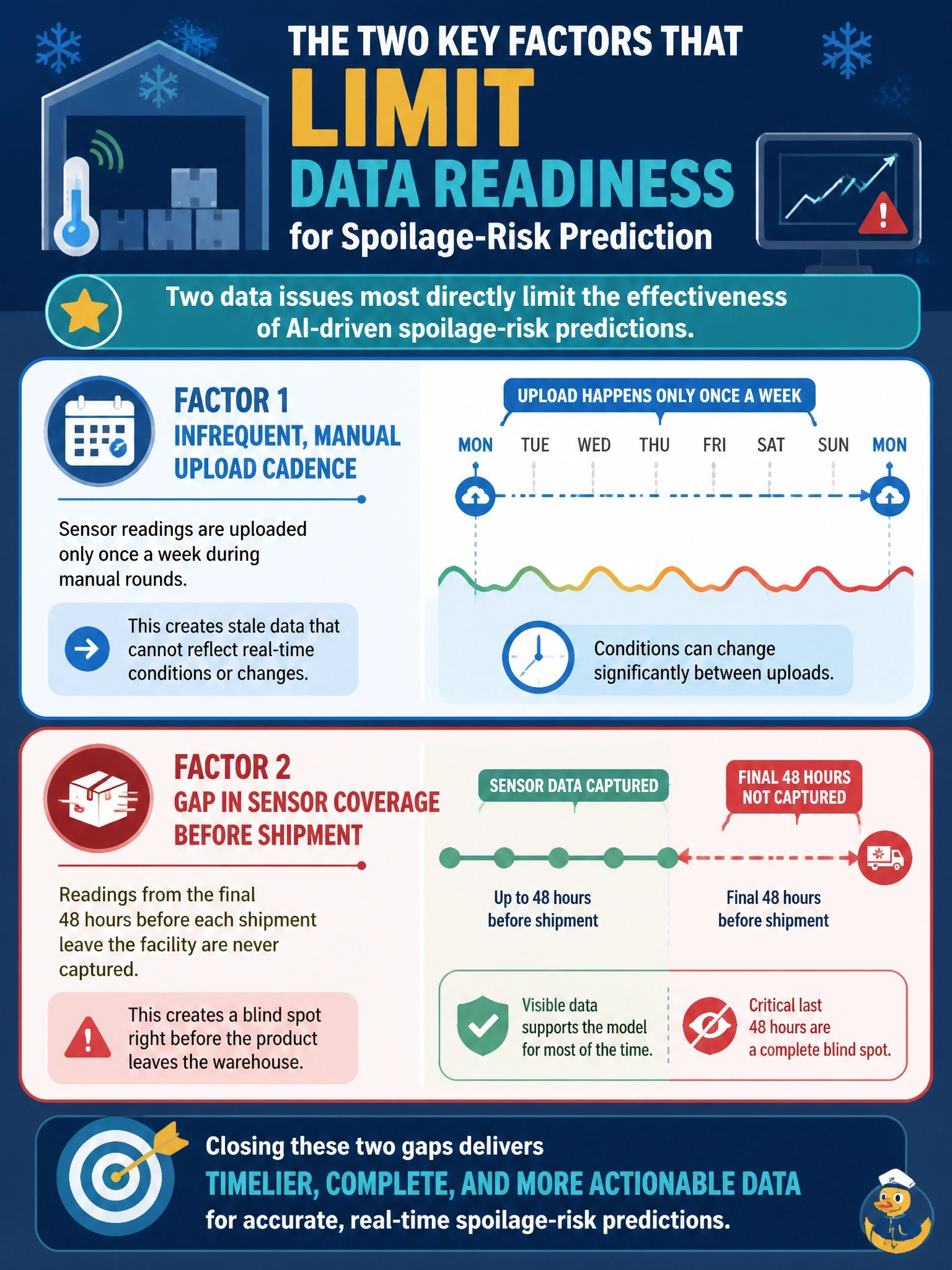
A cold-chain warehousing operator wants to deploy an AI tool that predicts spoilage risk using temperature-sensor data. The sensor readings are accurate at the moment they are recorded, but warehouse staff only upload them to the central system once a week during manual rounds, and readings from the final 48 hours before each shipment leaves the facility are never captured at all. Select the TWO factors that most directly limit this data's readiness for the spoilage-risk use case. (Select TWO.)
Select all correct answers, then click Submit.
Short Explanation
Your spoilage model is only as good as how fresh and complete its data is, and this setup fails on both counts: weekly manual uploads leave readings stale, and there's a total blind spot in the exact 48 hours before shipment the model needs most. The temperature unit and the sensor vendor mix are red herrings you don't need to chase.
Full Explanation
The infrequent, manual upload cadence, which leaves the data stale relative to a use case that depends on near-real-time conditions, and the gap in sensor coverage during the final 48 hours before shipment, which is precisely the window a spoilage-risk model would need most, are the two factors that most directly limit this data's readiness. The sensors being sourced from more than one vendor is tempting to flag, since multi-vendor equipment can sometimes cause format mismatches, but the scenario never establishes that the vendors' data is actually incompatible — it only says the readings are accurate, so this is an assumed problem rather than an evidenced one. The absence of a mobile app for staff to view sensor dashboards is a tooling gap for staff visibility, not a data-readiness issue for the model itself, which doesn't need a dashboard app to function. Using Fahrenheit rather than Celsius as the recorded unit is a red herring — a consistent unit of measurement doesn't affect the model's accuracy as long as it's applied consistently across every reading. The operational check: timeliness and completeness of coverage are core data-readiness dimensions, and a spoilage-risk model specifically needs data that reflects conditions close to the moment of shipment, not stale or gapped readings from earlier in the week.