
An insurer is scoping a new GenAI tool to help adjusters triage catastrophe claims. Select the TWO activities the responsible AI team should complete during the initial planning phase, before the first line of the pilot is built. (Select TWO.)
Select all correct answers, then click Submit.
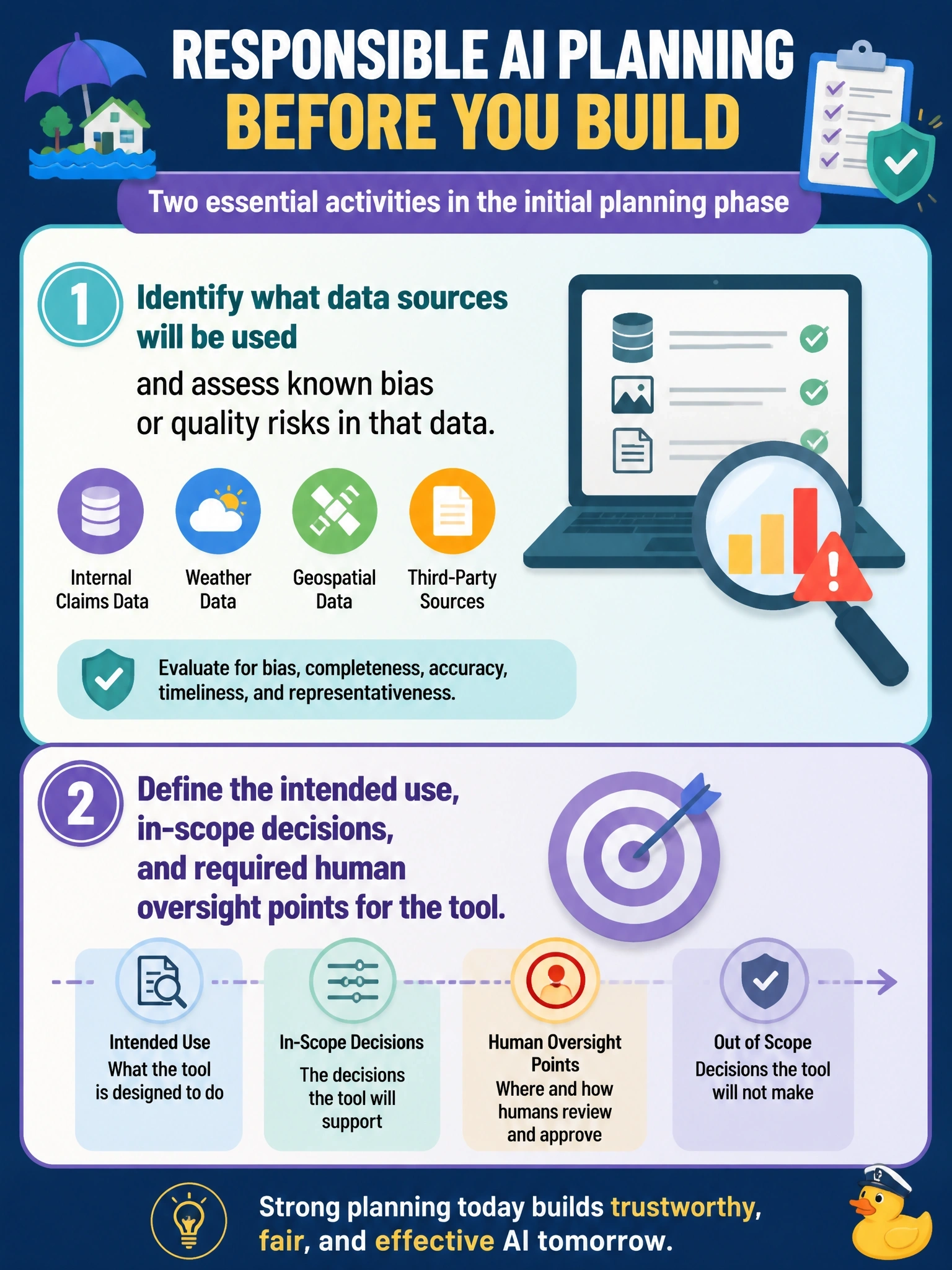
Short Explanation
Before you build anything, you scope it: what data feeds the model, what decisions it's allowed to touch, and where a human has to sign off. Think of it like drawing the blueprint before you pour concrete — the model architecture and hyperparameters come later, once the guardrails are already in place.
Full Explanation
Identifying the data sources and assessing known bias or quality risk in that data, together with defining the tool's intended use, in-scope decisions, and required human oversight points, are exactly the foundational governance-by-design decisions that belong at the start of planning, before any build work begins. Selecting the specific model architecture and its hyperparameters is a technical implementation choice that comes after these planning decisions are locked in, and it's a task for the technical build team rather than something a business owner leading governance planning is expected to decide at this stage. Conducting the tool's first annual performance audit happens well after the tool is live in production for a meaningful stretch of time, so it can't be a planning-phase activity by definition. Finalizing marketing materials describing a release date is a business and communications task with no governance dependency, and sequencing it this early adds nothing to responsible AI planning — if anything, committing to a public date before the tool's scope and data risks are understood creates pressure to skip steps later. The operational check: before a single line of the pilot is written, the team should be able to state in plain language what the tool will and won't decide, where a human checks its work, and what's known about the quality of the data feeding it.