
A specialty pharmaceutical company's leadership is calibrating its AI investment level for the coming year. Select the TWO factors that should most influence that decision. (Select TWO.)
Select all correct answers, then click Submit.
Short Explanation
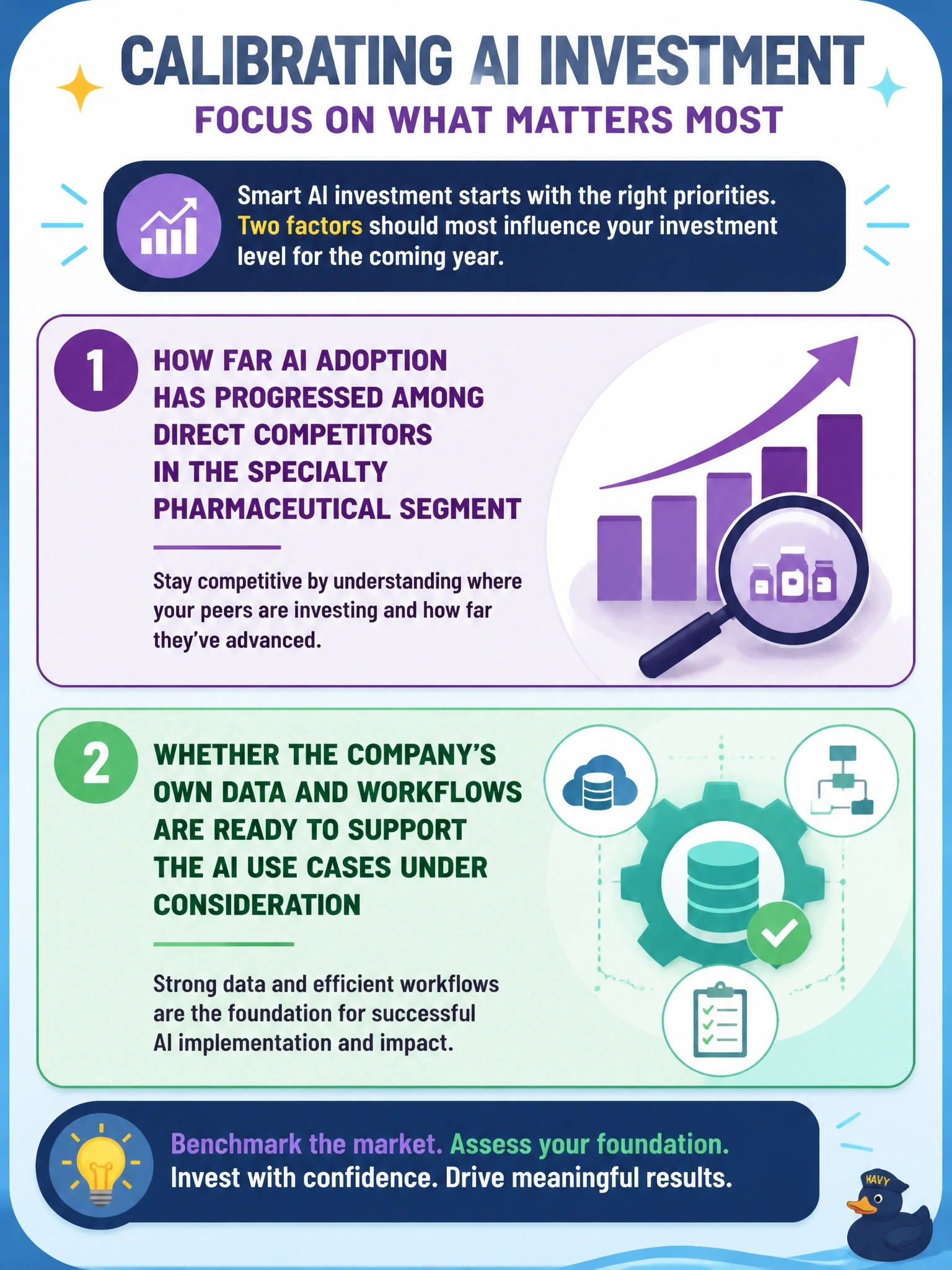
How much to invest should come down to two real signals: how far your direct competitors in your own segment have actually gotten, and whether your own data and workflows are ready to support the use cases you're considering. A flood of news articles, an unrelated industry's progress, or a CEO's vendor preference don't tell you anything useful about either one.
Full Explanation
Appropriate investment calibration weighs how mature the company's own competitive segment is alongside whether the company is actually positioned to execute on AI given its data and workflow readiness. Together, these determine both how much pressure there is to invest and how much of that investment is likely to pay off. The number of AI-related news articles published in the past month substitutes media volume for a substantive signal; a spike in coverage doesn't reflect actual competitive or readiness conditions. Whether the chief executive personally prefers a particular AI vendor's branding bases a strategic decision on personal preference rather than business need, which risks a poor-fit investment. Whether a completely unrelated industry, such as consumer electronics, has fully matured its AI adoption looks at a sector with no bearing on this company's competitive dynamics, so its maturity level isn't a relevant input. The principle: calibrate investment using your own segment's competitive maturity and your own organization's readiness, not media buzz, personal preference, or unrelated industries. A practical check: before setting next year's budget, confirm the data pipelines needed for the top use cases actually exist today.