
A retail chain's leadership is identifying AI opportunities that would transform its business model rather than simply improve existing store operations. Select the TWO ideas below that represent genuine business model transformation. (Select TWO.)
Select all correct answers, then click Submit.
Short Explanation
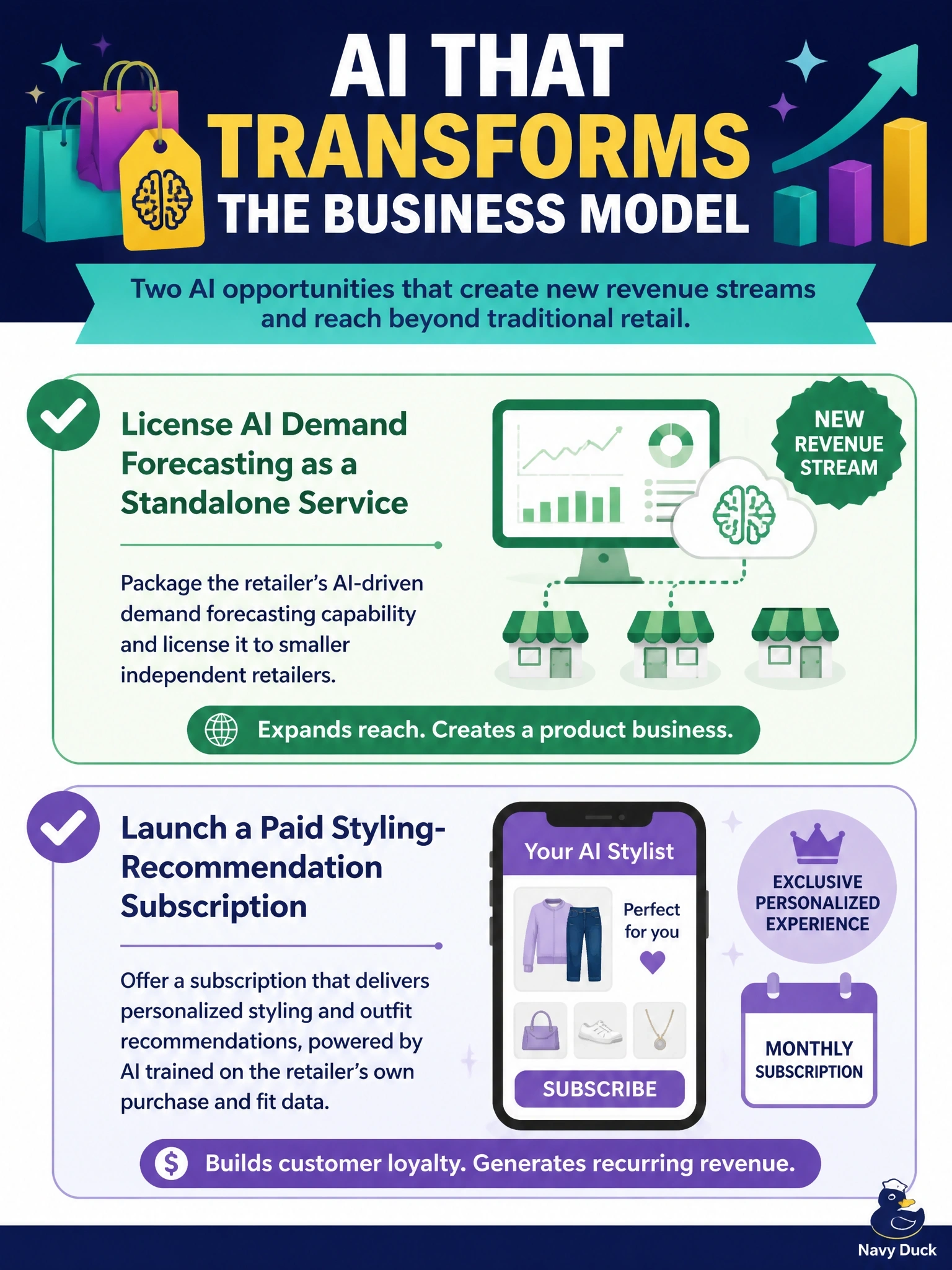
Transformation means the company starts making money in a new way, not just running its existing stores a little smoother. Licensing a forecasting capability to other retailers, or launching a paid styling subscription built on your own data, both open a new revenue line. Faster checkout, cleaner inventory tags, and easier reporting are still just the same old store, running better.
Full Explanation
Business model transformation means the company begins earning revenue or serving customers in a way it didn't before. Launching a paid styling-recommendation subscription for customers turns internal customer data into a new paid consumer product. Licensing the retailer's demand-forecasting capability to smaller independent retailers as a standalone service goes further and turns an internal operational capability into a service sold to other businesses, a new B2B revenue line built on an existing strength. Reducing checkout wait times, auto-generating weekly sales summaries store managers already receive, and flagging mis-tagged items in the existing inventory system all improve how the retailer runs its current stores, faster checkout, easier reporting, cleaner inventory data, without changing what it sells or to whom, so they're process improvements, not transformations. The pattern to recognize: transformation ideas repurpose data or capability into something new that can be sold, while improvement ideas make the existing operation run better. Leaders should be able to sort a list of AI ideas into these two categories quickly before deciding where transformational investment belongs.