
A retail chain's leadership is assessing the competitive landscape before deciding whether AI-driven personalized product recommendations would give the company an edge. Select the TWO factors that are most relevant to that assessment. (Select TWO.)
Select all correct answers, then click Submit.
Short Explanation
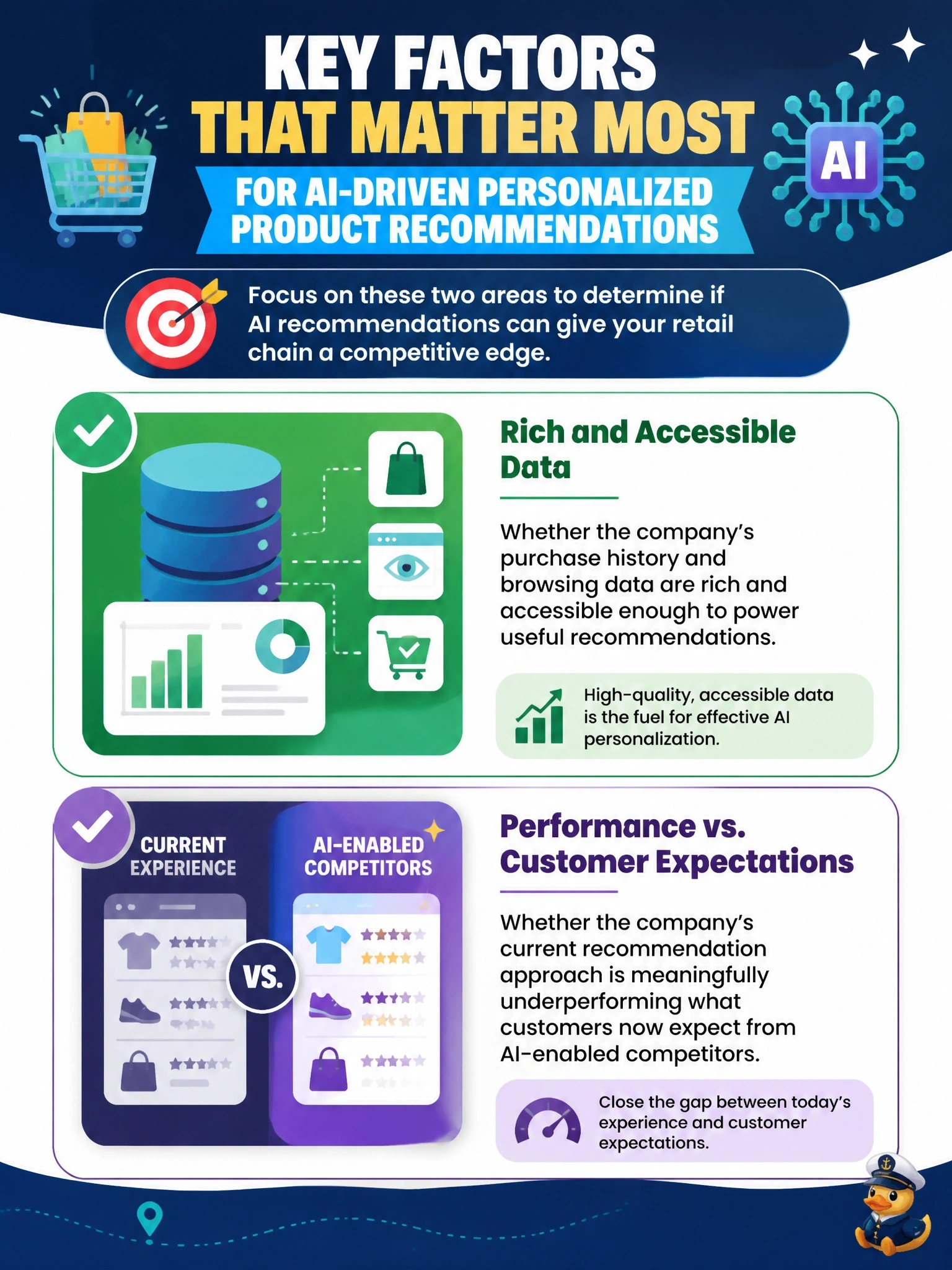
A real competitive assessment weighs two things: how big is the gap between what you offer and what customers now expect, and do you actually have what it takes — in this case, rich enough purchase and browsing data — to close it? A competitor's press release, the color of your logo, or which chip the engine runs on don't answer either question.
Full Explanation
Whether the company's current recommendation approach is meaningfully underperforming what customers now expect from AI-enabled competitors, and whether the company's purchase history and browsing data are rich and accessible enough to power useful recommendations, together weigh both the size of the gap versus competitors and whether the company actually has the underlying asset needed to close that gap. Without both, the company can't tell whether AI would create a real edge or just match a marketing claim. Whether a competitor's marketing team has publicized their AI use in press releases is a distractor because press coverage reflects publicity, not proven customer impact, and chasing headlines is a weak basis for strategy. Whether the company's logo and color scheme would need to change is irrelevant brand cosmetics with no bearing on competitive positioning. Whether the recommendation engine would run on GPU or CPU hardware is a technical infrastructure detail a business leader doesn't need to evaluate, and it falls outside the scope of a strategic assessment. The general principle: assess competitive advantage by pairing the size of the customer-facing gap with the company's own readiness to close it, not by reacting to competitor messaging or technical implementation choices.