
A logistics company is building an ROI framework for an AI shipment-tracking assistant. Select TWO value categories that belong in a comprehensive ROI framework. (Select TWO.)
Select all correct answers, then click Submit.
Short Explanation
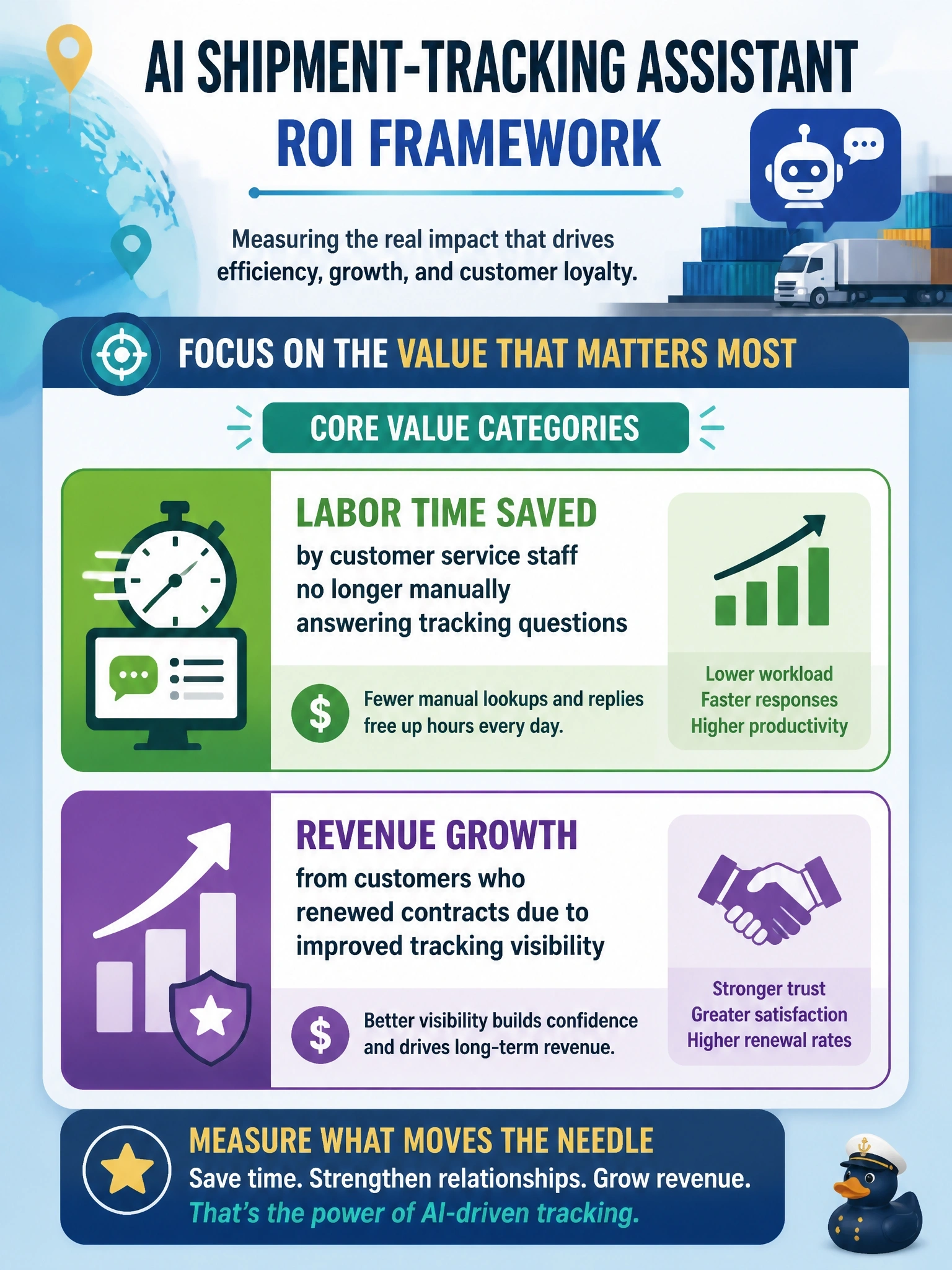
A real ROI framework covers both sides of the ledger: what you saved — labor hours no longer spent manually answering tracking questions — and what you gained, like renewal revenue from customers who stuck around because tracking got better. Headcount, query volume, and a vendor's founding date might sound relevant, but none of them are actual dollar value the tool created.
Full Explanation
Labor time saved and renewal-driven revenue growth are both legitimate value categories, representing cost reduction and revenue growth respectively, the two benefit types a comprehensive ROI framework is built to combine. The total number of employees currently on the customer service team is a fixed staffing fact, not a benefit the AI tool produced. The number of tracking queries the AI assistant answered last month is an activity count that shows usage but not dollar value created; a high volume could occur even if the tool wasn't actually saving time or driving renewals. The founding date of the AI vendor's company is irrelevant background information with no bearing on value delivered. The general principle: ROI categories must represent measurable benefits attributable to the initiative, such as time saved or revenue influenced, not usage counts, fixed organizational facts, or vendor background details. A useful check: for each proposed KPI, ask whether it would change if the tool were removed, if not, it doesn't belong in the ROI framework.