
A freight carrier is piloting an AI route-optimization tool built on Amazon SageMaker AI. The program sponsor wants a balanced KPI set covering both tangible and intangible benefits. Select TWO KPIs that would appropriately round out the set alongside "fuel cost per mile." (Select TWO.)
Select all correct answers, then click Submit.
Short Explanation
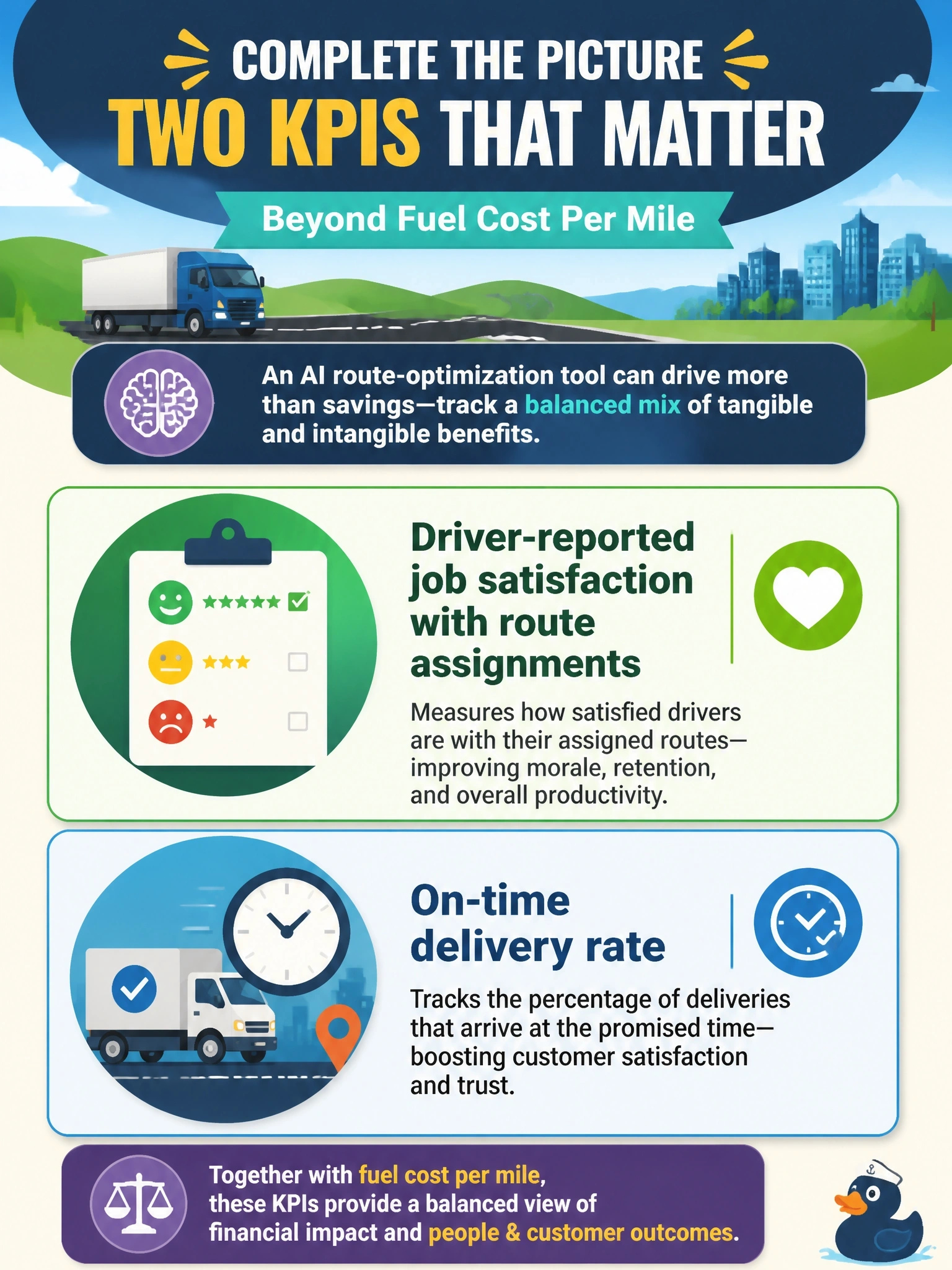
A balanced scorecard pairs a hard number with a human one: on-time delivery rate is the tangible, customer-facing win, while driver-reported job satisfaction captures the intangible side — how the change actually feels to the people using it every day. Fleet size, miles driven, and route counts are just activity or inventory stats; they don't tell you whether the tool actually helped.
Full Explanation
On-time delivery rate is a strong tangible KPI because it directly ties route quality to a measurable customer-facing outcome, and driver-reported job satisfaction is a meaningful intangible KPI because route optimization changes daily driver experience in ways that predict retention and adoption. The number of trucks in the active fleet is a static resource count, not a benefit produced by the AI tool, so it doesn't belong on a value dashboard. Total miles driven across the fleet is tempting because it sounds efficiency-related, but by itself it doesn't indicate whether the AI improved or worsened outcomes without a baseline comparison, and could rise or fall for unrelated reasons like demand. The number of routes the AI tool generated is an activity count describing how much the tool was used, not a benefit it produced. The general principle: a balanced KPI set pairs at least one measurable business or customer outcome with at least one perception-based measure, and excludes raw activity or inventory counts that don't represent value actually delivered.