
An arts education non-profit is preparing to transition its student-enrollment matching process from a manual, staff-run system to a new AI-based platform. Select the TWO considerations below that the transition plan should address, based on the factors named in AI strategy guidance for platform transitions. (Select TWO.)
Select all correct answers, then click Submit.
Short Explanation
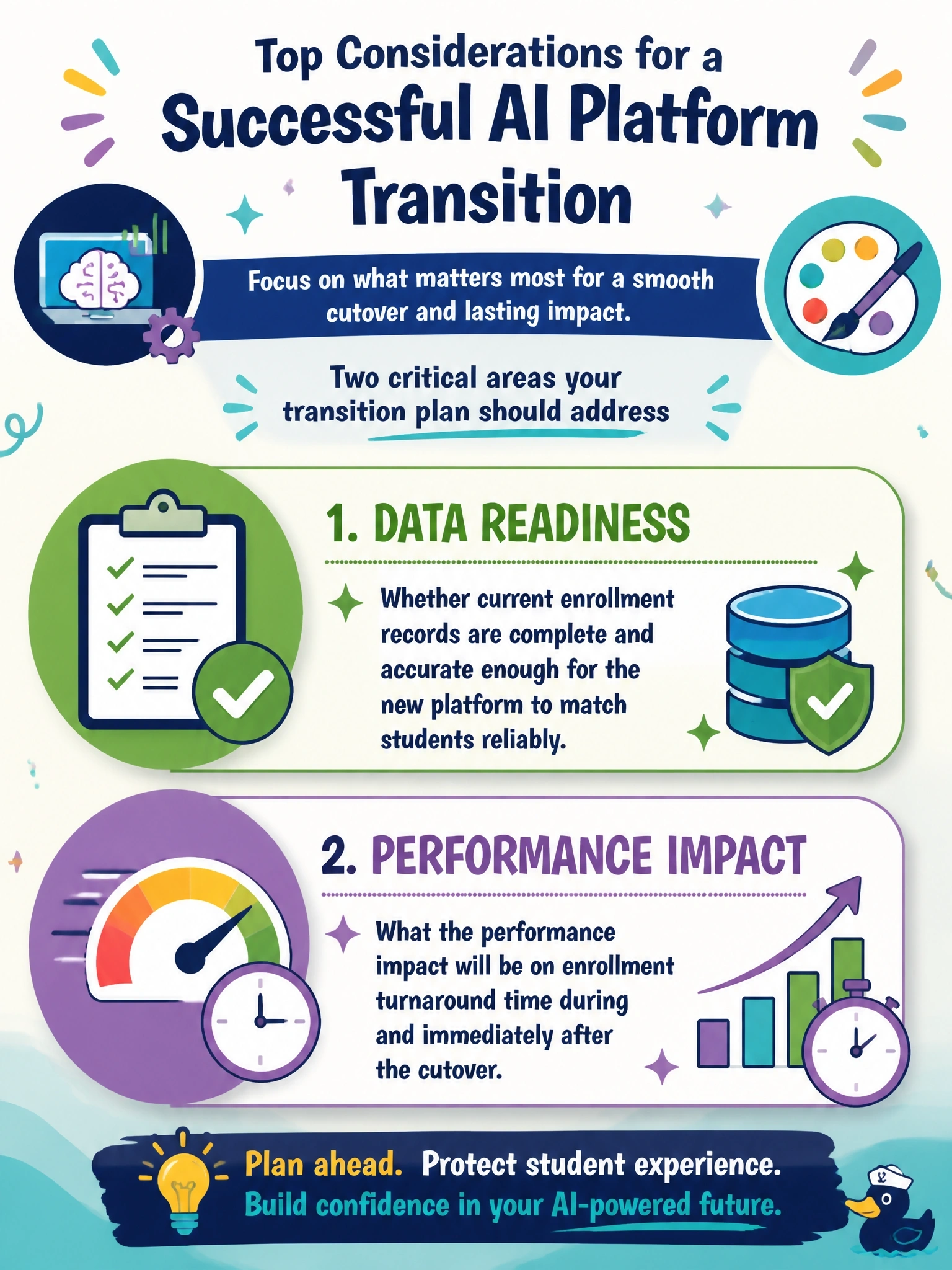
Before you flip the switch on a new enrollment platform, you need two questions answered: is the underlying data clean and complete enough for it to match students reliably, and what happens to turnaround time during and right after the cutover. A catchy name or a matching logo color won't save you if either of those goes wrong.
Full Explanation
Whether current enrollment records are complete and accurate enough for the new platform to match students reliably, and what the performance impact will be on enrollment turnaround time during and immediately after the cutover, map directly to two of the named considerations for transitioning a business process to an AI-based solution: data readiness and performance impact. Both determine whether the new platform will actually work as intended and whether service to students will be disrupted during the switch. Whether the platform's name is easy for staff to pronounce, whether the logo uses the non-profit's preferred shade of blue, and whether the vendor sponsors any local arts festivals are cosmetic, marketing-adjacent, or incidental factors with no bearing on whether the transition preserves data quality or enrollment turnaround, the substantive risks the scenario is asking about. The general principle: transition planning should focus on substantive factors, business continuity, cost implications, data readiness, and performance impact, not incidental branding or vendor relationship details. A practical check before cutover: confirm the data has been audited for completeness and that a rollback or contingency plan covers the turnaround window.