
A packaged food manufacturer is deciding how to source an AI-based demand-sensing solution. Select the TWO factors below that should carry the most weight in a build-buy-partner decision for this initiative. (Select TWO.)
Select all correct answers, then click Submit.
Short Explanation
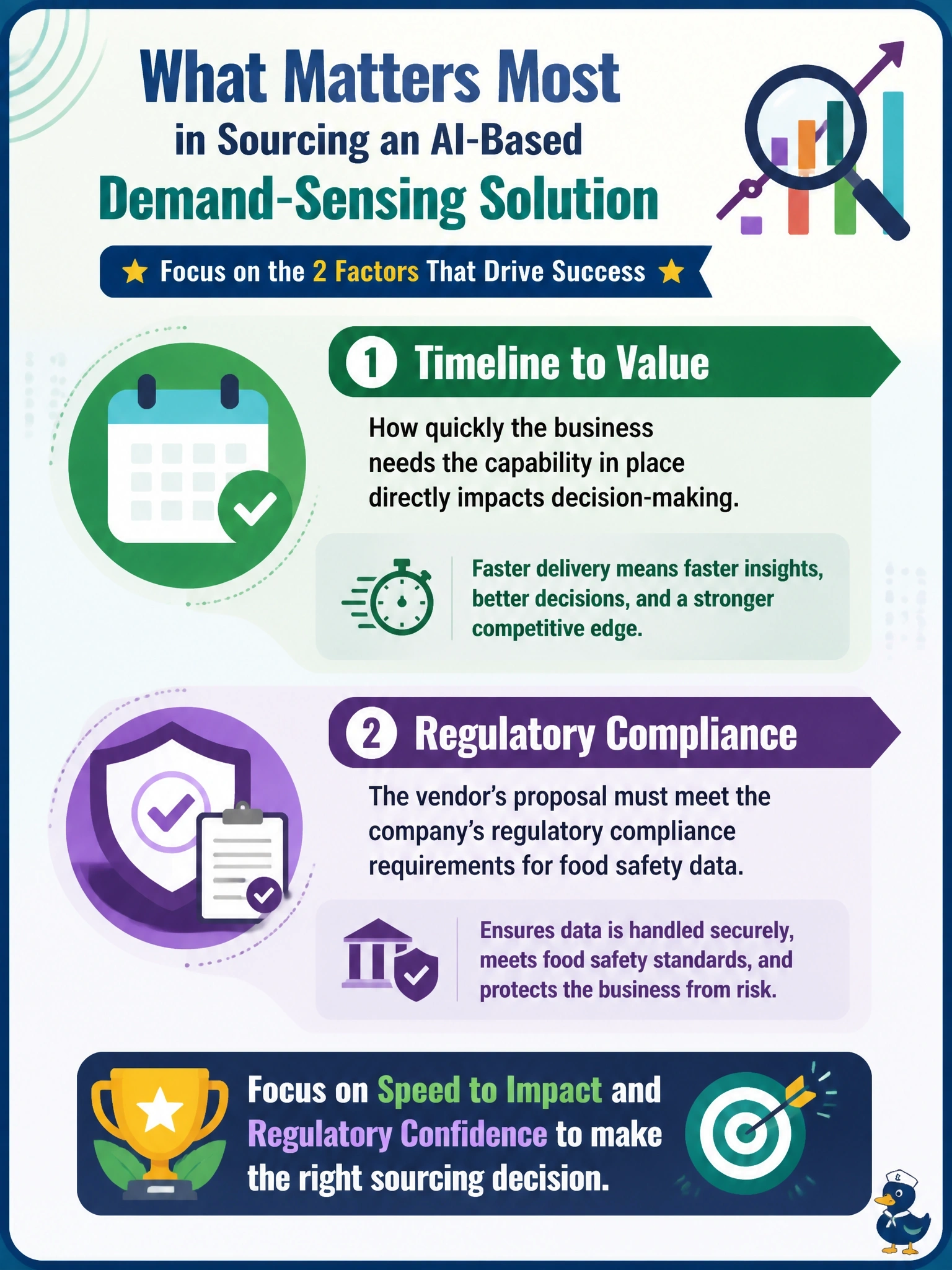
A sourcing decision should live or die on substance — can the vendor actually meet your timeline, and does their proposal satisfy the regulatory requirements you're bound by? Follower counts, color schemes, and how fast sales replies to email are just noise. Filter those out before they distract from what really decides viability.
Full Explanation
The timeline the business needs the capability in place by, and whether a vendor's proposal meets regulatory compliance requirements, reflect factors that materially affect whether a sourcing option is even viable. The vendor's social media follower count, the color scheme used in its marketing materials, and how quickly its sales team responds to emails are all surface-level vendor attributes that have no bearing on capability fit, cost, timeline, or compliance, and wouldn't inform a sound sourcing decision even though they might be noticed during vendor outreach. The general principle: build-buy-partner decisions should be driven by substantive factors, budget, timeline, capability, and regulatory fit, not incidental impressions of a vendor's marketing polish or responsiveness. A practical check before finalizing a sourcing decision: strip the proposal down to whether it can be delivered on time and whether it passes the compliance requirements that apply to the data involved, everything else is secondary.