
A health insurer is evaluating whether to build, buy, or partner for an AI tool that summarizes member call transcripts for care coordinators. Select the TWO scenarios below that would justify partnering with an external AI vendor rather than buying an off-the-shelf product or building in-house. (Select TWO.)
Select all correct answers, then click Submit.
Short Explanation
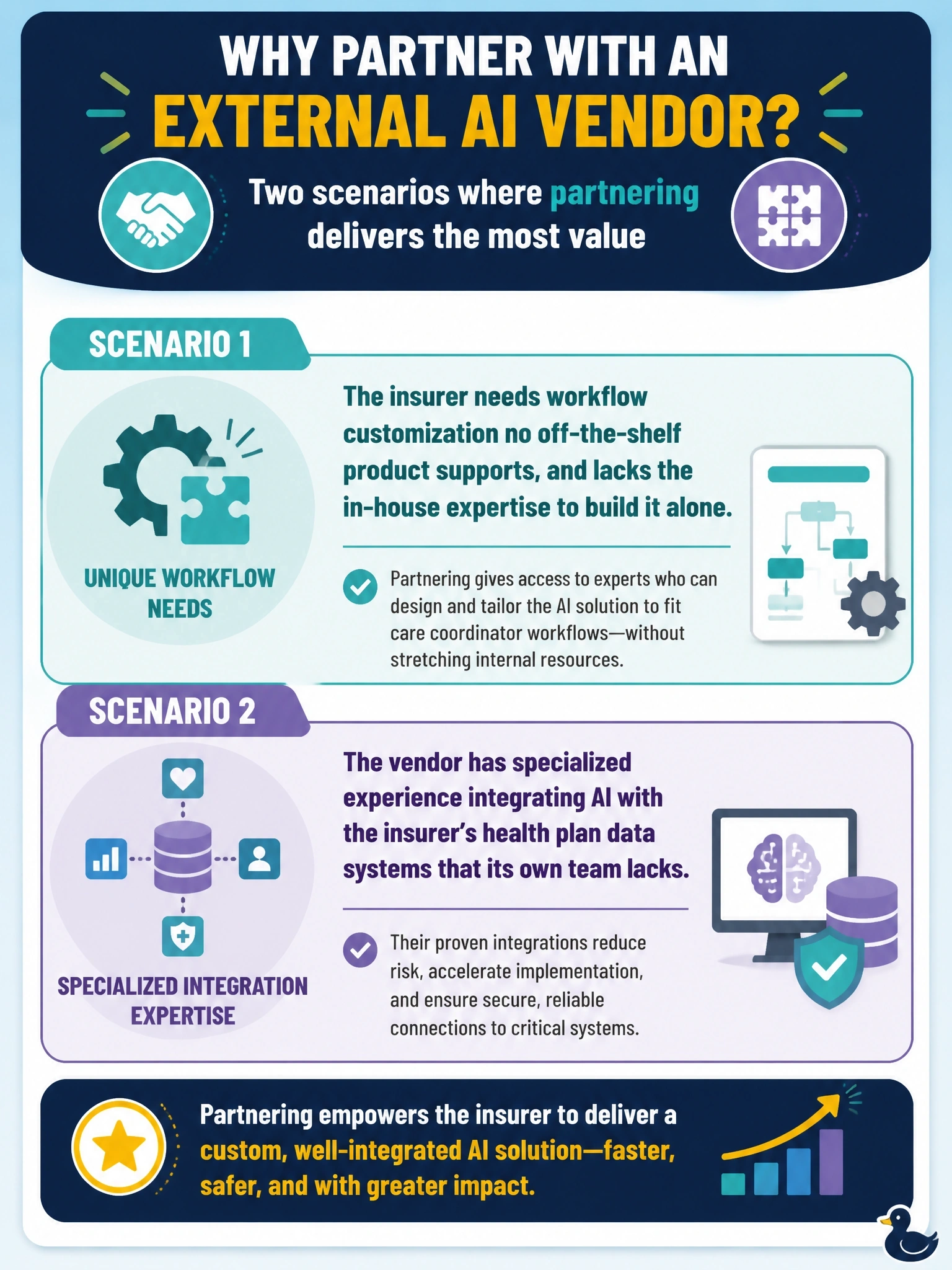
Partnering makes sense when there's a real gap — you need customization nothing off-the-shelf offers and you don't have the in-house chops to build it, or a vendor brings integration experience with your specific systems that your team simply doesn't have. Brand preference, a slightly lower price tag, or not wanting to learn a new dashboard aren't gaps — they're preferences. Only genuine capability shortfalls justify a partnership model.
Full Explanation
Needing workflow customization no off-the-shelf product supports while lacking the in-house expertise to build it alone, and a vendor's specialized experience integrating AI with the insurer's own health plan data systems, both describe genuine gaps that are classic justifications for a partnership model, where the vendor and insurer co-develop the solution together. The CEO's personal preference for vendors with well-known, established brand names is a subjective brand preference, not a substantive business factor. The off-the-shelf product being slightly cheaper on a per-seat basis favors buying on cost grounds, which argues against partnering rather than for it. The IT team simply preferring not to learn a new vendor's dashboard reflects team convenience, not a legitimate driver of a sourcing decision. The general principle: partnering is justified when there's a real customization or expertise gap that neither buying nor building alone can close, not by preference or minor cost or convenience differences, a useful check is asking whether the gap would still exist if the vendor charged the same as buying off-the-shelf.