
A consumer electronics manufacturer is evaluating where AI could create the most business value across its operations. Select the TWO business functions below where an AI use case maps most directly to a measurable operational outcome, based on the descriptions given. (Select TWO.)
Select all correct answers, then click Submit.
Short Explanation
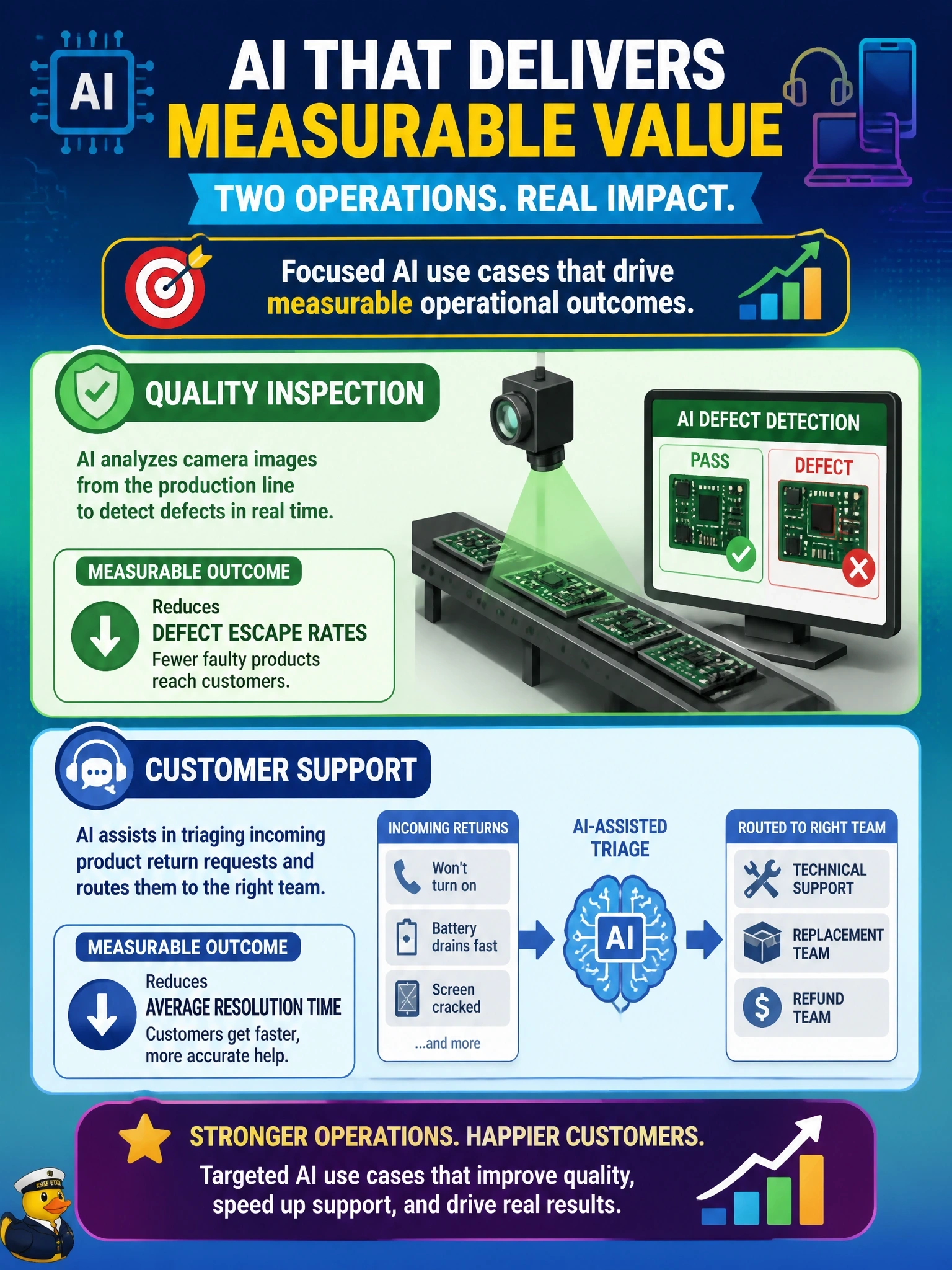
When you're scoring AI use cases for value, look for a number leadership already tracks — cutting defect escape rates on the inspection line and shrinking customer-support resolution time both move a metric that matters. A new holiday theme or a nearby-restaurant pick might use AI too, but neither touches your bottom line.
Full Explanation
Quality inspection and customer support each pair a described AI capability with a specific, measurable operational outcome, defect escape rate and resolution time, in core business functions, manufacturing quality and customer operations, that AI strategy frameworks specifically call out as high-impact. Corporate real estate floor-plan aesthetics, executive travel restaurant recommendations, and holiday party decorating themes all describe AI applied to low-impact, non-core administrative tasks with no meaningful link to strategic business outcomes; office aesthetics, restaurant picks, and party themes aren't measurable value drivers, even though each nominally uses AI. The general principle: high-impact use-case identification prioritizes core business functions with measurable outcomes over any activity where AI could technically be applied but wouldn't move a metric that matters. A useful operational check for evaluating a proposed use case: ask whether success can be tied to a number leadership already tracks, like defect rate or resolution time, before approving the initiative for further investment.