
A corporate training company's instructional designers are coaching non-technical staff on how to get better results from a GenAI writing assistant. Select the TWO practices that reflect sound, basic prompt engineering principles for business users. (Select TWO.)
Select all correct answers, then click Submit.
Short Explanation
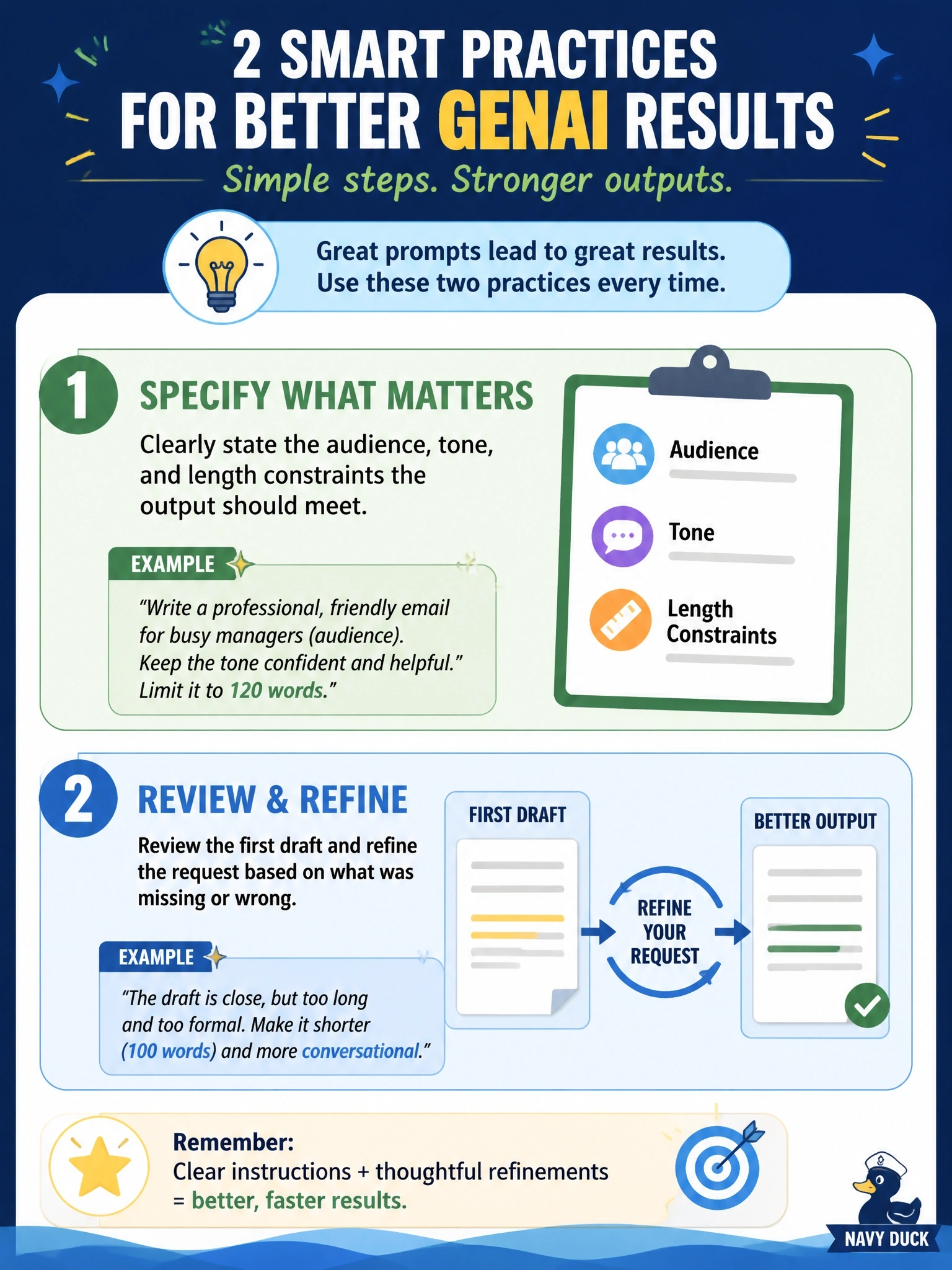
Getting good results from a writing assistant is less about a magic phrase and more about being specific — tell it who the audience is, what tone you want, how long it should be — and then treating the first draft as a starting point, not the finish line. Read it, notice what's off, and refine your ask. Vague and one-shot rarely beats specific and iterative.
Full Explanation
Stating audience, tone, and length constraints and iteratively refining the request based on the output are the two core habits that consistently improve GenAI results for non-technical users. Keeping every request under five words so the model isn't "confused" by detail gets the dynamic backwards: brevity for its own sake tends to produce vaguer, less useful drafts, since detail helps the model rather than confusing it. Assuming the first draft is final and sending it without review is risky and wrong: GenAI outputs require human review before use precisely because they aren't reliably correct, and skipping review invites errors into business communications. Avoiding examples on the theory that they bias the model toward copying instead of generating mischaracterizes what examples do; they typically help the model match a desired style rather than cause unwanted copying, so withholding useful context to dodge an unlikely problem is poor guidance. The generalizable point for instructional designers coaching business users: effective prompt coaching centers on clarity, constraints, examples, and iteration, not brevity or blind trust in a first draft.