
An energy company is building its shadow AI governance program. Select the TWO actions that directly support transparent classification of AI tools. (Select TWO.)
Select all correct answers, then click Submit.
Short Explanation
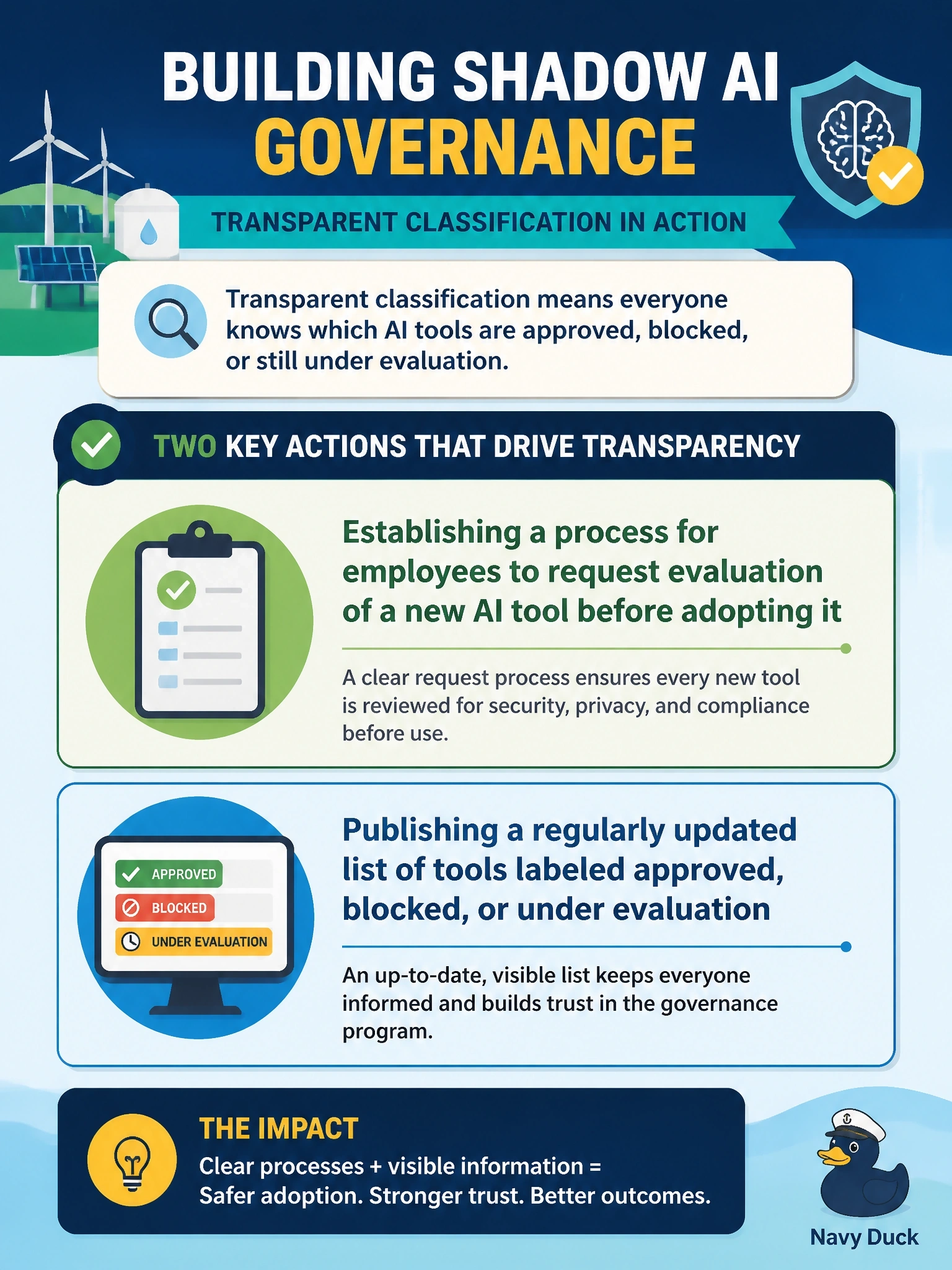
Your governance program gets real the moment you give employees a clear way to request a review before they adopt a new tool, backed by a regularly updated status list showing what's approved, blocked, or still under evaluation. Compute budgets and vendor discounts might matter elsewhere, but they don't tell anyone which tools you've actually sanctioned.
Full Explanation
Publishing a regularly updated status list gives employees ongoing visibility into which tools are approved, blocked, or under evaluation, and establishing a request process lets employees surface new tools for review before adopting them, together forming the core of a transparent classification system. Purchasing AI Marketplace licenses at a companywide discount addresses procurement economics, not visibility into which tools are governed or how they're classified. Increasing the compute capacity allocated to the data science team expands technical infrastructure for one team, a capacity decision unrelated to whether employees across the company know which AI tools they may use. Requiring all AI vendors to lower their pricing targets vendor economics broadly, which has no bearing on establishing or communicating a tool's approval status. The general principle: transparent classification depends on maintaining and communicating current tool status and giving employees a clear path to request evaluation, not on procurement terms, infrastructure investment, or vendor pricing, which are separate business concerns entirely.