
A telecom analytics team is cataloging data sources for an upcoming AI project. Select TWO examples that are correctly classified. (Select TWO.)
Select all correct answers, then click Submit.
Short Explanation
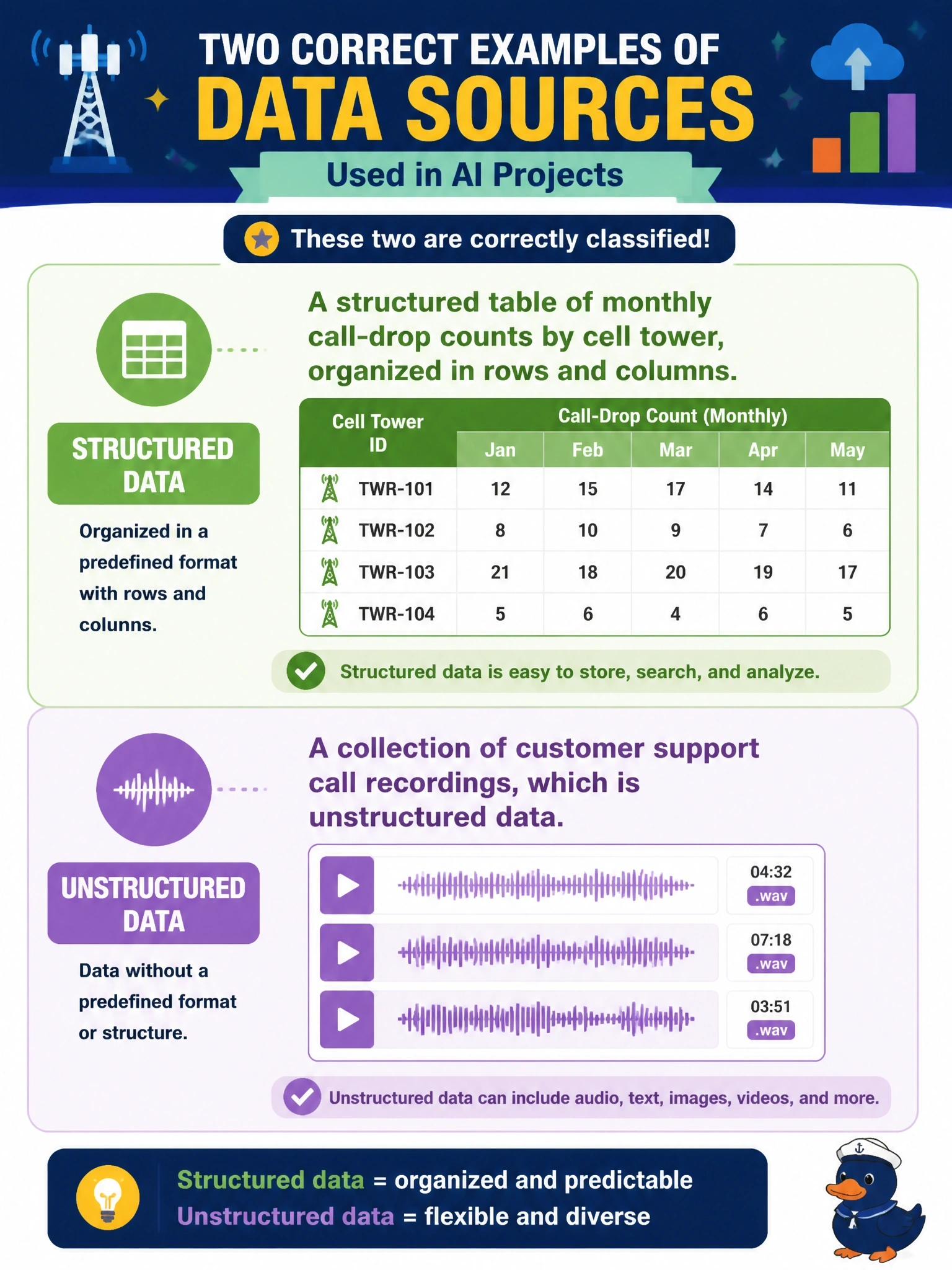
Picture a spreadsheet with everything slotted into rows and columns — that's your structured data, like the call-drop counts by tower. Audio recordings don't come with that built-in organization, so they stay unstructured no matter where you store them or how often the numbers in a table change.
Full Explanation
A table with rows and columns of call-drop counts is a textbook example of structured data, and audio call recordings are a textbook example of unstructured data, since their content isn't organized into predefined fields. Recasting the structured table as unstructured because its values change from month to month confuses update frequency with organization — how often numbers get refreshed has nothing to do with whether the data is stored in fixed fields; the table stays structured either way. Claiming the call recordings are structured because they sit inside a database makes a similar error: storage location doesn't determine structure, and placing audio files inside a database doesn't organize their content into structured fields, so the recordings remain unstructured regardless of where they're kept. The suggestion that structured and unstructured data always require identical preparation effort also overstates the similarity between the two; unstructured sources like recordings typically need more work before they're usable, transcription, tagging, cleanup, than an already-organized table does. Correctly classifying these sources up front helps the analytics team estimate the effort each one will take before it can support an AI project, rather than discovering the gap mid-build.