
A humanitarian NGO's leadership announces it will pilot an AI tool to help translate field reports faster. Field staff, many of whom are proud of their local-language expertise, worry the initiative implies their skills are being devalued. Leadership has not addressed this specific concern in any communication so far. What should leadership add to its communication?
Select an answer to reveal the explanation.
Short Explanation
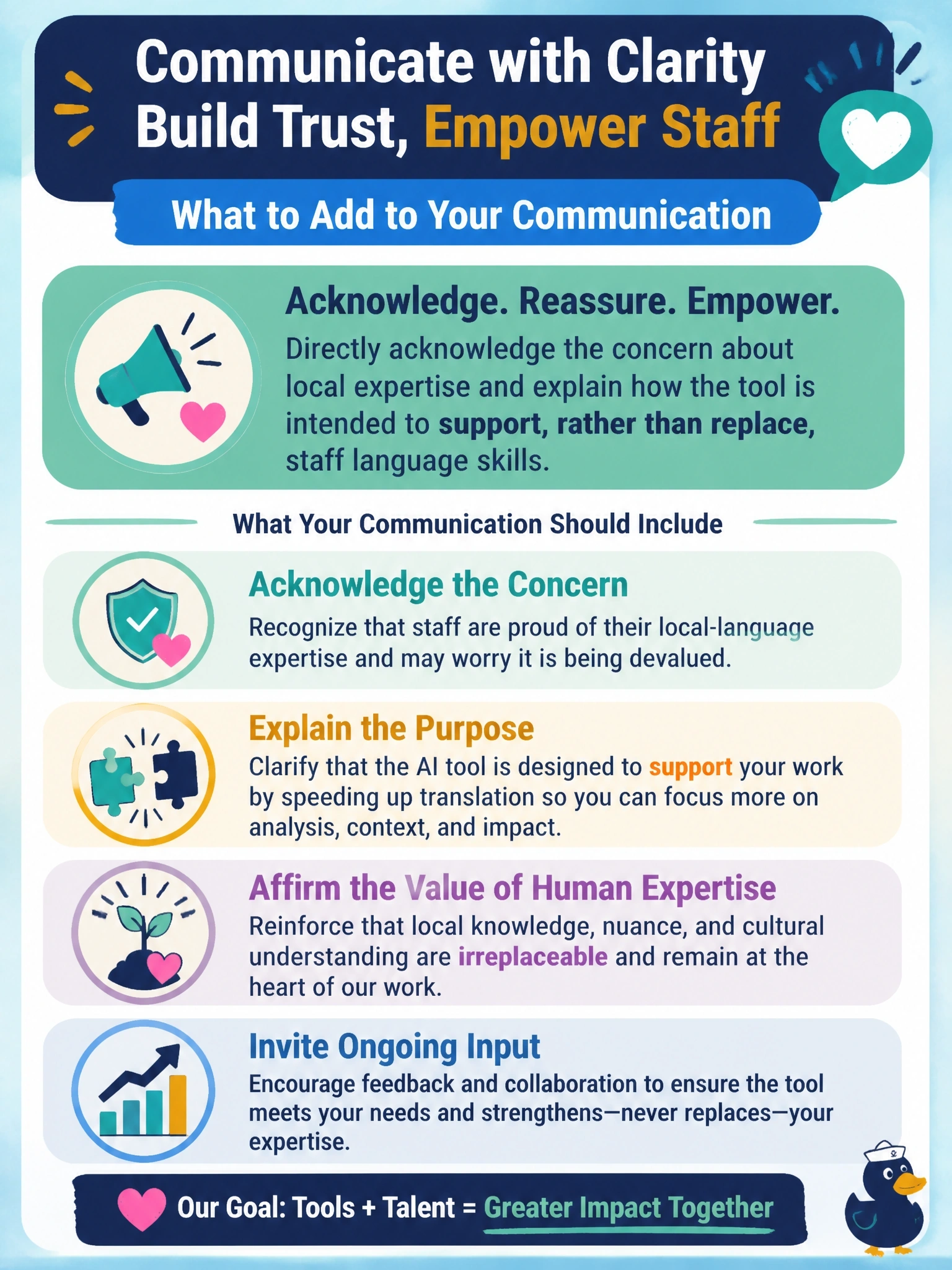
Leadership staying quiet here doesn't read as neutral — it reads as confirmation of exactly what your staff are afraid of. Name the concern about local-language expertise directly and explain how the tool's meant to support, not replace, those skills, and you close the trust gap silence leaves wide open.
Full Explanation
The correct move is to name the staff's concern directly and explain that the tool is meant to support, not replace, their language expertise — that directness is what closes the trust gap silence or vagueness leaves open. Emphasizing cost savings misses the point entirely: staff aren't worried about the organization's budget, they're worried about their own professional value, so leading with savings numbers reads as tone-deaf to the actual concern raised. Staying silent about language expertise doesn't make the worry disappear; unaddressed concerns about job relevance tend to calcify into resentment or quiet resistance rather than fade on their own. Routing reassurance through a single respected staff member's informal word of mouth also falls short, because it's not a substitute for leadership's own accountable, consistent messaging — one person's paraphrase can't reach the whole organization the same way, and it leaves leadership's actual position unstated. What ties these together: an effective response to a specific workforce anxiety has to speak to that anxiety by name, come from leadership itself, and travel through the organization's primary channels rather than proxies or omission. A good operational check: before publishing any change communication, ask whether it explicitly answers the concern staff are actually voicing, in leadership's own words.