
A commercial construction firm plans to use an AI tool to flag safety-inspection anomalies. Field supervisors worry the tool will be used to discipline them for missed items. The firm's leadership intends to use the tool only to prioritize which sites need follow-up visits, not for individual performance evaluation. What is the most effective way to communicate this?
Select an answer to reveal the explanation.
Short Explanation
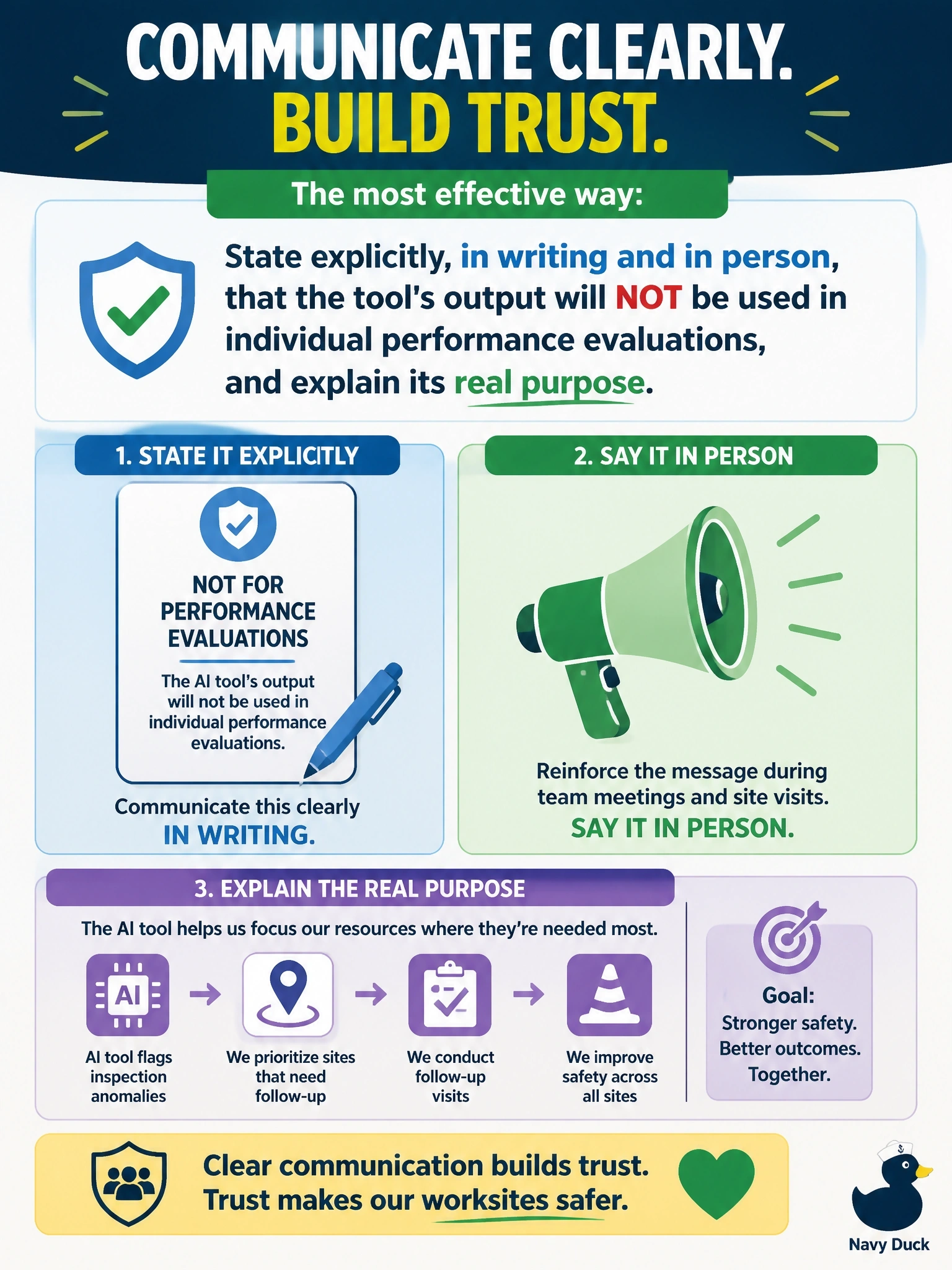
An unaddressed worry only hardens the longer you let it sit. Leadership needs to tell your supervisors, plainly and more than once, that the tool's output won't be used in individual performance evaluations, and spell out its real purpose so that worry has nowhere left to grow.
Full Explanation
Because the specific fear is about individual discipline, leadership needs to directly and explicitly address that fear, in multiple channels, along with a clear explanation of the tool's real purpose. Letting supervisors draw their own conclusions based on how the tool happens to be used over time leaves the purpose ambiguous, which lets fear and rumor persist instead of resolving them. Telling supervisors the tool's use is confidential until every rollout detail is finalized withholds information from people who have a legitimate stake in understanding how a tool affecting their evaluations will be used — that isn't a justified reason for secrecy. Addressing the concern only if a supervisor happens to ask during a routine check-in is purely reactive, meaning anyone too anxious or hesitant to raise it directly never gets the clarification they need. The operational check: put the non-evaluation commitment in writing, repeat it in person at a team meeting, and confirm every supervisor — not just the ones who ask — hears it directly.