
A state agency is rolling out an AI tool to help caseworkers triage benefit applications. Caseworkers fear the tool signals eventual job elimination. In reality, the agency plans to use the tool to reduce backlog while keeping caseworkers focused on complex cases and client interaction. What should the agency's communication strategy do?
Select an answer to reveal the explanation.
Short Explanation
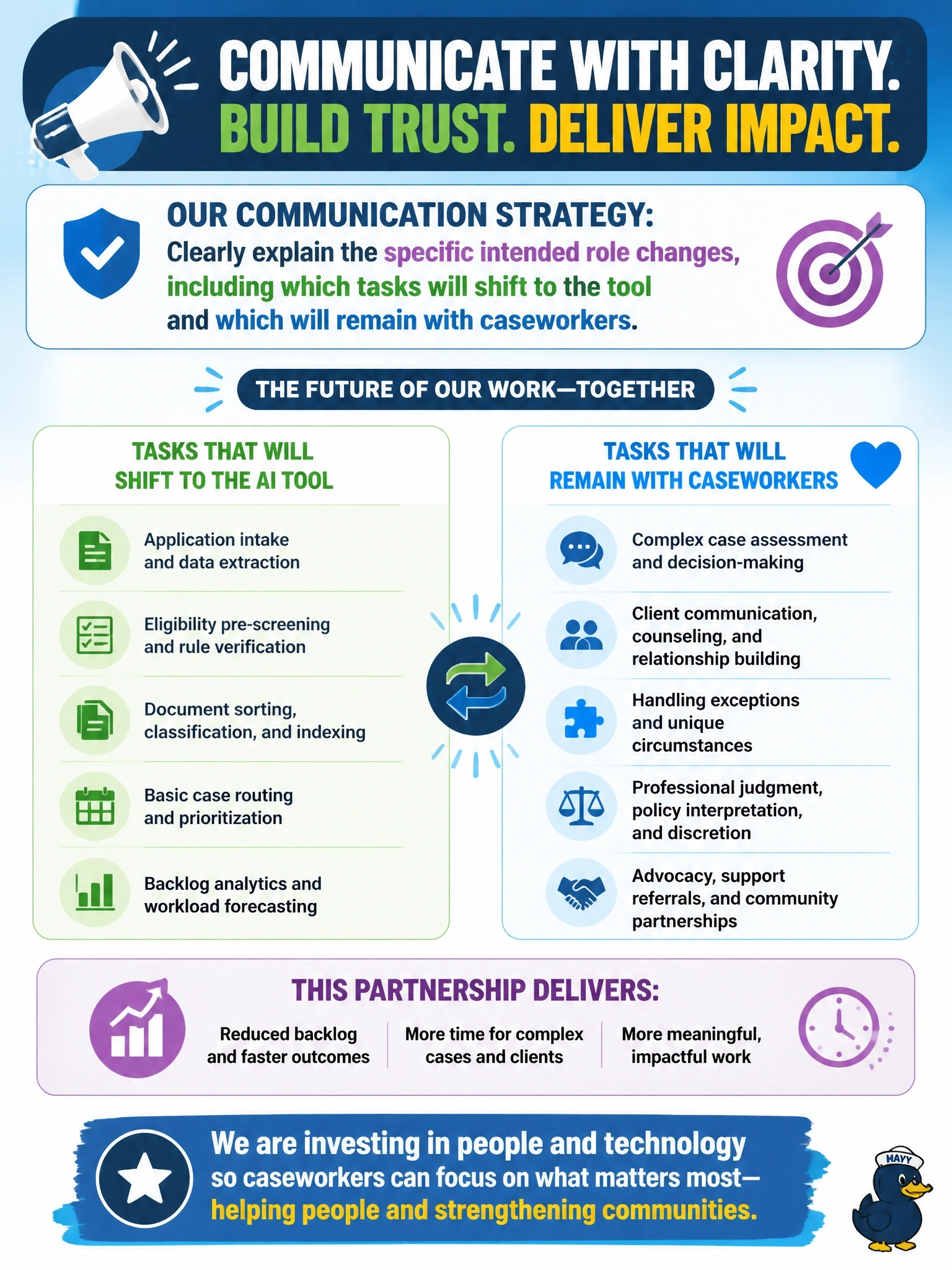
Think about what happens when you leave a rumor unanswered — people fill the silence with their worst fears. The honest move is to name the specific tasks that will shift to the tool and the ones that stay with caseworkers, instead of a vague blanket reassurance that isn't even true.
Full Explanation
Caseworkers deserve a specific, honest account of what is actually changing, since the agency does intend to shift some tasks to the tool while keeping complex casework and client interaction with people. Promising that jobs won't change in any way is false given the agency's real plans, and it will undermine trust the moment staff notice their day-to-day work shifting anyway. Avoiding the conversation about role changes for a full year leaves a long window for anxiety and rumor to grow unaddressed, which tends to harden resistance rather than prevent it. Directing caseworkers to submit written questions to IT routes concerns to a channel that can only answer narrow technical issues, not the workforce-role fears that are actually driving the resistance. The operational check: leadership should be able to state, task by task, what moves to the tool and what stays with a person — if that list doesn't exist yet in writing, the communication isn't ready to go out.