
A county government is building a cross-functional team to evaluate AI tools for public-records requests. The team includes the records manager and an IT analyst. A council member asks why no one from the county attorney's office is involved, given that records requests involve legal exemptions. What is the best response?
Select an answer to reveal the explanation.
Short Explanation
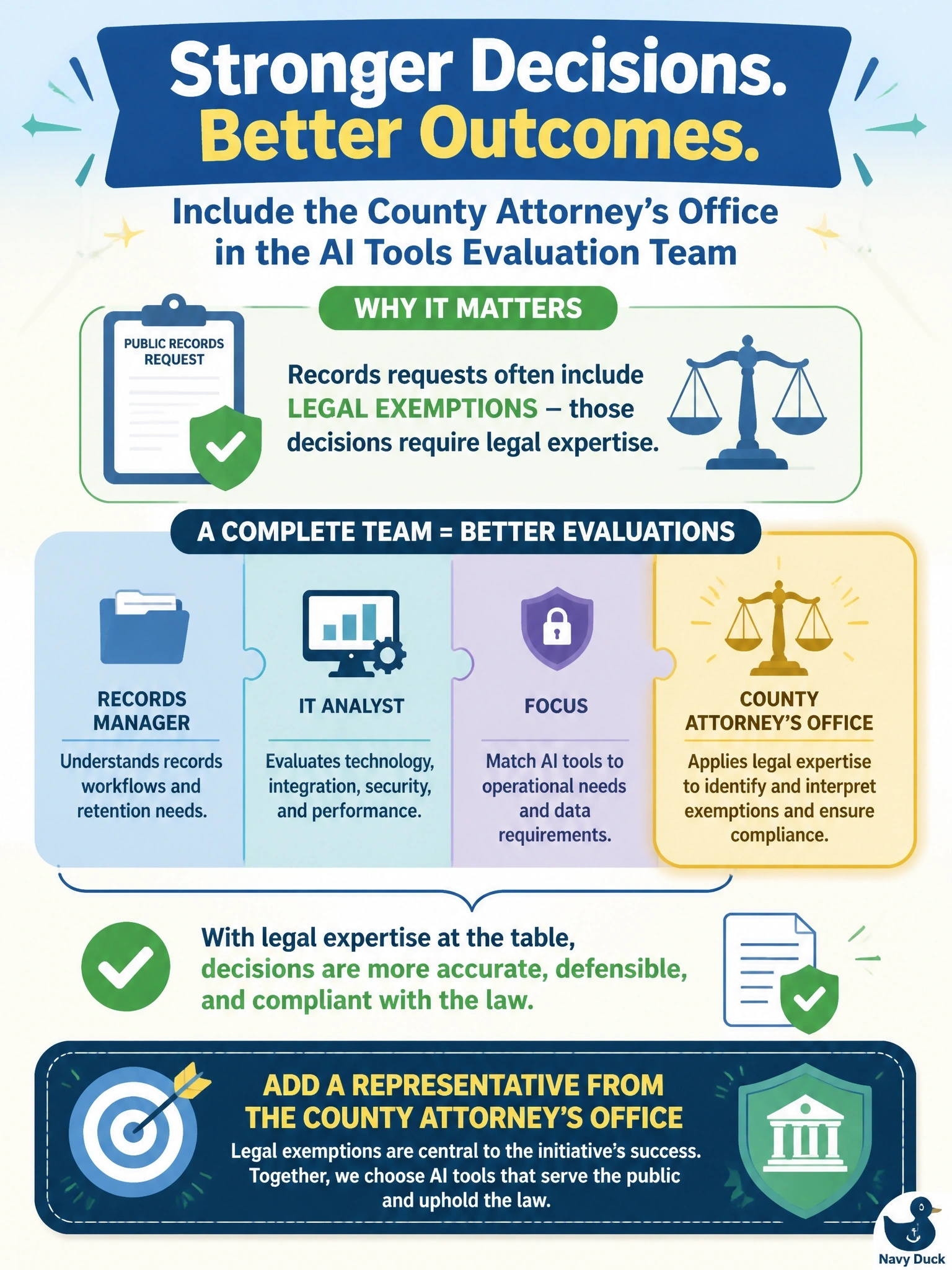
Think of it like this: you wouldn't sign a contract without a lawyer reading the fine print, and records requests are full of legal fine print in the form of exemptions. Since those exemptions sit at the center of this initiative, the team needs a real seat at the table from the county attorney's office, not an informal workaround.
Full Explanation
Legal exemptions are central to how public-records requests are handled, so the team needs a formal representative from the county attorney's office, not an informal or substitute arrangement. Relying on ad hoc review that only happens when the IT analyst happens to have a question risks missing legal issues that a non-lawyer wouldn't know to flag in the first place — you can't catch what you don't know to look for. Assuming the records manager's general legal familiarity is equivalent to legal expertise understaffs a function that carries real regulatory consequence; general knowledge isn't the same as formal legal review. Waiting to add legal representation until after the tool has already been selected and implemented is too late to shape decisions that should have been informed by legal review from the start — by then, the choices are already locked in. The operational check: confirm a named attorney's-office representative sits on the team before tool evaluation criteria are finalized, not after a vendor is chosen.