
A community foundation is forming a team to pilot an AI tool that drafts responses to grant applicant inquiries. The team includes a program officer and a data-savvy volunteer, but no one has been assigned responsibility for deciding whether draft responses are accurate and mission-appropriate before they go out. What is the most important step the foundation should take?
Select an answer to reveal the explanation.
Short Explanation
A kitchen with three cooks and no one plating the dish is still going to send out a mess, no matter how good the ingredients are. The fix here isn't more hands, it's naming one person with clear accountability, so you always know who signed off before a response ships.
Full Explanation
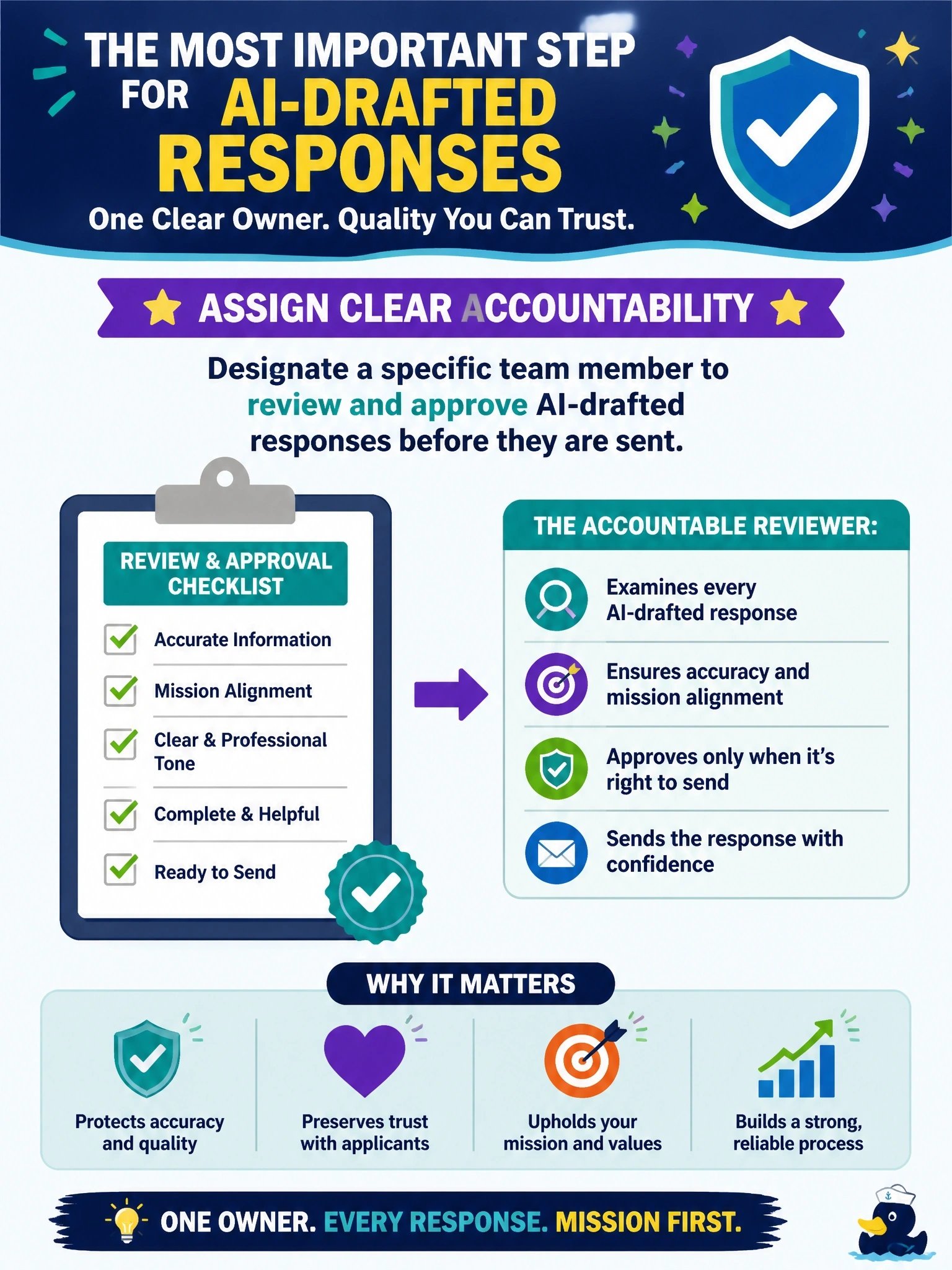
The gap here is accountability, not staffing volume: someone specific needs clear responsibility for judging whether AI-drafted responses are accurate and mission-appropriate before they go out. Expanding the team to include more volunteers adds people without designating who is actually responsible, which diffuses rather than clarifies accountability and can create a false sense of coverage — more reviewers isn't the same as one owner. Instructing the tool to only draft responses to low-risk inquiries narrows its scope but doesn't solve the underlying accountability gap for whatever inquiries remain in use; the review problem just moves with the tool. Requiring the executive director to personally approve every AI-drafted response is impractical and unscalable, over-centralizing approval at the top instead of assigning clear ownership at the working level closest to the work. The operational check: name one accountable reviewer by title, define what accurate and mission-appropriate mean for this context, and confirm no response goes out without that person's sign-off.