
A homebuilding company is starting an AI initiative to speed up permit-document review. The project team currently consists only of the IT director and an external AI vendor. No one from the legal or compliance function has been included, even though permitting documents carry contractual and regulatory risk. What should the company do before proceeding further?
Select an answer to reveal the explanation.
Short Explanation
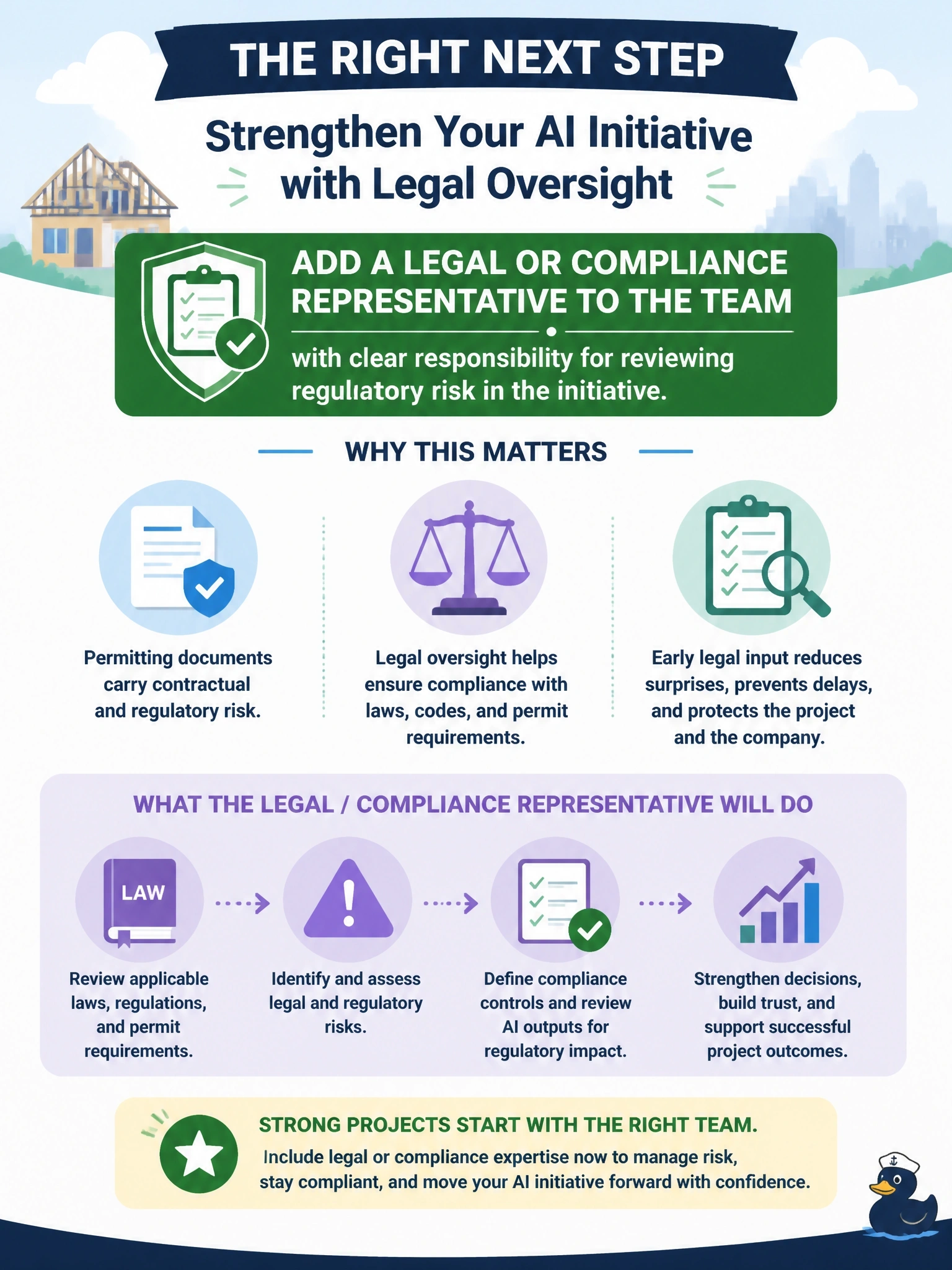
Building a house without an inspector on site means a great crew but nobody watching for the risk that matters most. Since permitting documents carry real regulatory and contractual weight, your team needs a legal or compliance voice with clear ownership before work moves any further.
Full Explanation
Permitting documents carry real regulatory and contractual risk, so the team needs a legal or compliance representative with explicit, named accountability for that risk area — not just technical expertise from IT and a vendor. Asking the vendor to bolt on a regulatory-compliance module mistakenly assumes software features can substitute for human legal judgment and accountability, which they cannot; a tool can flag issues, but it can't own the risk. Proceeding with the pilot and involving legal only if a contractual dispute arises is reactive rather than proactive — waiting for a dispute is exactly the failure mode that cross-functional team composition is meant to prevent. Having the IT director independently research the relevant regulations asks someone to take on a role outside their expertise and accountability, which doesn't create the clear ownership the initiative needs. The operational check: before the pilot proceeds further, confirm a named legal or compliance owner is on the team roster with defined review responsibilities, not just an escalation contact for if something goes wrong later.