
An international relief NGO's executive director publicly supports piloting AI to triage incoming aid requests, but has not identified anyone within program teams to advocate for the tool day-to-day or answer frontline staff questions. Frontline coordinators are skeptical and default to old manual processes. What should the executive director do next?
Select an answer to reveal the explanation.
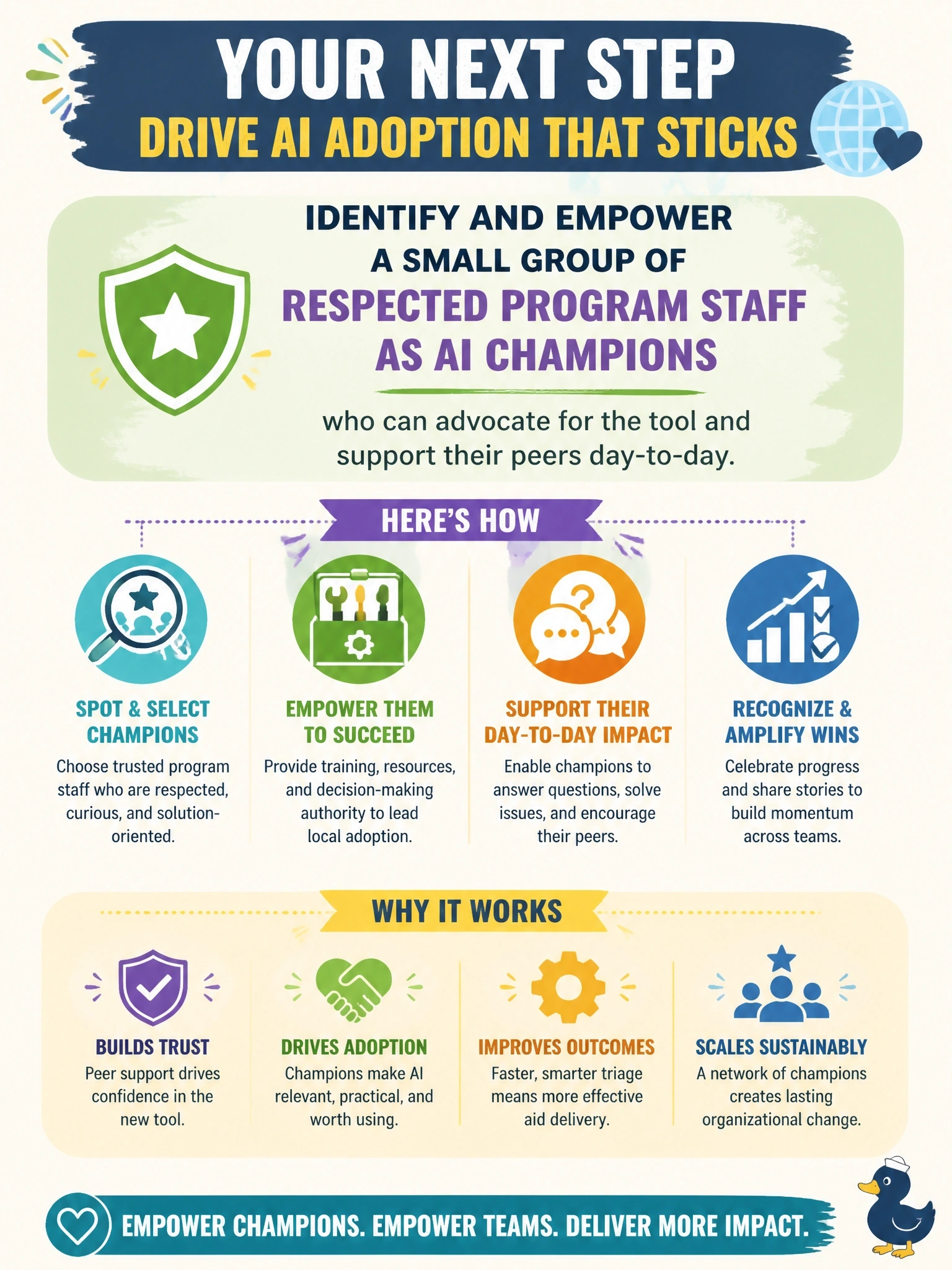
Short Explanation
Notice who your frontline coordinators actually trust — it's rarely a directive from the top, it's the peer working right next to them. Naming respected program staff as champions puts credibility exactly where the skepticism lives, so people see the tool proven out by someone they already believe.
Full Explanation
Executive sponsorship alone doesn't reach the frontline; sustained momentum requires trusted peers embedded in the program teams who can model use of the tool and answer day-to-day questions as they come up. Postponing the pilot until coordinators independently request the tool is a premature retreat that cedes leadership responsibility, waiting for organic bottom-up demand that's unlikely to emerge given the described skepticism — effectively abandoning the initiative. Issuing a written mandate requiring every coordinator to use the tool for every triage decision, regardless of comfort level, does not address the underlying skepticism and trust gap; forcing use before staff feel supported risks quiet resistance or workarounds. Routing all coordinator questions to IT substitutes a technical support desk for peer credibility, but IT cannot speak to whether the tool actually fits real program workflows, which is what builds trust among frontline staff. Champions succeed because they carry program-level credibility a policy memo or a help desk never will. The operational check: name specific, respected staff as champions, give them real time to support peers, and track whether manual-process defaults start dropping as a result.