
A general contracting firm's VP of Operations personally champions using AI for project-schedule risk forecasting and talks about it often in meetings. However, adoption has stalled at the project-manager level, and several project managers say they've never heard the executive team discuss why the initiative matters to the company's future. What is the most important gap the VP should close?
Select an answer to reveal the explanation.
Short Explanation
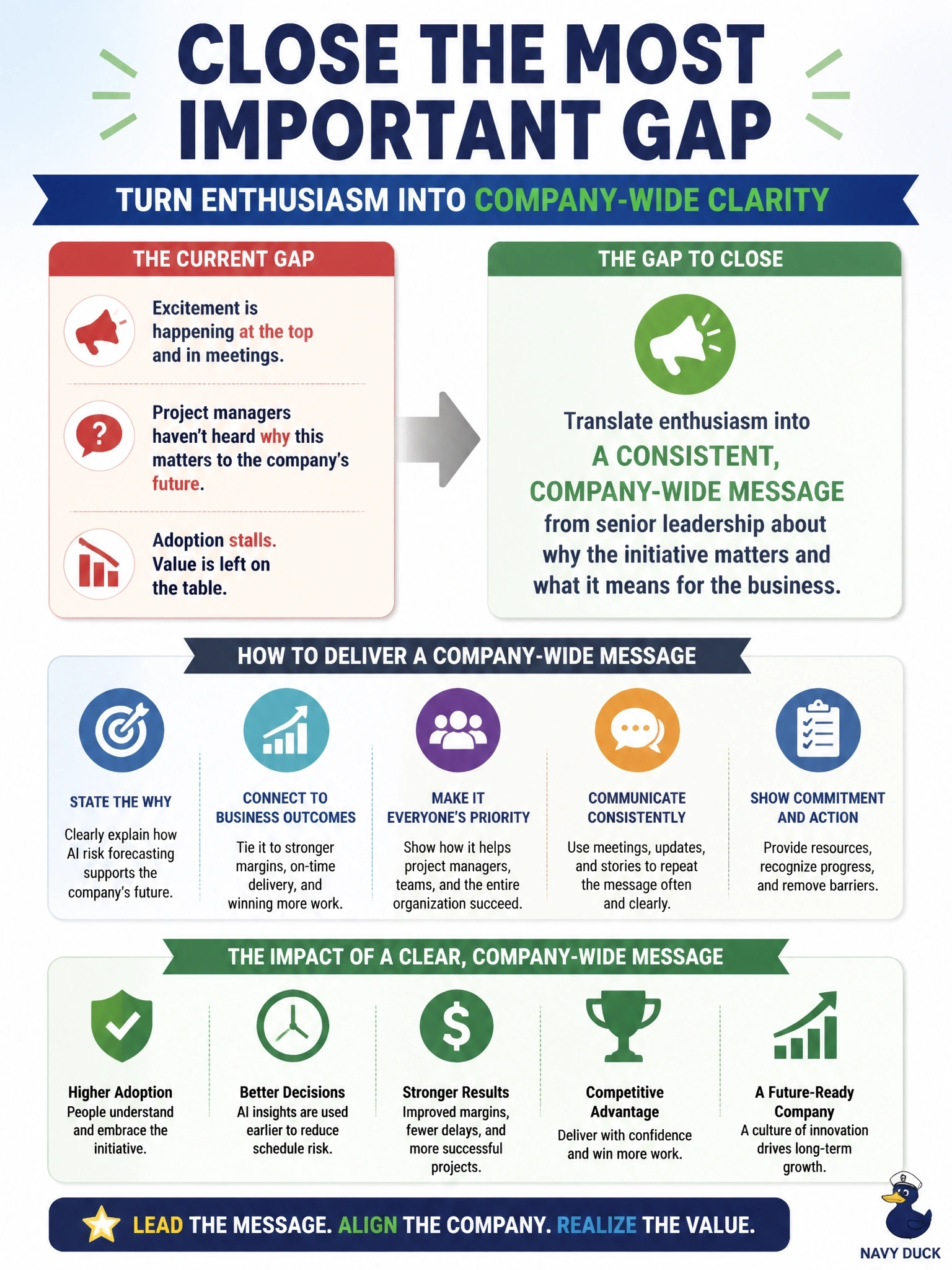
One executive cheerleading in meetings isn't the same as your whole leadership team standing behind something — it's a relay race, and the baton of sponsorship has to pass from one enthusiastic exec to a consistent, company-wide message, or your project managers down the line never start moving.
Full Explanation
One executive's personal enthusiasm is not the same thing as organizational sponsorship. Project managers need to hear a consistent rationale from senior leadership as a group — one that ties the initiative to the company's strategic direction — before they'll treat it as a real priority instead of a pet project. Replacing the current project managers with new hires assumes the problem is receptiveness, when the actual gap is that no one in leadership has explained why the initiative matters; swapping people does nothing to fix a message that was never delivered. Waiting for the next budget cycle to communicate further introduces an arbitrary delay — sponsorship messaging doesn't need new funding attached to it, and stalling only deepens disengagement in the meantime. Asking the vendor to present directly to project managers outsources a leadership responsibility; staff read vendor pitches as sales, not direction, which undermines the credibility that only internal executives can provide. The operational check: has every senior leader, not just the champion, delivered the same message about why this matters in a forum project managers actually attend? If not, that's the gap to close first.