
A regional farming cooperative supplies member farms with shared soil-monitoring equipment. The co-op wants to launch an AI-based advisory service using the sensor data this equipment collects, but member farms disagree about who has rights to that data and whether the co-op can use it beyond generating individual farm reports. What should co-op leadership establish before proceeding?
Select an answer to reveal the explanation.
Short Explanation
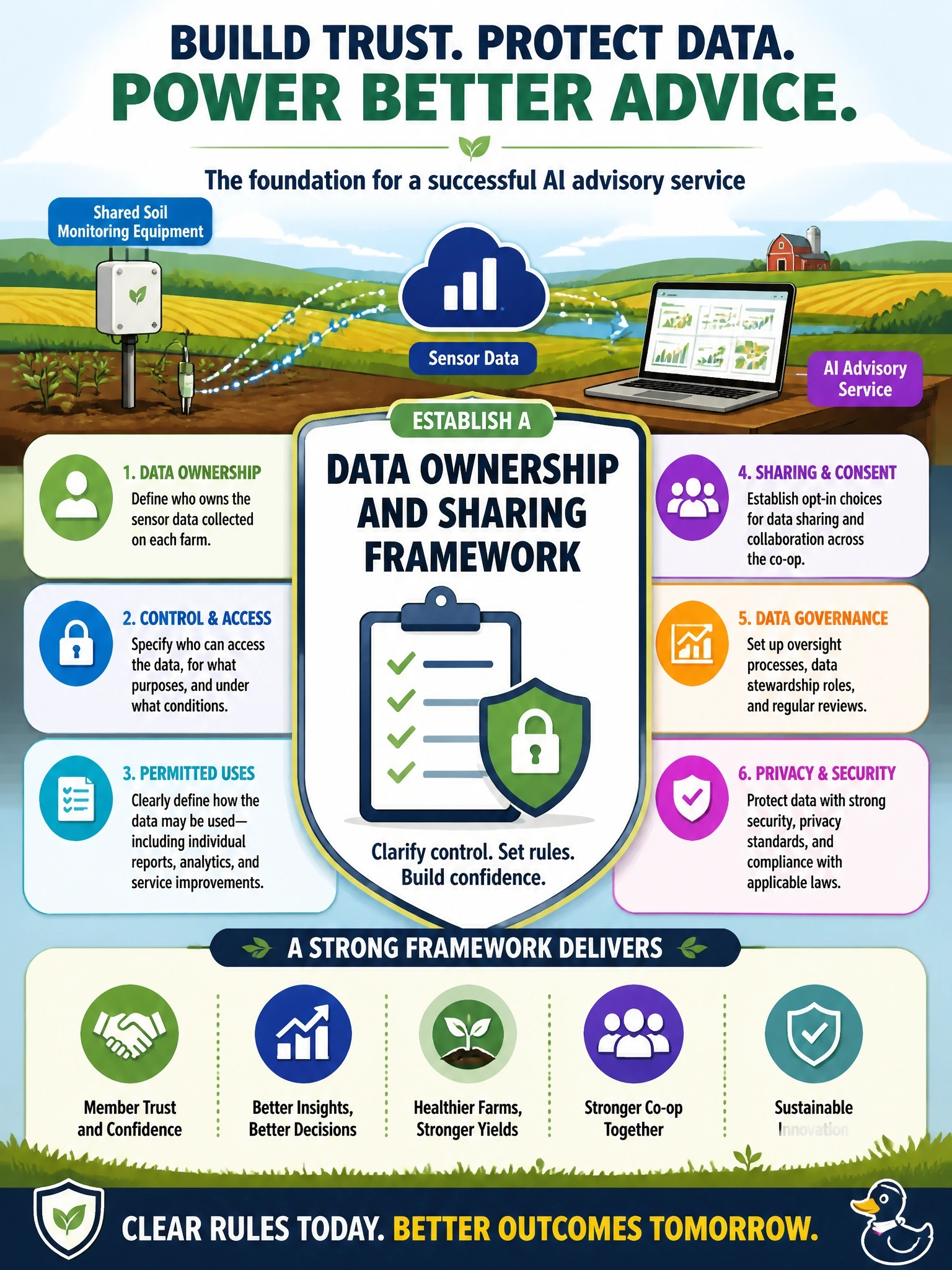
A shared toolshed where nobody agreed who owns the tools or who gets to borrow them needs that fight settled before you build anything on top of it. Here the data ownership framework is that agreement — who controls the sensor data, and what you can actually use it for — and it has to come before any AI initiative gets built.
Full Explanation
A data ownership and sharing framework directly targets the actual conflict described, a dispute over rights and consent, not equipment, revenue, or growth, by clarifying who controls the sensor data and the terms under which the co-op may use it. A revenue-sharing agreement that pays farms for AI-generated recommendations might eventually matter commercially, but it doesn't resolve the foundational question of who controls the underlying data or whether the co-op is even permitted to use it beyond individual farm reports. Upgrading all shared equipment to a single sensor model is a hardware fix that leaves the ownership dispute completely untouched, since standardizing equipment says nothing about who has rights to the data it produces. A marketing plan to recruit more member farms addresses cooperative growth, which is unrelated to the disagreement among existing members and does nothing to settle their dispute. The principle: before pooling or reusing data collected through a shared arrangement, leadership must establish a data ownership and sharing framework defining who controls the data and the terms of its use; this foundational governance question has to be resolved before any AI initiative built on that data can proceed.