
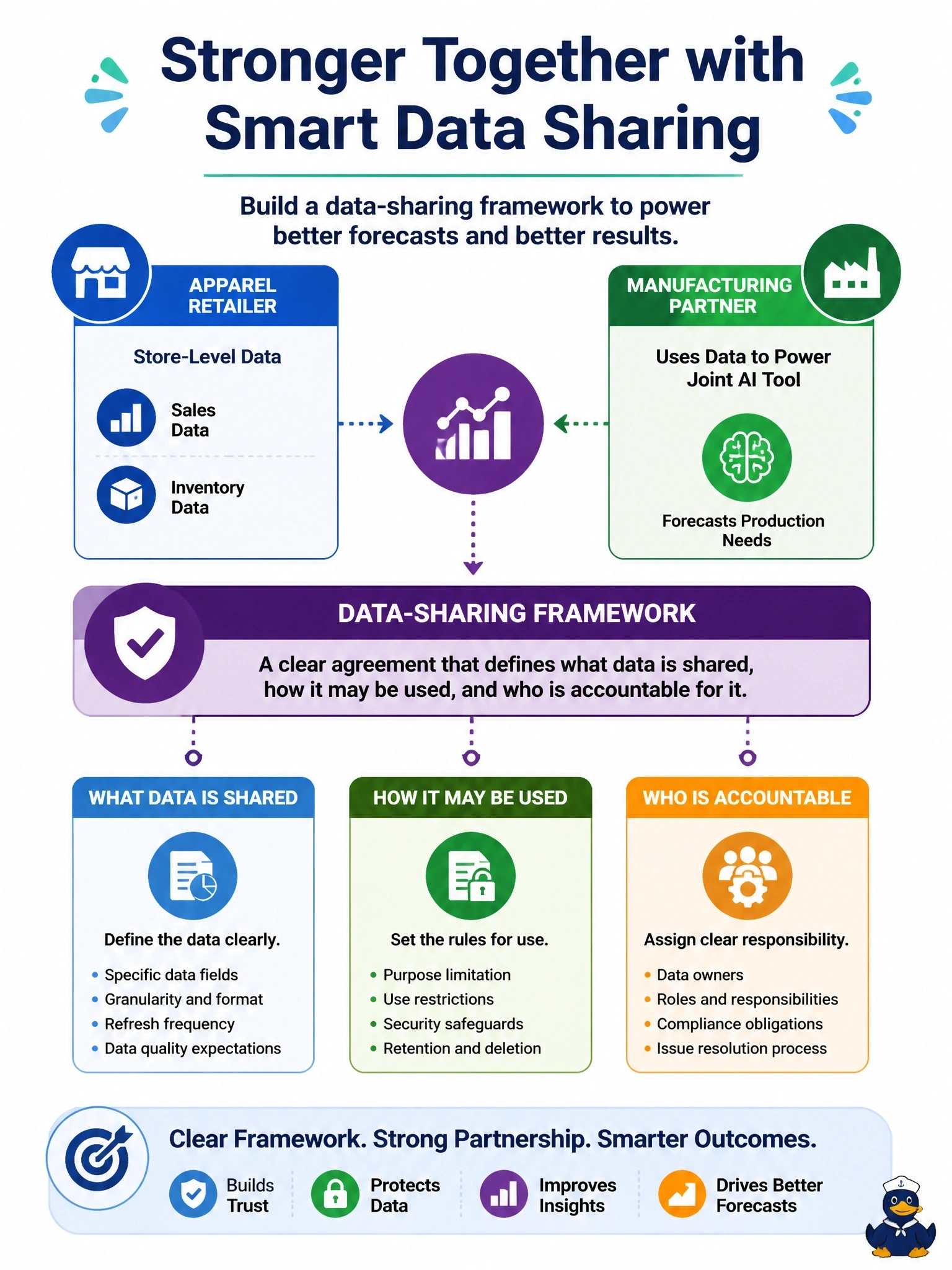
An apparel retailer wants to share its store-level sales and inventory data with a manufacturing partner to power a joint AI tool that forecasts production needs. Before any data changes hands, what should the two companies put in place?
Select an answer to reveal the explanation.
Short Explanation
Think of it like handing someone your house keys without agreeing on which rooms they can enter — you don't send the data until you've agreed on the rules. A data-sharing framework spells out what's shared, how it can be used, and who's accountable, before anything moves.
Full Explanation
The two companies should first agree on a data-sharing framework defining scope, permissible use, and accountability, since data is about to move between two separate organizations and neither party's obligations are yet defined. The marketing-campaign option is a downstream promotional activity that has nothing to do with the terms governing the data exchange itself. The shared point-of-sale system option conflates data sharing with merging technical systems; unifying point-of-sale platforms is a much larger, unnecessary infrastructure undertaking when the actual need is to share specific datasets under agreed terms. The performance-bonus option introduces an incentive structure tied to outcomes, but it does not address what data is shared, how it can be used, or who is responsible for it — the basic governance questions that must be settled first. The principle: any cross-company data exchange supporting an AI initiative needs a sharing framework establishing scope, use, and accountability before the data itself moves, rather than jumping to commercial or technical arrangements that assume those terms are already settled.