
A regional hotel chain has invested in modern cloud-based property management systems at every location, and its guest data is clean and centralized. Front-desk and housekeeping staff, however, have seen two prior technology rollouts fail and openly say "this will be forgotten in six months like the last one." What is the greatest risk to the chain's planned AI-powered guest-service assistant?
Select an answer to reveal the explanation.
Short Explanation
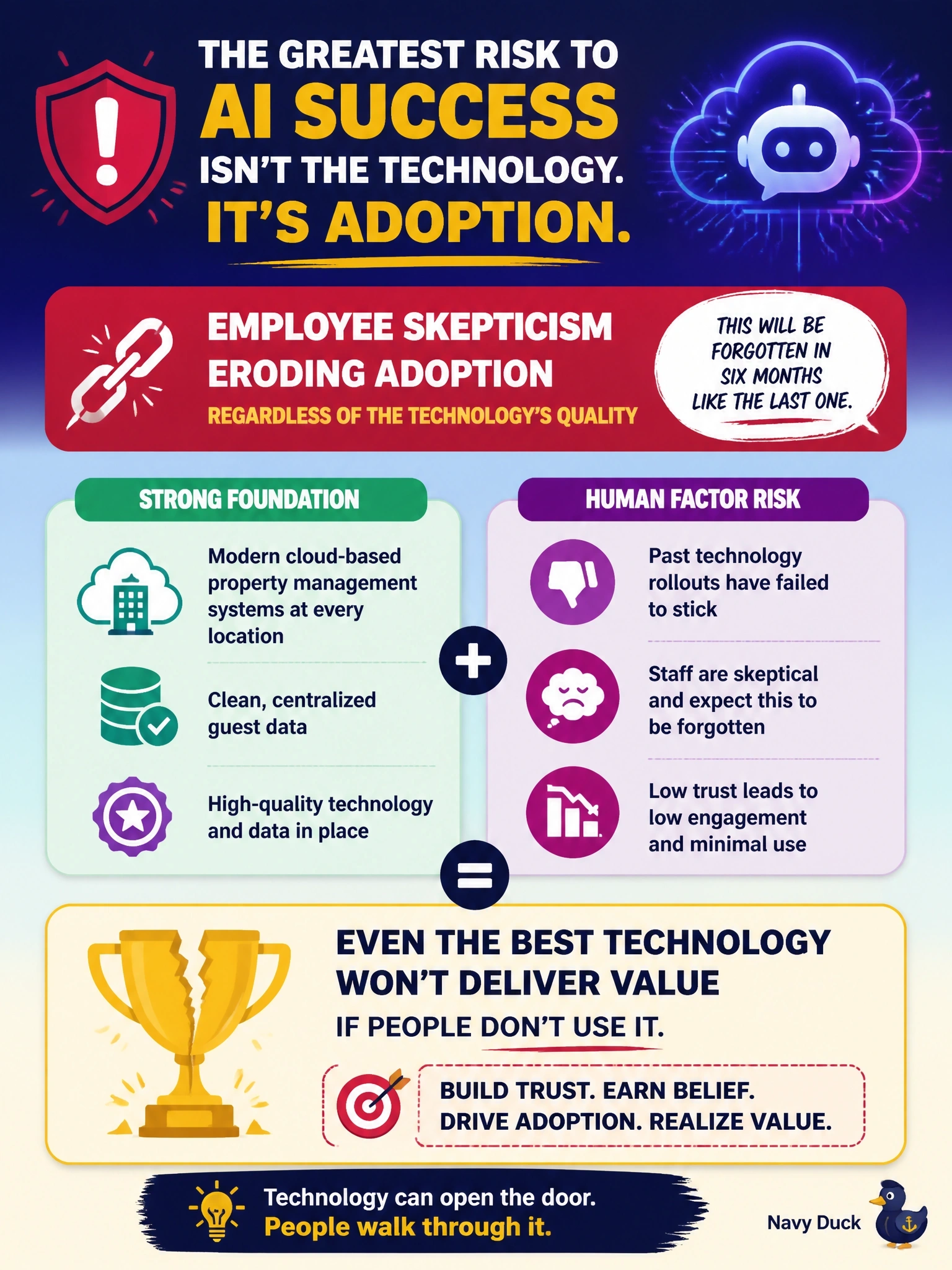
Two failed rollouts have taught the front-desk and housekeeping staff a lesson, and it isn't a good one: "this will be forgotten in six months." You can have the cleanest data and the newest cloud systems in the world, but if the people who touch the tool every day have already checked out, the adoption never happens. That's what makes employee skepticism the real threat here, not the technology itself.
Full Explanation
Even a technically excellent tool fails if the people expected to use it have quietly decided not to engage, and the staff's comment about past rollouts is a direct signal of low cultural readiness. That makes employee skepticism the greatest risk here. Citing insufficient technical infrastructure is incorrect because the stem explicitly describes modern, cloud-based systems already in place at every location. Citing poor data quality is incorrect for the same reason on the data side: the stem states the guest data is clean and centralized. Raising a missing governance framework points to a real long-term consideration, but the scenario gives no indication of a specific governance failure, while it gives a clear, direct signal about staff attitude toward change. The general lesson: readiness risk should be weighted toward the dimension the scenario provides concrete evidence for, since a technology and data foundation cannot overcome an organization that has already disengaged.