
A utility's AI assistant for customer service occasionally fabricates plausible-sounding but incorrect information about rate plans. What is the most important control to prioritize?
Select an answer to reveal the explanation.
Short Explanation
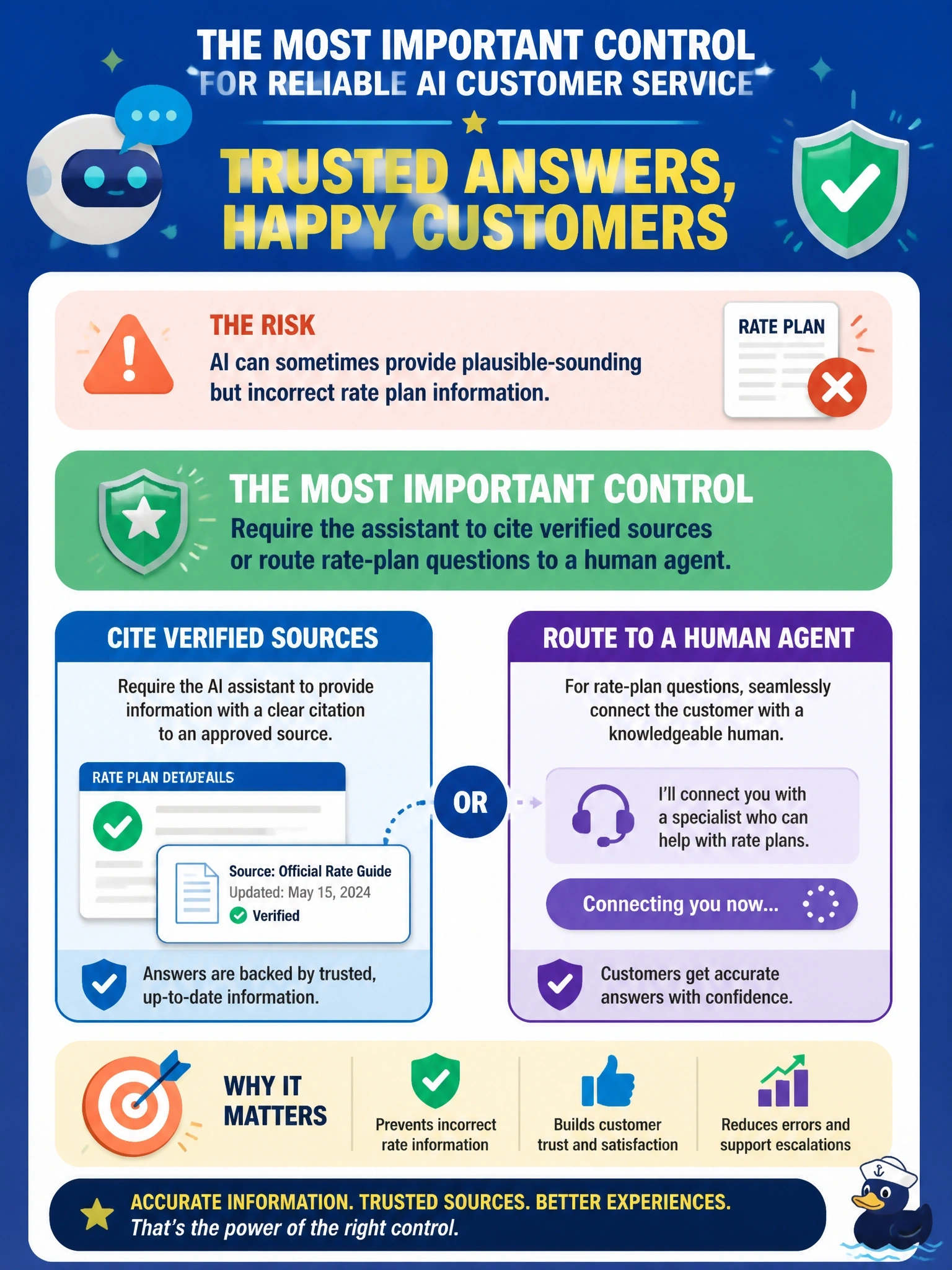
A tour guide who makes something up rather than admitting they don't know still sounds confident — and still gets it wrong, exactly like a hallucinating chatbot on rate-plan details. The fix isn't scolding it after the fact or shrinking what it's allowed to say; it's grounding answers in verified sources or handing tricky rate questions to a human agent before anything wrong reaches your customer.
Full Explanation
Requiring the assistant to cite verified sources, or route rate-plan questions to a human when that isn't possible, is correct because grounding answers in verified documents directly addresses the risk of fabricated information reaching customers on topics that require precision. Limiting the number of questions asked does nothing to prevent an incorrect answer within the questions that are still allowed, so the underlying risk remains. Automatic apologies address tone after an error has already reached the customer rather than preventing the fabricated information from being delivered in the first place. Replacing the assistant entirely is a disproportionate response that removes a useful tool instead of targeting the specific reliability gap with a proportionate safeguard. The general principle: mitigating hallucination risk on high-stakes topics works best by grounding answers in verified sources or routing to a human, not by limiting scope, softening tone, or abandoning the tool altogether.