
A utility's public-facing chatbot answers customer questions about outages and billing. During testing, someone found that it could be prompted into giving unsafe electrical safety advice. What should the company do before the chatbot goes live?
Select an answer to reveal the explanation.
Short Explanation
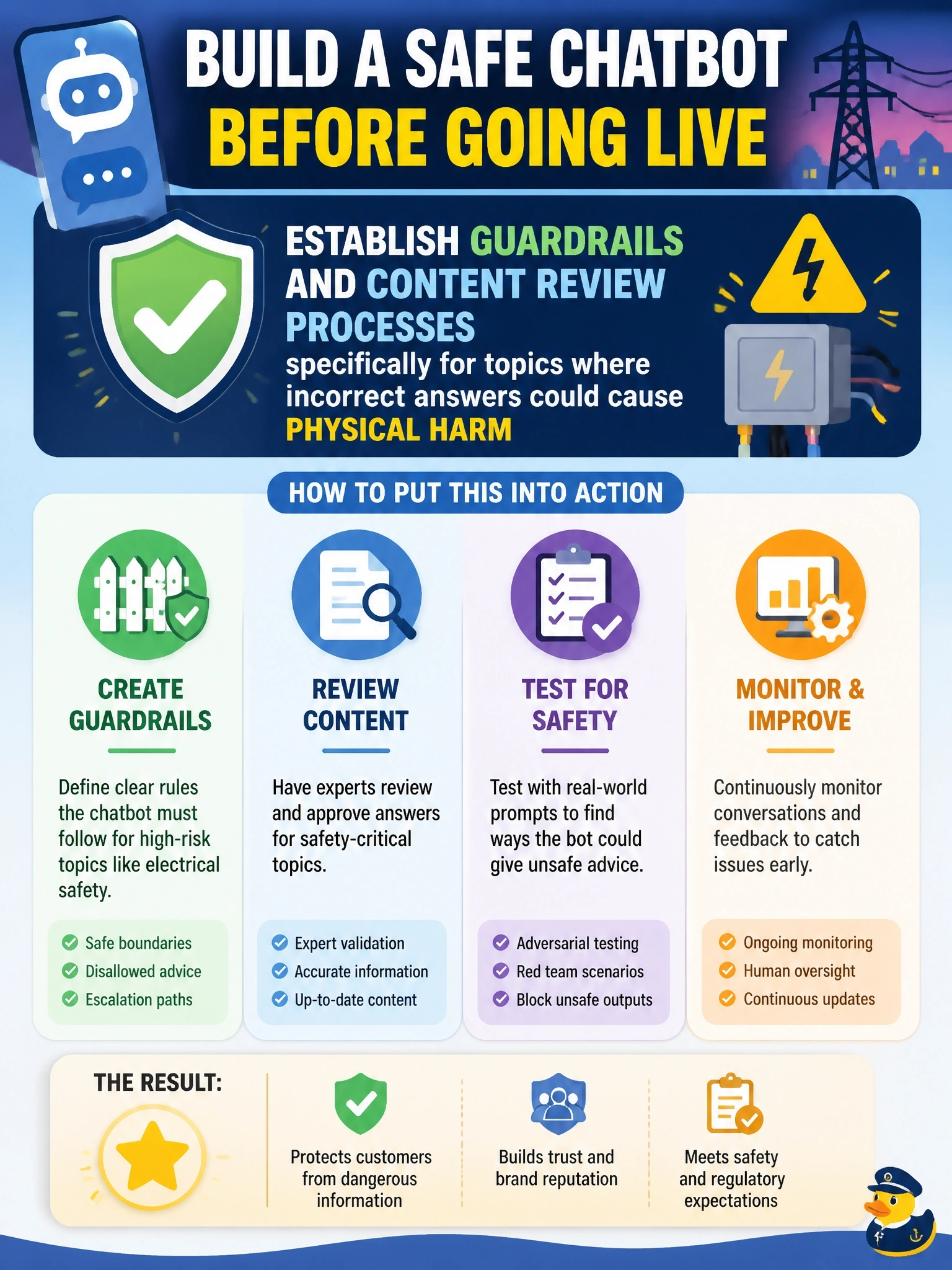
Think of it like childproofing a house — you don't slap one warning sign on the front door and call it done, you lock up the specific cabinets that hold the dangerous stuff. A generic disclaimer doesn't stop a chatbot from actually giving unsafe electrical advice, so you need targeted guardrails and review specifically for topics where a wrong answer could hurt someone. That's proportionate risk management, not an all-or-nothing fix.
Full Explanation
Establishing guardrails and content review for high-harm topics is correct because it directly targets the identified risk: topics where a wrong answer could cause physical harm need dedicated review, not a blanket fix applied to the whole system. Adding a general disclaimer and proceeding as planned treats a safety-critical gap as if a disclaimer resolves it, but a disclaimer does not prevent unsafe advice from being generated or acted on. Limiting the chatbot to internal employees indefinitely avoids the customer-facing risk by restricting access, but it does not fix the underlying issue and simply delays addressing it rather than resolving it. Postponing the launch until the chatbot can guarantee zero incorrect answers sets an unrealistic bar; no AI system can be guaranteed to produce zero incorrect answers, so waiting for that guarantee would indefinitely block a launch instead of applying a proportionate, achievable safeguard. The general principle: harmful-content mitigation should be proportionate and targeted at the specific high-risk topics identified, using guardrails and review rather than absolute guarantees or superficial disclaimers.