
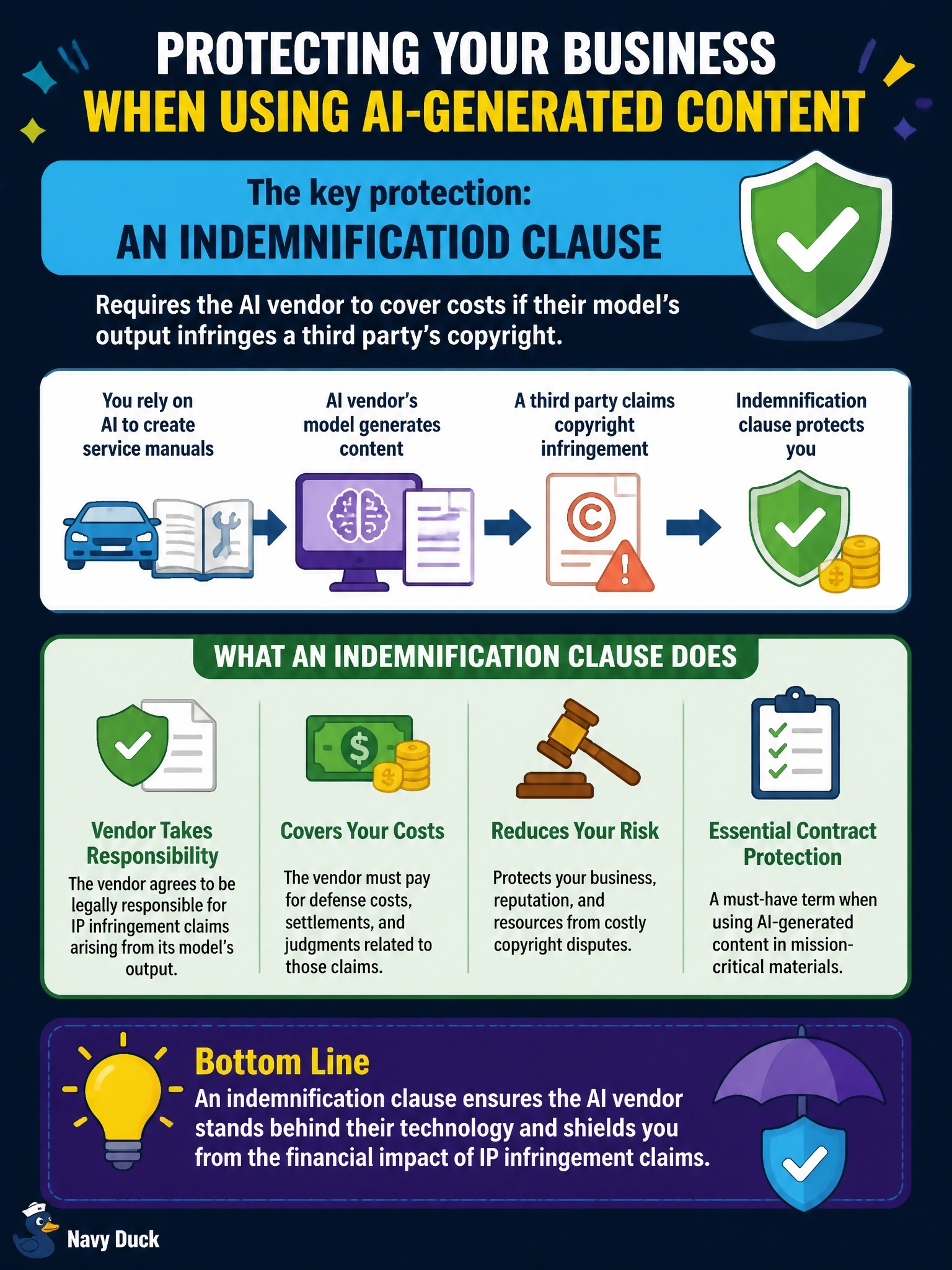
An auto manufacturer is negotiating a contract with a generative AI vendor to produce AI-generated service manuals. Which contract term most directly protects the manufacturer if the AI-generated content later turns out to infringe a third party's copyright?
Select an answer to reveal the explanation.
Short Explanation
Think of an indemnification clause like insurance built right into the contract — if the vendor's AI output turns out to infringe someone's copyright, the vendor, not you, is on the hook for the cost. Uptime guarantees, NDAs, and security audits are all useful, but none of them touch who pays when the content itself is the problem. Indemnification is the specific term that shifts that IP risk back onto the vendor.
Full Explanation
The indemnification clause is correct because it specifically shifts the financial and legal exposure of an IP infringement claim tied to the vendor's model output back onto the vendor, which is the exact risk described. The uptime guarantee addresses system availability, a valuable but unrelated protection that does nothing if the content itself infringes someone's copyright. The non-disclosure agreement protects the manufacturer's own confidential information from disclosure by the vendor, which is a separate concern from output ownership or infringement risk. The security audit right concerns the vendor's security practices, relevant to data protection, not to who bears the cost if the AI's output turns out to violate a third party's rights. The general principle: when adopting AI-generated content, indemnification is the specific contract mechanism that allocates IP infringement risk between the parties, and it should be evaluated separately from unrelated protections like uptime, confidentiality, or security audits.