
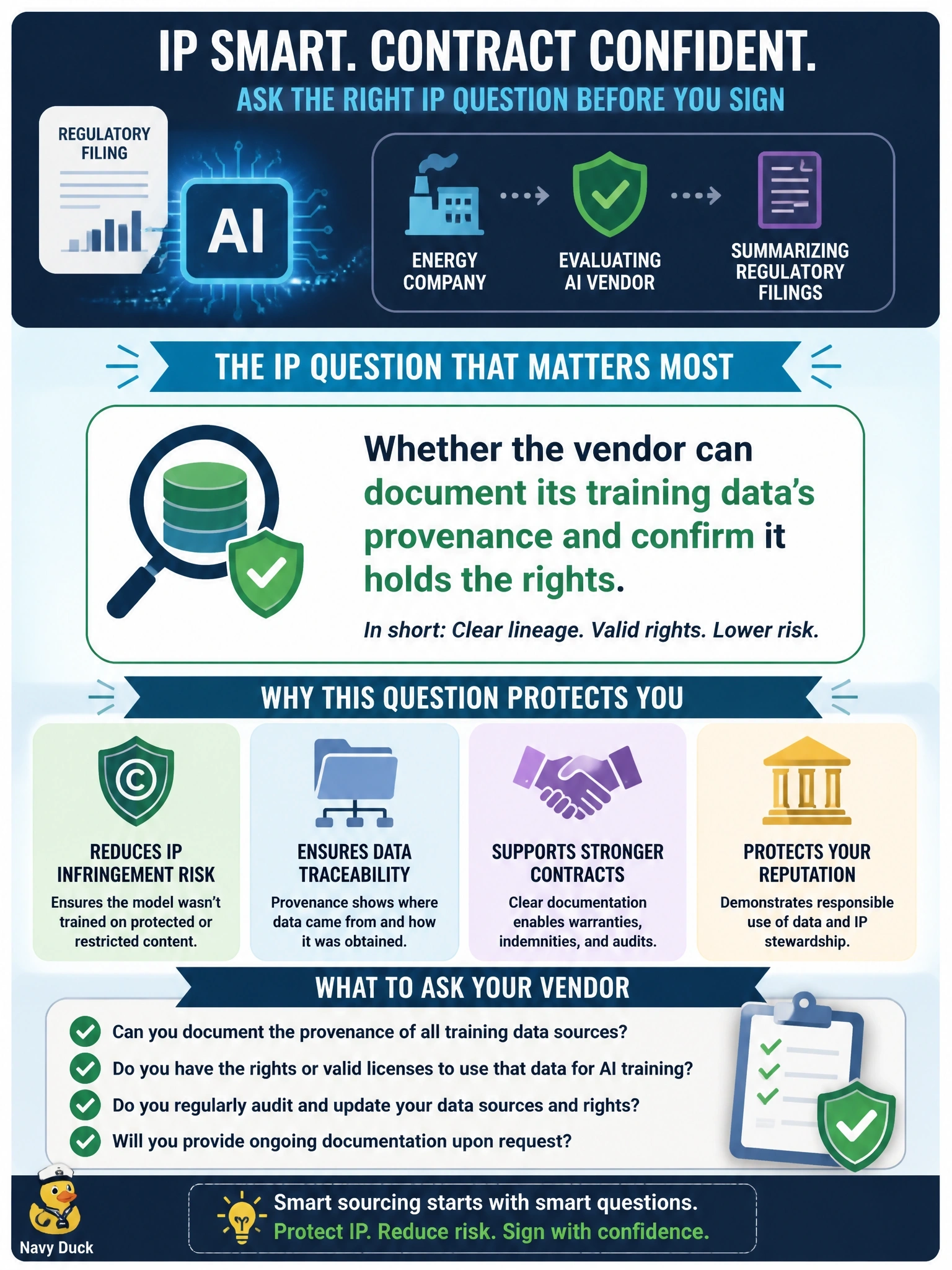
An energy company is evaluating a third-party AI vendor to summarize regulatory filings. The vendor's model was trained on data collected from a mix of public and possibly proprietary industry sources. What IP-related question should the sourcing team prioritize before signing the contract?
Select an answer to reveal the explanation.
Short Explanation
Think of training data like ingredients in a restaurant kitchen — if the chef can't tell you where the beef came from, you're taking on the risk of serving it anyway. Before signing with a vendor whose model may have been trained on proprietary industry data, you need proof of provenance: documentation that the data was lawfully sourced and the rights are clean. Skip that check, and any IP dispute buried in the vendor's supply chain becomes your problem too.
Full Explanation
Checking whether the vendor can document its training data's provenance is correct because IP risk in this scenario centers on whether that data was lawfully obtained and used; without documented provenance, the energy company cannot assess its exposure if a data-rights dispute later arises. Checking data center location addresses data residency, which relates to data security and jurisdiction, not whether the vendor had the rights to use the data that trained its model. Comparing model size is a technical performance detail that has no bearing on the legal question of data rights. Choosing a cheaper vendor despite unclear sourcing rewards selecting the option specifically because its data sourcing is unclear, which inverts the correct priority; unclear provenance should raise concern, not be offset by a lower price. The general principle: before adopting a third-party AI system, a business must verify the vendor's training-data provenance and rights, since unresolved IP risk in the supply chain becomes the customer's risk too.