
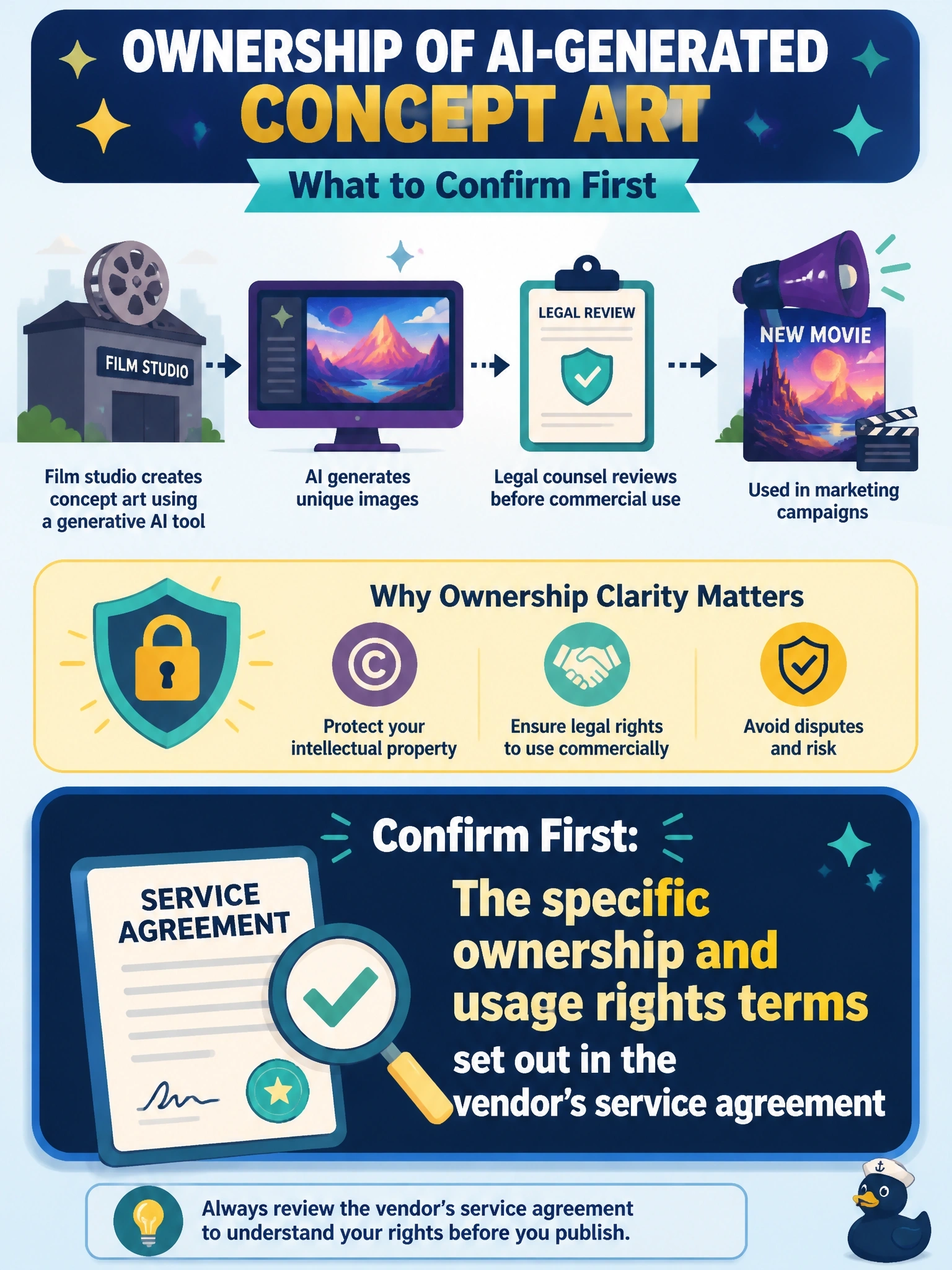
A film studio uses a generative AI tool, built on Amazon Bedrock, to produce concept art for marketing campaigns. Before the studio uses the images commercially, legal counsel wants to confirm who owns the output. What should the governance lead confirm first?
Select an answer to reveal the explanation.
Short Explanation
Think of a generative AI vendor's service agreement like a lease — it spells out who actually owns what comes out the other end, and that clause is different from one vendor to the next. You can't assume the studio automatically owns the concept art just because it commissioned it; the service agreement is where that answer actually lives. Read the fine print before you use anything commercially.
Full Explanation
Confirming the ownership and usage rights terms in the vendor's service agreement is correct because those rights for AI-generated output are set by the terms of that agreement, and those terms differ across providers; nothing about ownership should be assumed without checking the specific contract. Checking whether the images look sufficiently different from existing work addresses a different concern, potential similarity to existing copyrighted work, but does not answer the actual question of who owns the output the studio generated; an image can be original and still not be owned or freely usable by the studio if the contract says otherwise. Requiring attribution to the AI tool is a courtesy or marketing practice, not a legal determination of ownership. Trademarking the images jumps ahead before confirming the studio even has clear rights to use them commercially, which is premature and does not resolve the underlying ownership question. The general principle: ownership of AI-generated content is a contractual matter that must be confirmed with the specific vendor, not assumed as a default.