
A pharmaceutical company plans to use a GenAI tool to draft patient-facing educational materials about a prescription drug. Which factor represents the greatest regulatory compliance risk?
Select an answer to reveal the explanation.
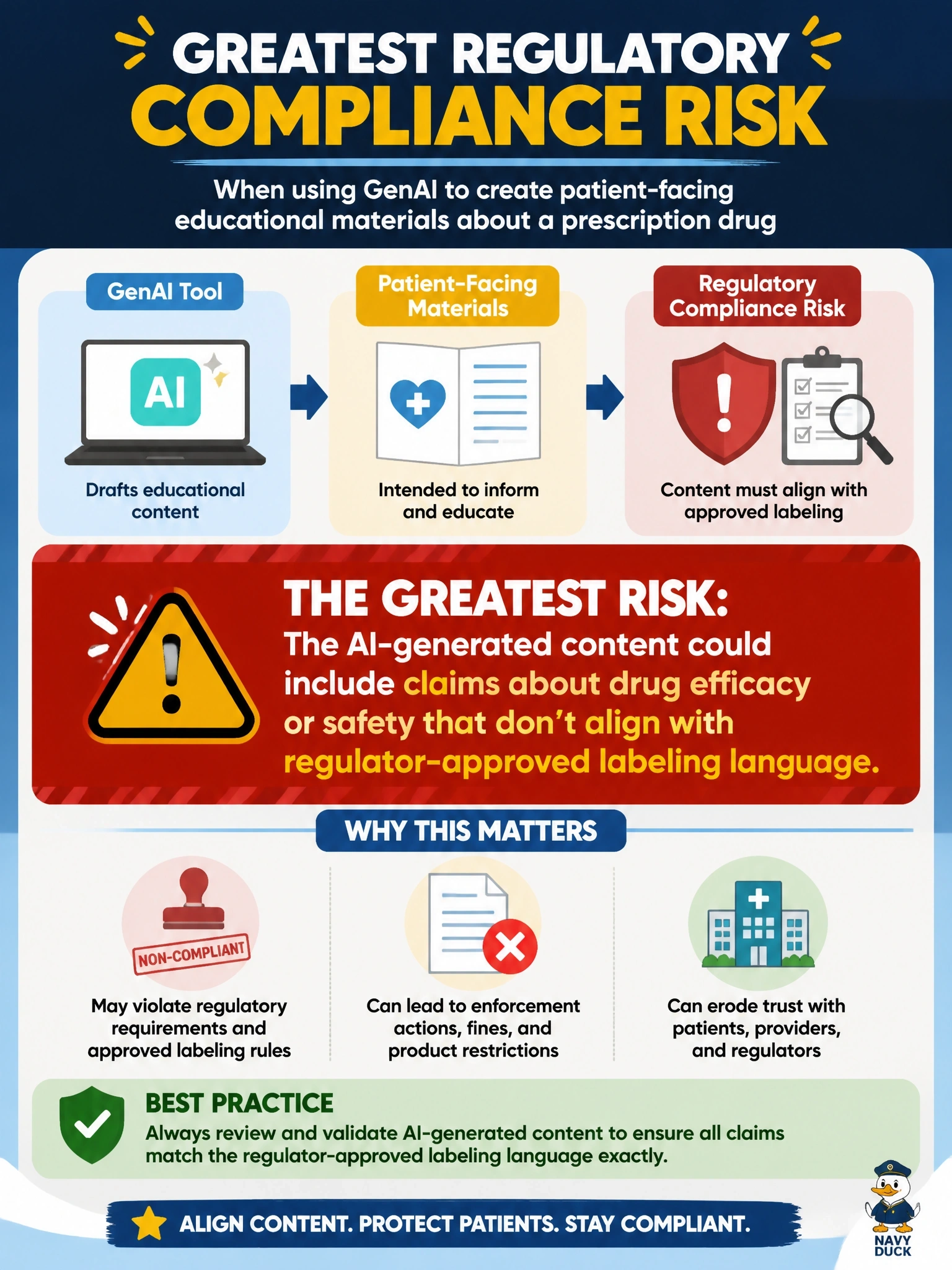
Short Explanation
Think of it like this: a drug's label isn't marketing copy, it's a legally vetted document, and anything an AI writes about that drug needs to match it word for careful word. If a GenAI tool drifts on an efficacy or safety claim, you've got content contradicting regulator-approved labeling — and that's the kind of mismatch that draws real scrutiny, not just a rewrite request.
Full Explanation
Claims about a drug's efficacy or safety that drift from regulator-approved labeling language create direct regulatory exposure, since pharmaceutical communications about a drug's effects are tightly controlled by health regulators — this is the compliance risk that most needs to be managed before publishing patient-facing content. Reading level is a genuine quality and accessibility concern, but it doesn't itself create regulatory noncompliance the way an unapproved efficacy or safety claim does. Production speed is a purely operational consideration with no bearing on whether the content is compliant. Branding consistency is a marketing and design concern, not a regulatory one. The general principle: when assessing compliance risk for AI-generated content in a regulated industry, the content's alignment with regulator-approved claims outweighs quality, efficiency, or brand considerations, because it's the one factor that can trigger regulatory action.