
A telecom company's legal team flags that a new region where it plans to launch an AI-driven customer support assistant has a comprehensive data-protection law similar to GDPR. What is the most appropriate leadership response?
Select an answer to reveal the explanation.
Short Explanation
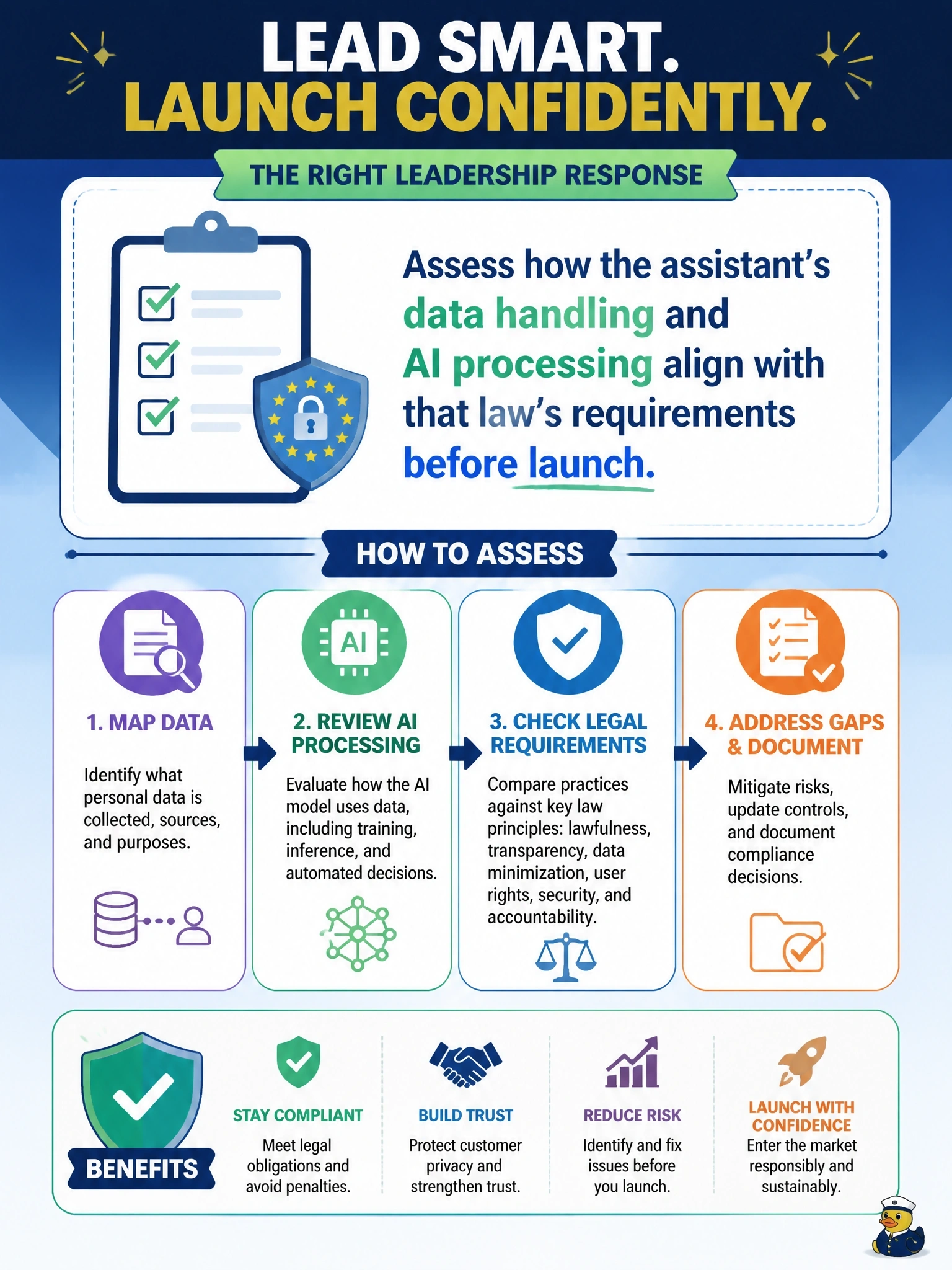
Think of it like this: when a new region's law looks like GDPR's cousin, you don't wait to find out the hard way whether it applies to you. Before flipping the switch on a customer-facing assistant, you check how its data handling stacks up against that law's actual requirements. That's basic due diligence — assess first, launch second.
Full Explanation
Assessing how the assistant's data handling aligns with the new region's law before launch is the direct, proportionate response to a flagged compliance risk. Assuming data-protection laws apply only to vendors and not to the company deploying the tool is a common misconception — the company making decisions about customer data and deploying the assistant typically retains its own obligations under such laws, regardless of which vendor built the underlying technology. Restricting launches to only unregulated regions is an overly limiting strategy that sacrifices real market opportunities rather than addressing the compliance question directly. Asking a vendor for a signed guarantee that removes the company's own obligations misunderstands how compliance responsibility works — a vendor contract can allocate certain duties, but it cannot eliminate the deploying company's own regulatory obligations to its customers. The general principle: a flagged regulatory risk calls for direct assessment against the law's requirements, not avoidance or an assumption that responsibility lies elsewhere.