
A bank is deploying a GenAI assistant that customer-service representatives use to look up account information. Which access-control principle should the bank apply?
Select an answer to reveal the explanation.
Short Explanation
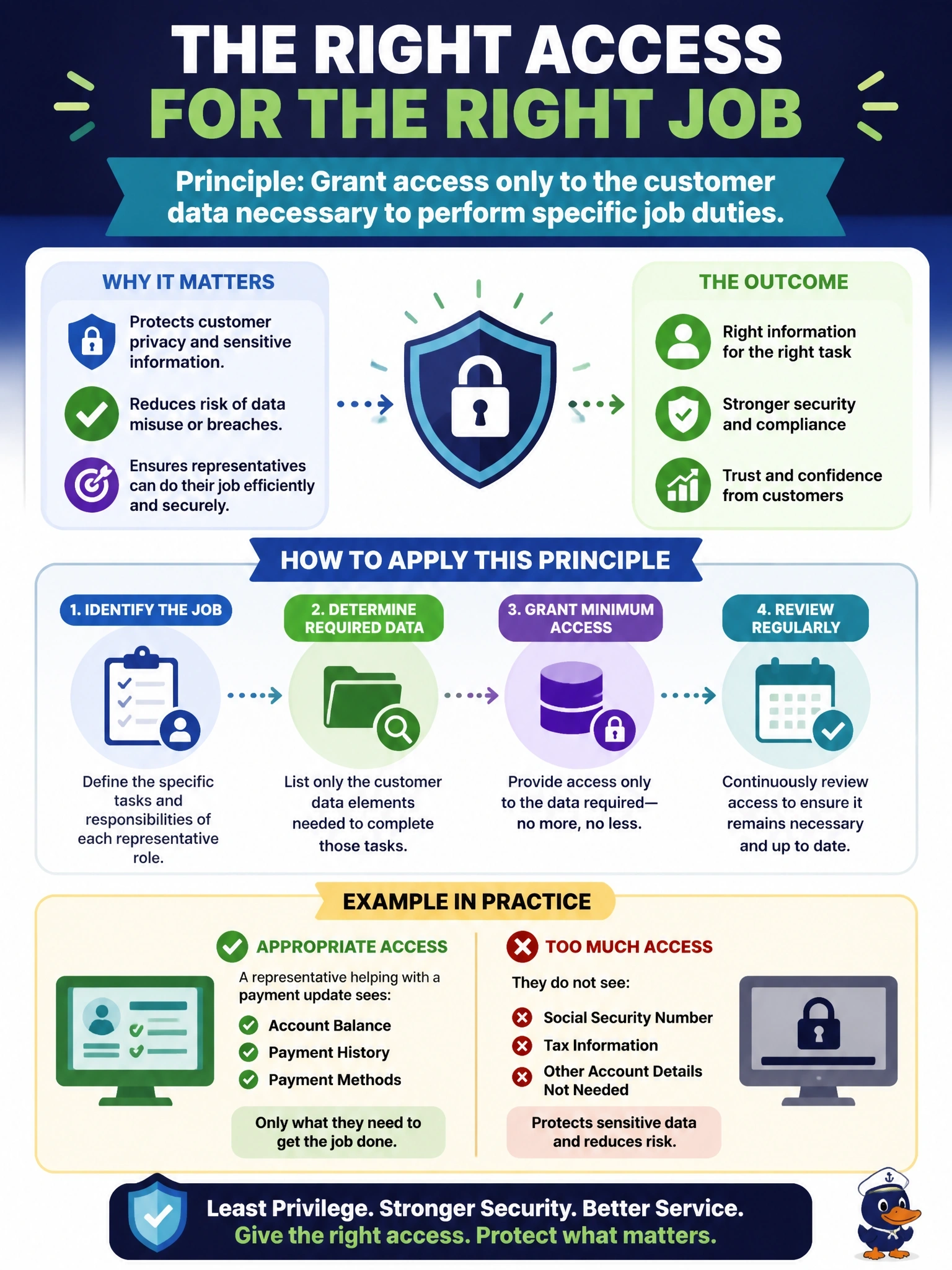
A bank teller doesn't need keys to every vault, just the one they're working — and representatives shouldn't need every customer's full record either. Give them access only to the account data their specific job actually requires, and you've applied least privilege the way a bank handling sensitive data actually needs to.
Full Explanation
Limiting representatives' access to the customer data necessary for their specific job duties reflects the need-to-know principle, which is the appropriate business-level access-control decision for a bank handling sensitive account information. Granting company-wide access so any team can help customers sounds convenient, but it needlessly expands the number of people who can view sensitive account data, increasing risk without a corresponding job-related need. Basing access on tenure ties data exposure to seniority rather than to actual job responsibilities, which is an arbitrary and irrelevant basis for access decisions. Giving the assistant itself unrestricted access to generate "the most complete answers" maximizes the system's exposure to sensitive data beyond what any single interaction requires, creating unnecessary risk. The general principle: access should be scoped to job-related need, not convenience, seniority, or a desire for completeness — that's the least-privilege standard a business owner is responsible for applying.