
A telecom company uses a GenAI tool to personalize marketing offers based on customer usage data. A regional regulator has recently issued guidance restricting automated decision-making that affects pricing without customer disclosure. What should the company's leadership do?
Select an answer to reveal the explanation.
Short Explanation
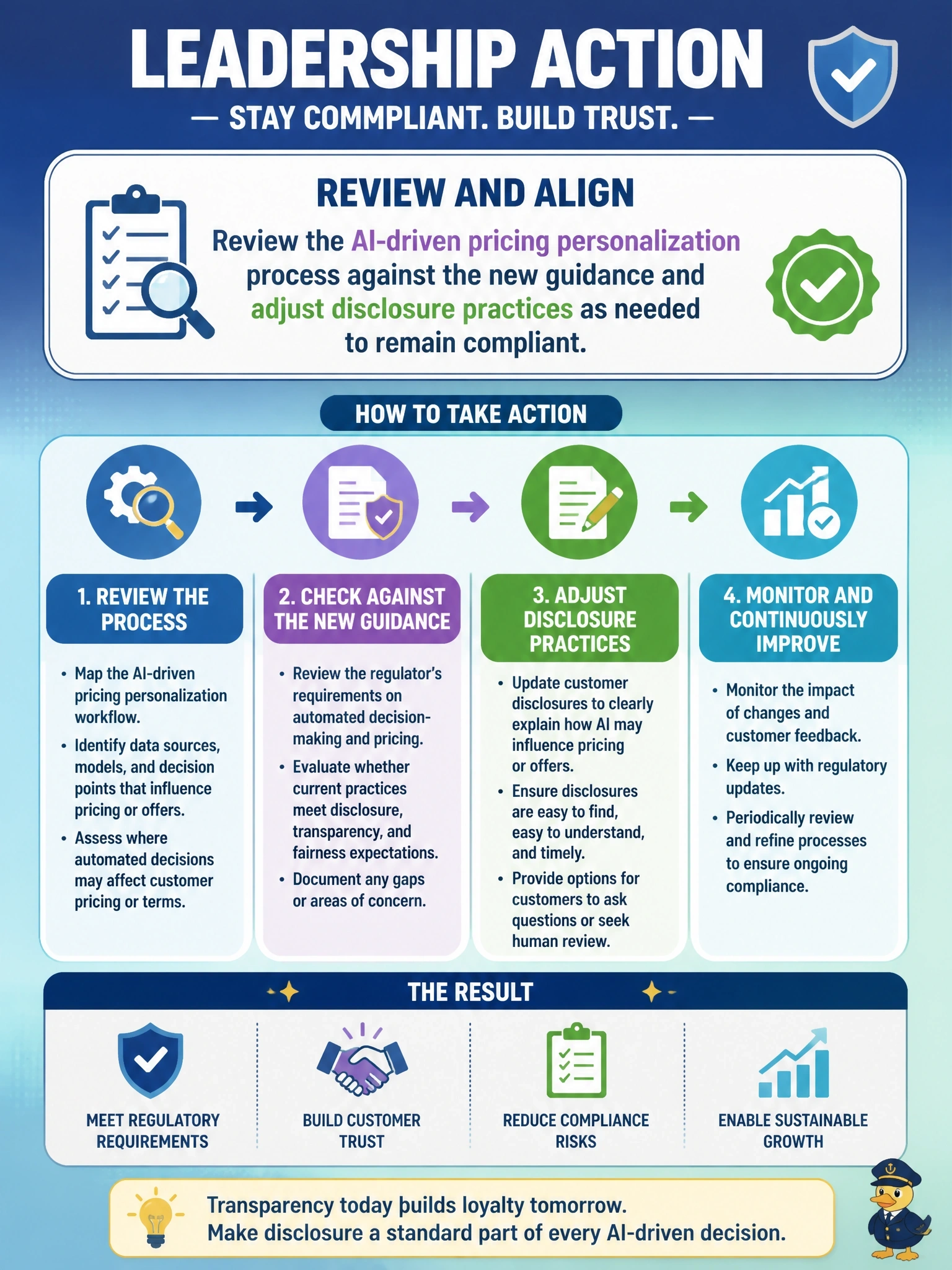
Think about updating your business the moment a new law actually applies to you, not waiting to get caught: that's the difference between compliance and damage control. Once a regulator flags automated pricing decisions without disclosure, the right move is to review the process against that guidance and fix the disclosure gap.
Full Explanation
Reviewing the pricing personalization process against the new guidance and adjusting disclosure practices is a proactive, proportionate response that addresses the specific compliance risk the regulator flagged. Waiting for a formal enforcement action before changing anything is reactive and risky — it exposes the company to penalties and reputational harm that a proactive review would have avoided. Permanently discontinuing all AI-driven personalization is a drastic overcorrection that sacrifices a working business capability when a narrower fix (better disclosure) would resolve the specific issue raised. Shifting responsibility to the vendor ignores that the company, as the party making pricing decisions and interacting with its own customers, retains its own regulatory obligations regardless of which tool it uses. The general principle: when new regulatory guidance emerges, the appropriate response is a targeted review and adjustment, not inaction, overcorrection, or outsourcing accountability.