
A biotech firm's AI governance committee has cross-functional representation, but each initiative's success or failure is never traced back to a specific owner, and no one is held responsible for outcomes. What should the committee change to fix this?
Select an answer to reveal the explanation.
Short Explanation
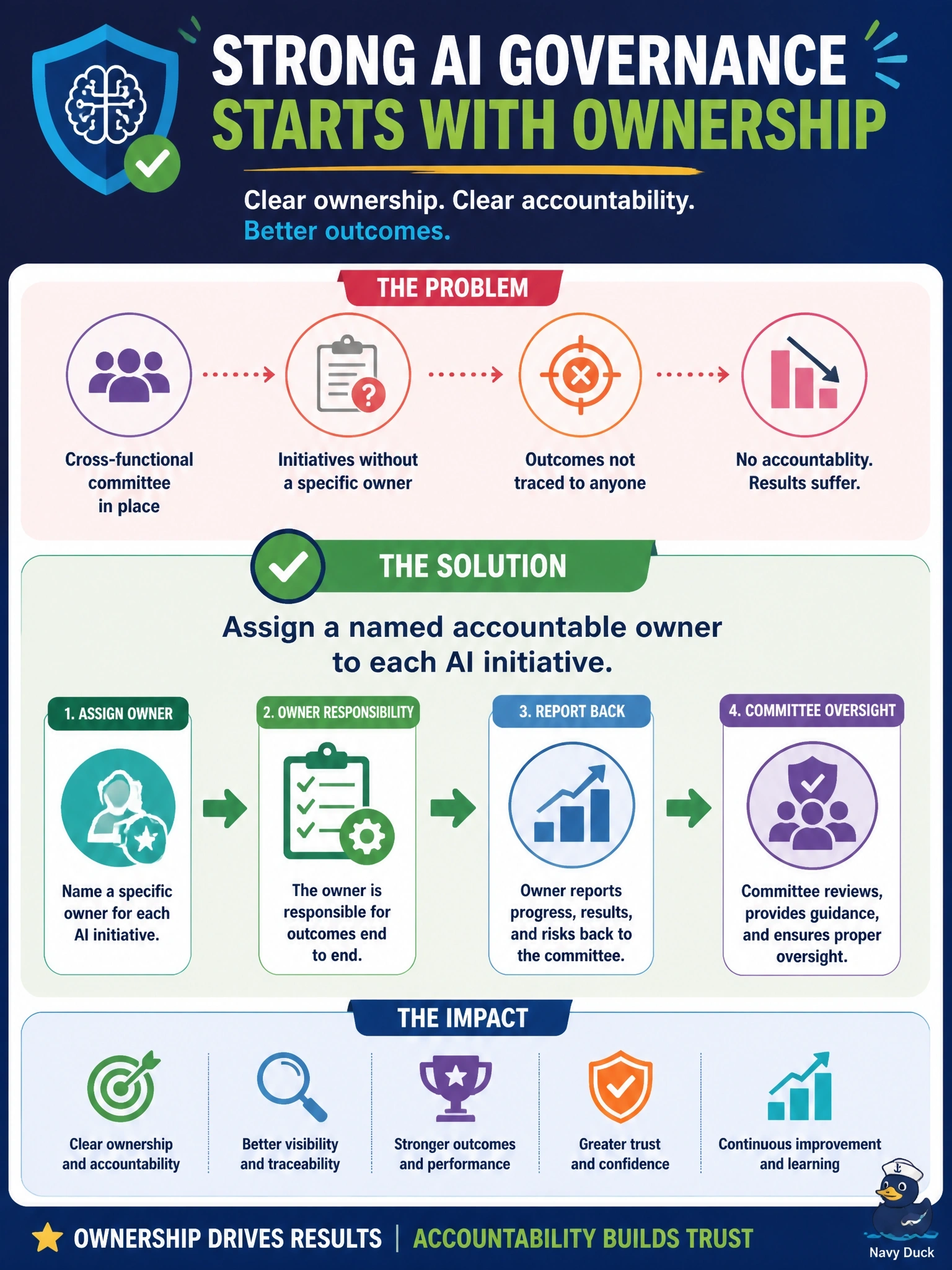
A project with a dozen stakeholders but nobody's name on the deliverable means everyone points somewhere else when it fails. Naming a single accountable owner for each AI initiative closes exactly that gap for you — now one person answers for the outcome.
Full Explanation
Assigning a named accountable owner to each initiative directly closes the gap described: someone is now responsible for outcomes and answers to the committee for them. Meeting more often gives the committee more time together, but without a defined owner, more frequent meetings still won't produce accountability for any specific initiative's results. An ethics statement communicates values and intentions, but it's aspirational — it doesn't assign responsibility for any particular AI system's performance or outcomes. Better technical documentation from the technology team improves understanding of how a model works, but documentation isn't ownership; it doesn't answer who is accountable when an initiative succeeds or fails. The general principle: cross-functional representation determines who has a voice in decisions, but accountability requires a distinct, additional step — naming an owner responsible for results.