
A bank is deploying a GenAI tool to help loan officers draft adverse-action notices to declined applicants. Which regulatory consideration is most important before launch?
Select an answer to reveal the explanation.
Short Explanation
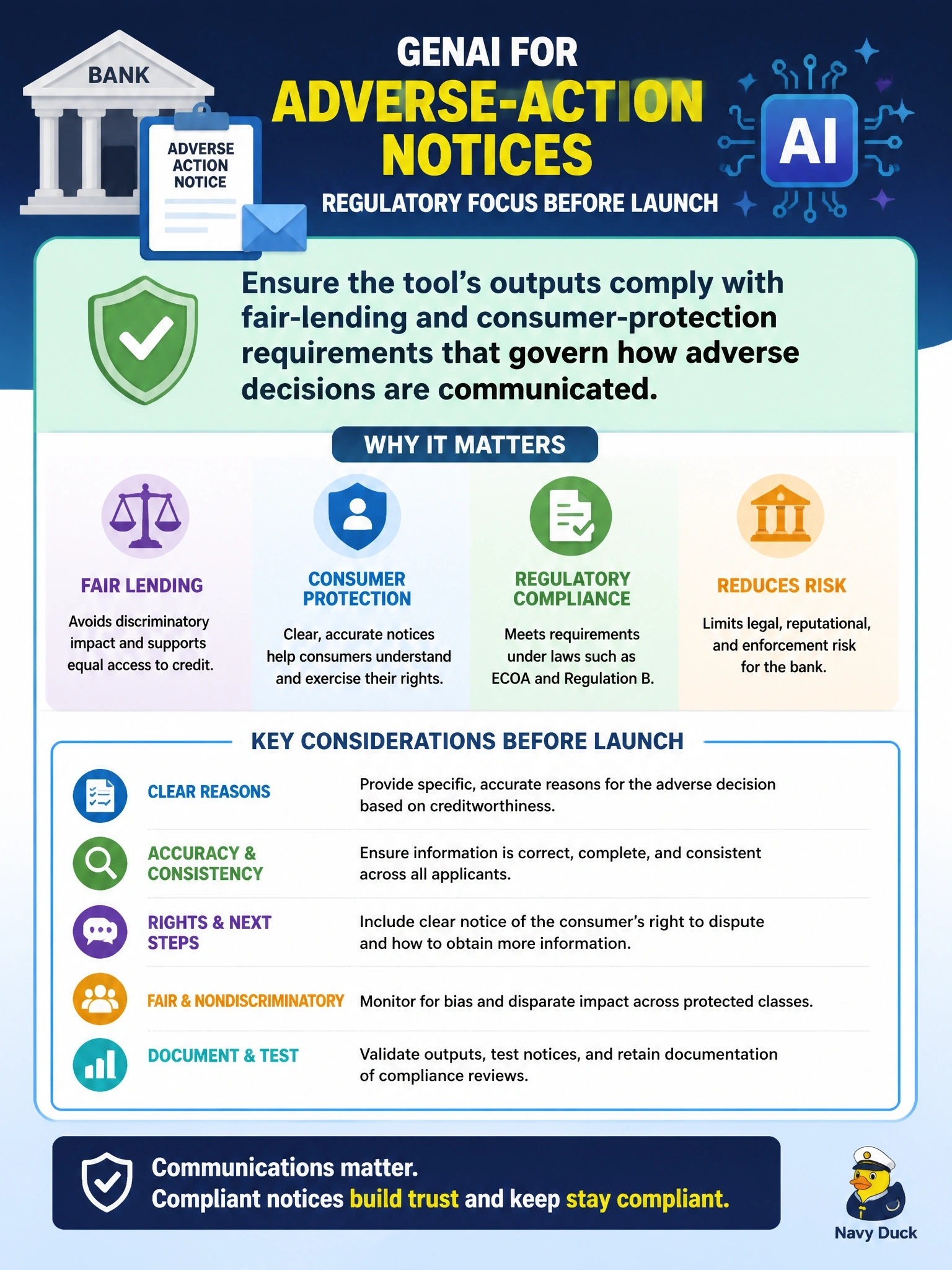
Adverse-action notices have to satisfy a judge, not just a customer — they're legally regulated documents, not ordinary correspondence. Before you do anything else, confirm the AI-drafted notices actually meet fair-lending and consumer-protection requirements; speed and language options are secondary to that.
Full Explanation
Adverse-action notices are directly governed by fair-lending and consumer-protection rules, so confirming AI-generated notices meet those requirements is the most important consideration before launch — a compliance failure here creates legal and regulatory exposure. Multi-language support is a genuine accessibility benefit, but it's a secondary feature, not the regulatory risk that determines whether the bank can launch responsibly. Reducing drafting time is a real efficiency gain, but speed has no bearing on whether the notices themselves comply with the law — a fast noncompliant notice is still noncompliant. CRM integration is an operational convenience that affects workflow, not regulatory risk. The general principle: when a business process touches a regulated customer interaction, the compliance question always outranks efficiency, accessibility, and integration considerations in determining launch readiness.