
An insurance company is about to kick off a new project to build a GenAI tool that drafts renewal letters. At what stage should the team first define who is accountable for reviewing the tool's outputs and what human oversight will look like?
Select an answer to reveal the explanation.
Short Explanation
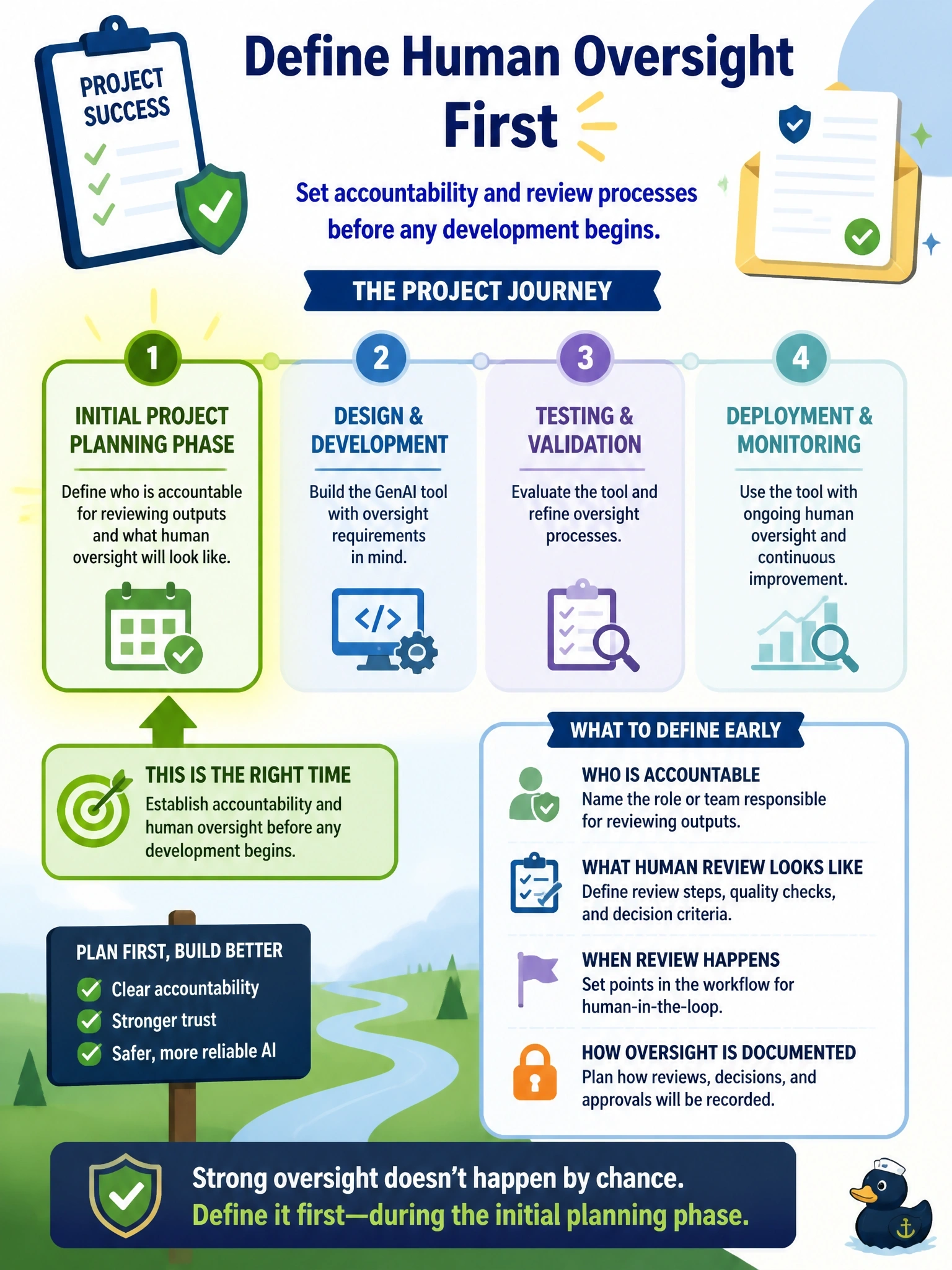
Think about deciding who signs off on a contract before you start drafting it, not after it's already been sent: accountability works the same way for AI tools. Defining who reviews outputs and what oversight looks like belongs in the initial planning phase, before development even starts.
Full Explanation
Defining accountability and human-oversight expectations during initial planning ensures the tool is built around those requirements from the start, rather than having oversight processes awkwardly layered onto an already-finished system. Waiting until the tool is fully built and tested means the workflow, review points, and output format are already set, making it harder and more costly to insert oversight in the right places. Making oversight relevant only once customers begin submitting complaints turns governance entirely reactive, triggered only after customers have already been affected by unreviewed output, which defeats the purpose of proactive design. Tying the timing to the annual budget renewal cycle anchors the decision to an unrelated administrative schedule rather than to the project's own development timeline, which could leave oversight undefined for months regardless of how far the build has progressed. Operational check: before development begins on any GenAI tool, confirm that accountability for reviewing outputs and the shape of human oversight have both been written down — if they haven't, planning isn't actually finished yet, whatever the project timeline says.