
After a wave of wildfire claims, a property insurer's fraud unit wants to use a GenAI model to auto-deny claims with suspicious patterns, potentially saving millions in payouts and investigator hours during a high-volume disaster response. The model cannot yet produce a case-specific explanation that policyholders can appeal against, and denials trigger legal appeal rights. Leadership must decide before the claims deadline. What is the most defensible path?
Select an answer to reveal the explanation.
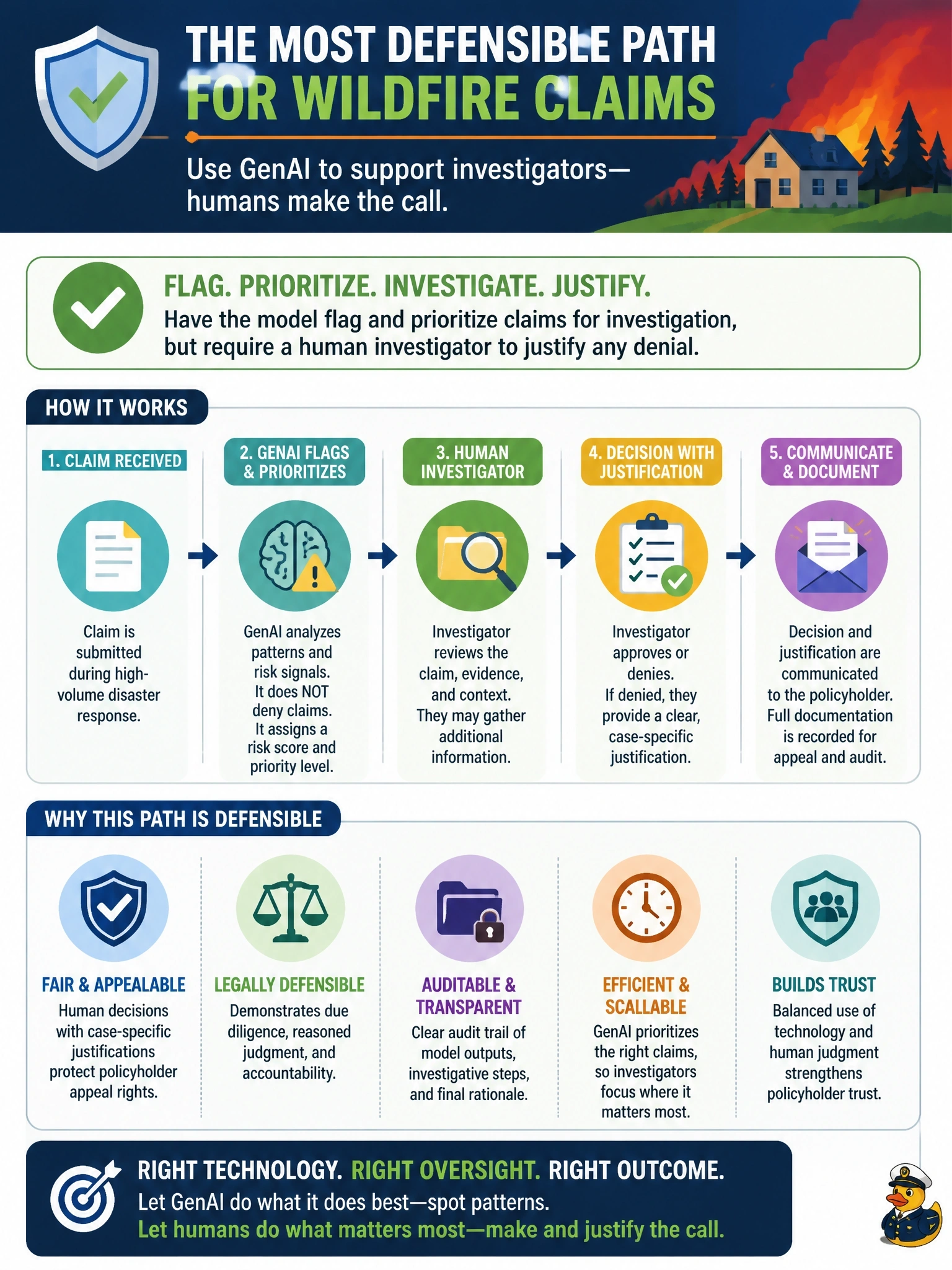
Short Explanation
Think of the model as a smoke detector, not the fire department: it's great at telling you where to look first, but somebody still has to walk in and make the call. Letting the model flag and prioritize claims while a human investigator signs off on every denial keeps that division of labor intact — even during a disaster.
Full Explanation
This path captures most of the efficiency value — the model still triages and prioritizes the flood of claims — while keeping a human accountable for any denial, which is the decision that actually triggers legal appeal rights and requires an explanation the model can't yet produce. Auto-denying all flagged claims and offering only a generic appeals hotline provides an appeal process in name only, since a hotline without case-specific reasoning doesn't satisfy the explanation requirement the denial itself triggers. Auto-denying claims above a confidence threshold lets the model make legally consequential decisions it can't adequately justify, exposing the insurer to failed appeals and reputational harm at exactly the moment policyholder trust matters most. Pausing claims processing entirely until an explainability upgrade ships sacrifices all speed even though prioritization alone, without denial authority, can capture substantial value without needing denial-level explainability — making a full pause unnecessarily costly to policyholders who are waiting to rebuild. Operational check: when a business objective requires a capability the AI system can't yet safely provide, look for a narrower role for the AI — triage rather than final decision-making — that preserves most of the value without exceeding what the system can currently justify.