
A pharmaceutical company's leadership is setting next year's AI budget. Which factor should carry the most weight in determining the appropriate investment level?
Select an answer to reveal the explanation.
Short Explanation
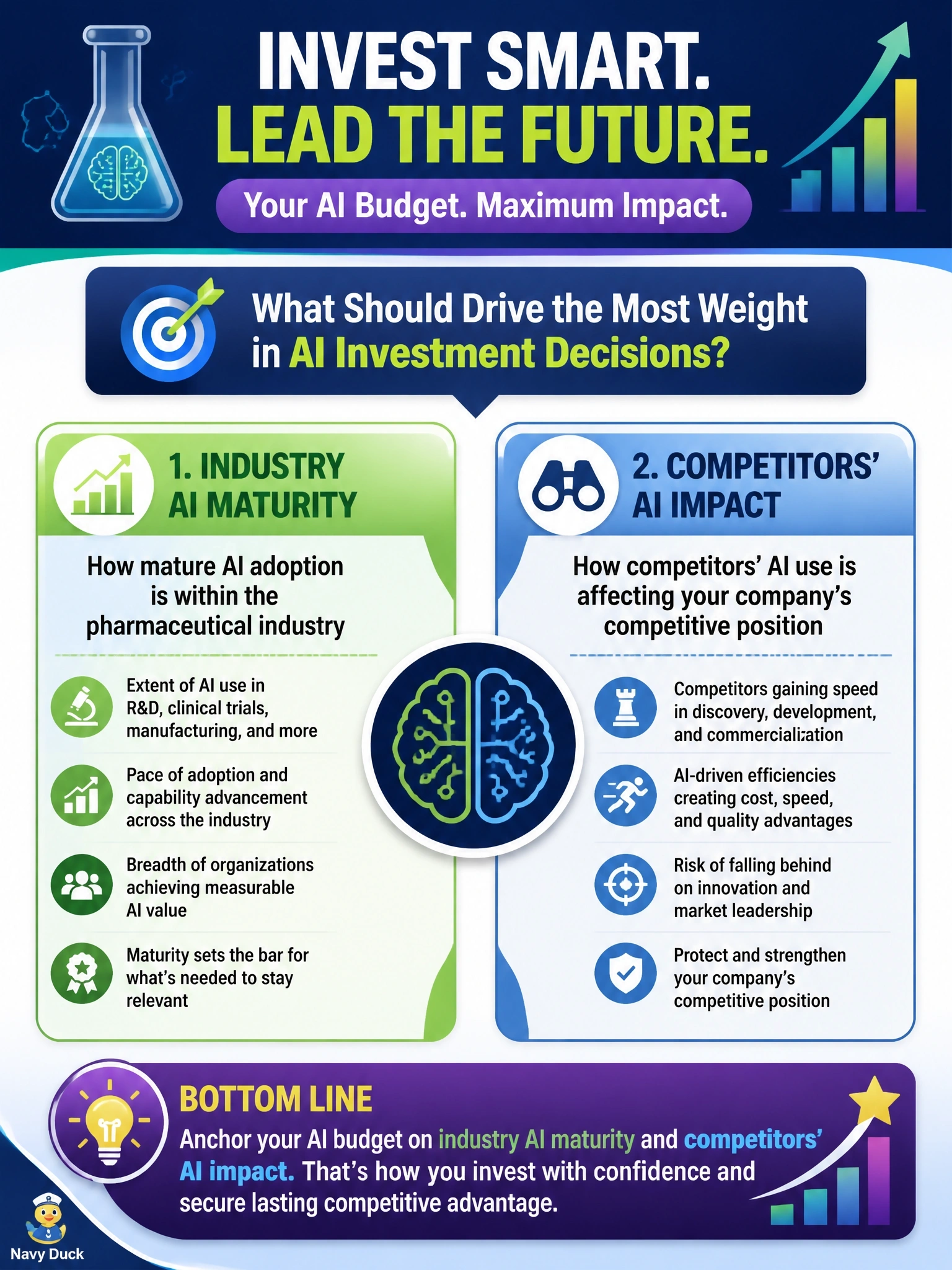
Think about how a general reads the battlefield before committing troops: it's the terrain and the enemy's position that matter, not some fixed formula back at headquarters. The right AI budget follows the same logic — size it to how mature AI is in your industry and how competitors are using it against you, not to internal comparisons or last year's number.
Full Explanation
Appropriate AI investment is calibrated to external conditions: how far AI adoption has progressed within the pharmaceutical industry, and how competitors' use of it is shifting the competitive landscape the company operates in. That external read tells leadership whether the spending is protecting against erosion, capturing a real opportunity, or both. Anchoring the AI budget to a fixed percentage of the prior year's spend ignores whether anything in the industry or competitive picture actually changed, which can just as easily produce under-investment in a fast-moving area as over-investment in a stagnant one. Sizing the budget so it simply stays smaller than an unrelated line, like marketing, ties AI investment to internal bookkeeping rather than to the opportunity or threat the company actually faces. Counting how many employees have expressed enthusiasm for new AI tools is a useful signal for change management and adoption planning, but enthusiasm is not evidence of competitive necessity or return, so it's the wrong basis for setting the investment level itself. Operational check: before finalizing any AI budget line, leadership should be able to name what's happening with AI adoption in the industry and among named competitors — if the budget can't be justified against that picture, it's anchored to the wrong thing.