
A credit union's AI-powered member chat assistant has repeatedly exceeded its monthly budget due to unexpectedly high usage. What is the most appropriate cost control practice going forward?
Select an answer to reveal the explanation.
Short Explanation
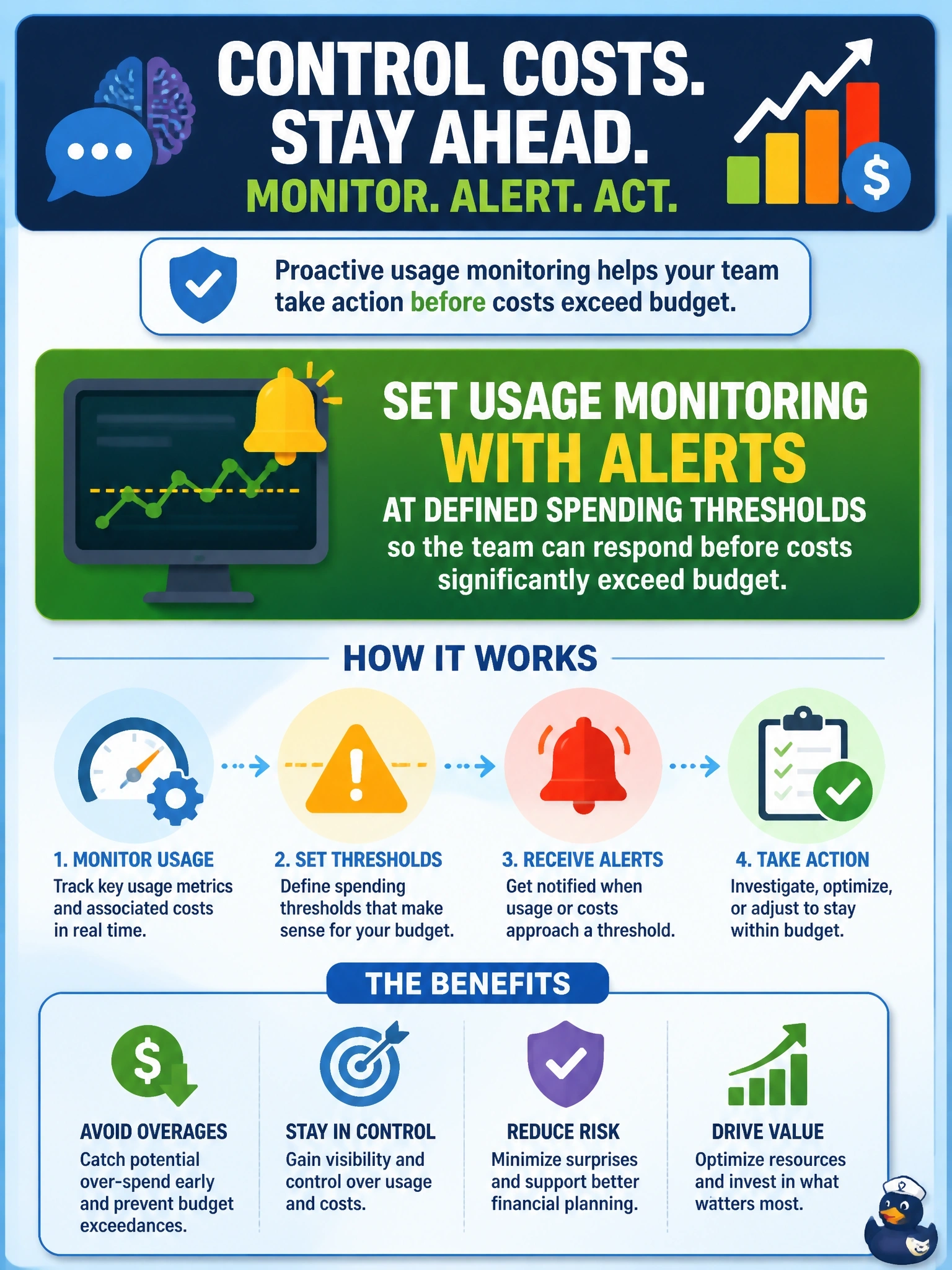
Think of it like a bank app that texts you when your balance drops below a set amount — you find out while there's still time to act. Threshold alerts on AI spend do the same thing: they flag rising usage early, so the team can respond before a budget overage turns into a crisis.
Full Explanation
Setting usage monitoring with alerts at defined spending thresholds gives the team early, ongoing visibility into where costs are heading, so they can act while there's still room to course-correct rather than discovering the overage after the bill arrives. Cutting the assistant's availability without first investigating what's driving the higher usage is a reactive move that could just as easily be punishing strong member adoption as it is addressing a real problem — the team wouldn't even know which. Simply raising the budget to match whatever the highest month happened to be, with no further review, abandons cost discipline entirely and quietly normalizes future overruns instead of controlling them. Removing the assistant altogether without investigating the cause throws away a tool that may be delivering real value, based on a budget number alone rather than an understanding of why usage climbed. The underlying principle: sound cost control is proactive — thresholds and alerts that surface a problem early — not a reactive cut, a blank check, or an extreme shutdown taken before anyone has actually diagnosed what happened. A useful operational check: can the team say, in real time, how close current spend is to the threshold? If not, the monitoring isn't doing its job yet.