
An automotive manufacturer is evaluating whether to invest in a large-scale AI quality-inspection rollout across multiple plants. Before committing budget, the program owner wants to estimate costs under several different usage scenarios. Which action best supports this planning need?
Select an answer to reveal the explanation.
Short Explanation
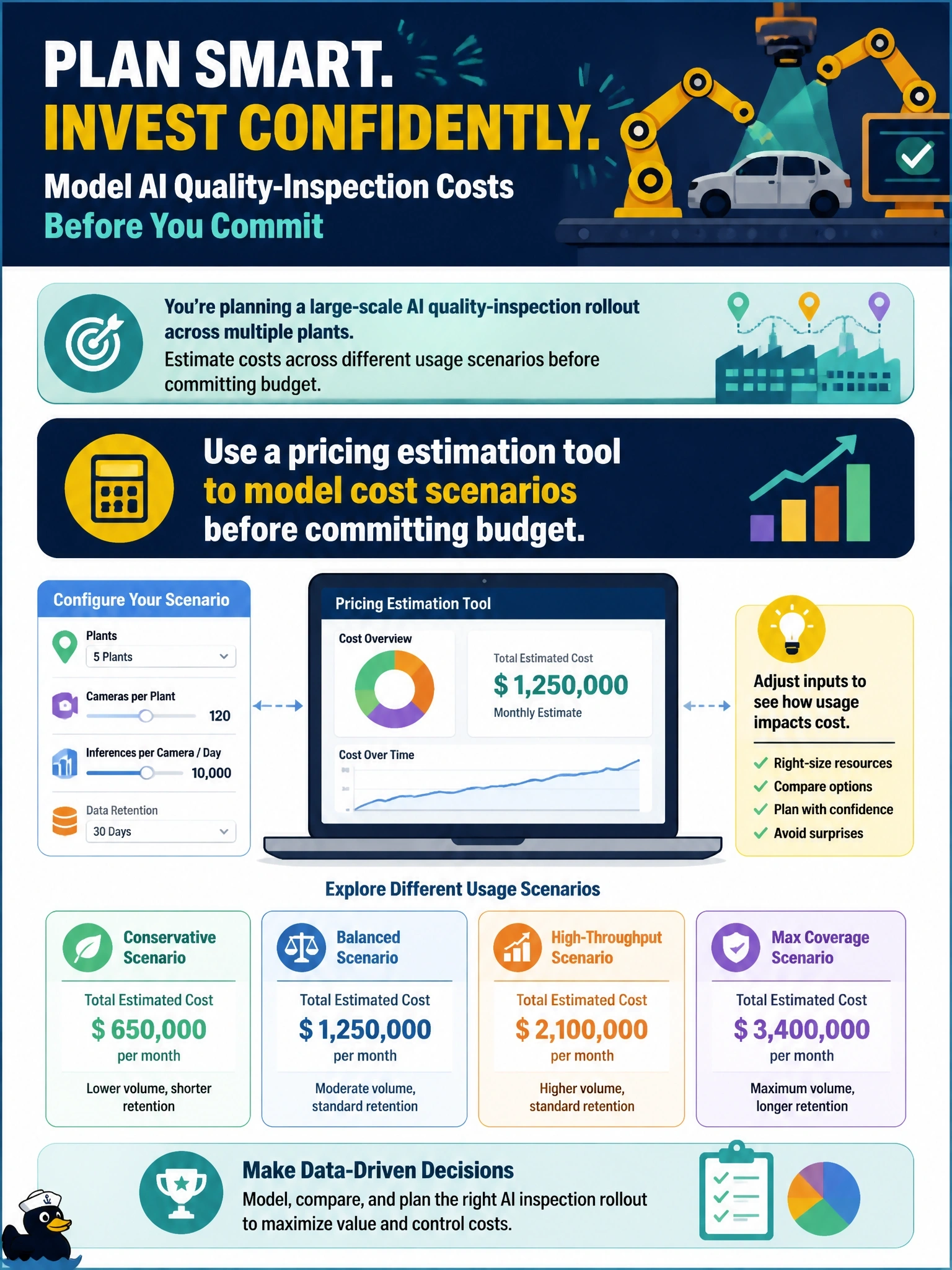
Think of it like getting a contractor's estimate before knocking down a wall — you want the numbers before you commit, not after. A pricing estimation tool lets the program owner model different plant counts and throughput levels ahead of time, so the multi-plant budget is built on evidence instead of a guess.
Full Explanation
A pricing estimation tool lets the program owner model several cost scenarios — different plant counts, different throughput levels — before a single dollar of budget is committed, which is exactly the kind of evidence a large rollout decision needs. Committing to the full multi-plant budget first and figuring out the real costs after rollout begins reverses that order entirely, risking a budget that's already locked in before anyone knows if it's right. Basing the whole multi-plant number on the cost of one small, single-plant pilot ignores that costs rarely scale in a straight line — additional plants can introduce integration, coordination, and infrastructure costs the pilot never touched. Having each plant manager guess independently, with no shared method or inputs, produces numbers that can't be meaningfully combined into one trustworthy budget. The pattern here: large, multi-site AI investments deserve structured, tool-based cost modeling across realistic scenarios, not premature commitment, a single unscaled data point, or a patchwork of individual guesses. A good operational check is whether the estimate can explain its assumptions per plant — if it can't, it isn't really an estimate yet.