
A freight company is deciding how to source a pre-built AI demand-forecasting solution rather than building one from scratch, in order to control both cost and delivery timeline. Which sourcing approach best supports this cost-planning goal?
Select an answer to reveal the explanation.
Short Explanation
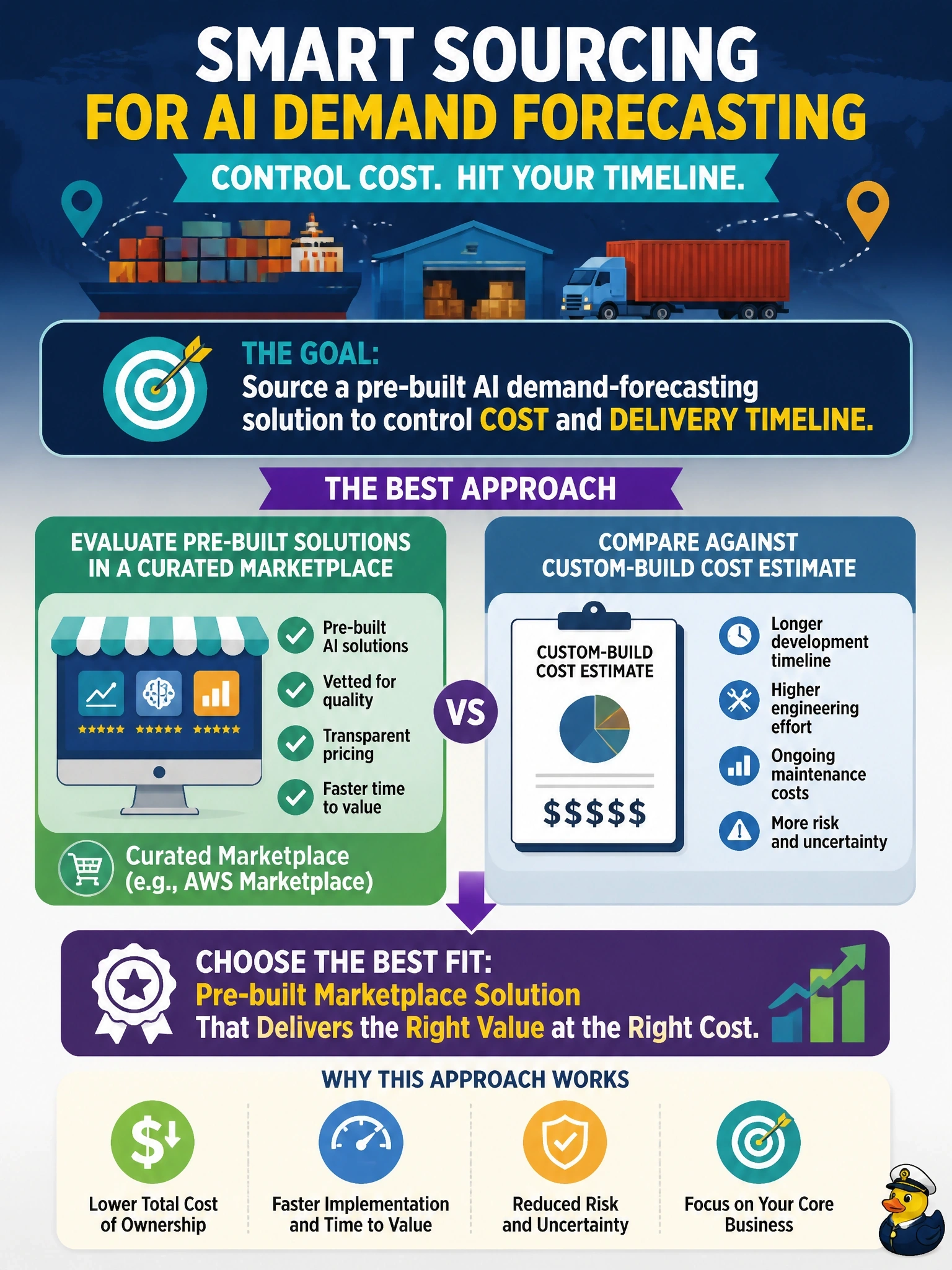
Think of it like comparing quotes before renovating a kitchen — you don't pick the first contractor or build it yourself out of habit, you line up the real numbers side by side. Evaluating marketplace options against a custom-build estimate gives the freight company an actual cost-and-timeline comparison to decide from.
Full Explanation
Evaluating pre-built marketplace solutions against a custom-build cost estimate gives the company a real, structured comparison — the only way to know whether buying or building actually controls cost and timeline better in this specific case. Committing to a fully custom, in-house build without comparing it to any pre-built alternative skips the cost-planning step altogether and risks a longer, more expensive path when a ready-made option might have done the job. Choosing whichever pre-built option has the lowest sticker price, without looking at total cost of ownership, ignores integration effort, ongoing fees, and support costs that often matter more than the upfront number. Delaying the sourcing decision indefinitely while searching for a perfect solution doesn't control cost or timeline either — it just leaves the underlying business need unmet while the search drags on. The principle underneath all of this: sound sourcing decisions come from comparing real alternatives on total cost and delivery time, not from defaulting to a single path, anchoring on price alone, or refusing to decide. A practical check: has the comparison accounted for costs beyond the sticker price, like integration and support? If not, the comparison isn't finished yet.