
A logistics company's finance team notices that spending on its AI forecasting workloads has grown steadily but no one can explain which business unit is driving the increase. What is the most appropriate first step to regain cost control?
Select an answer to reveal the explanation.
Short Explanation
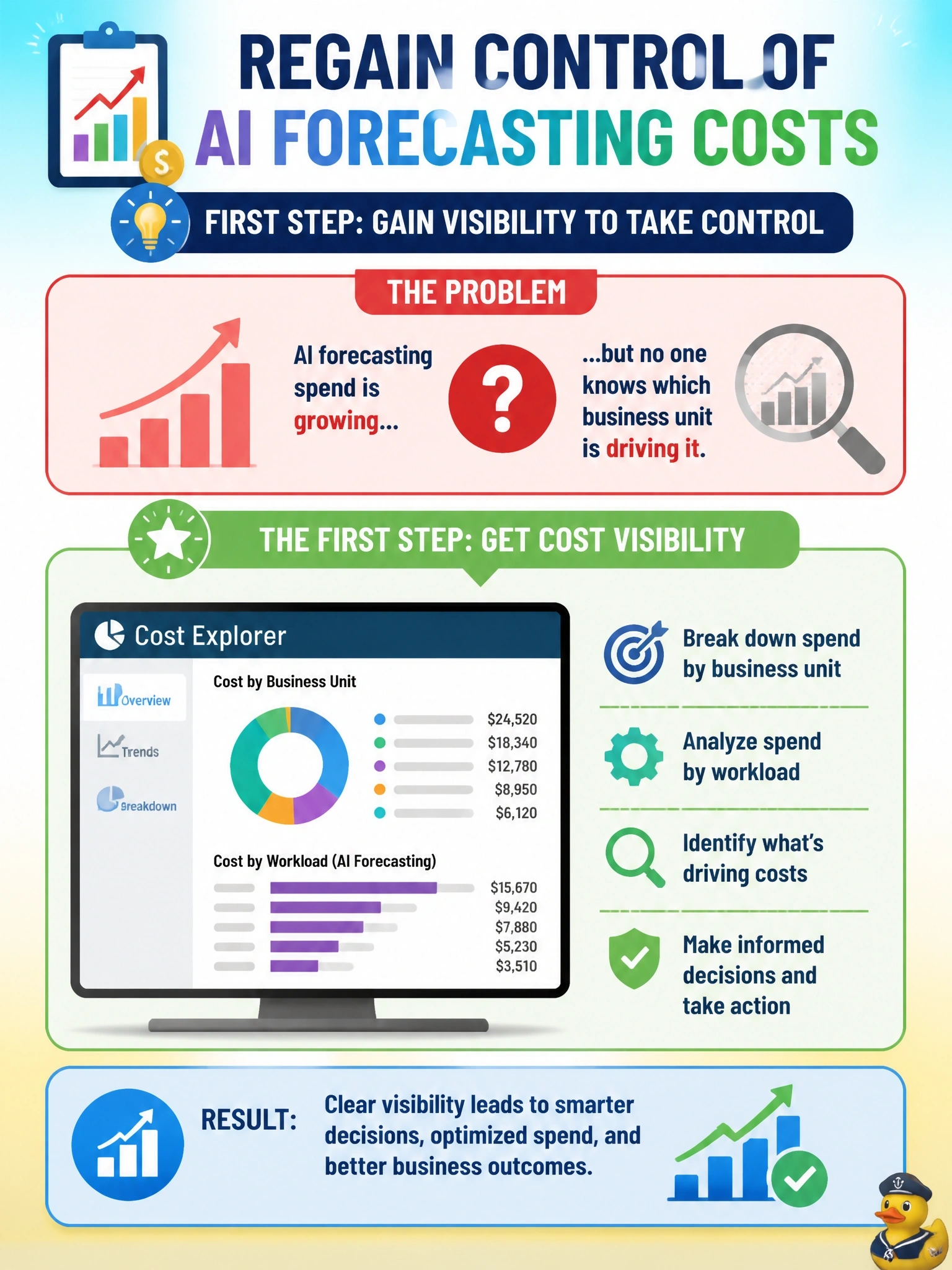
Think of it like a credit card statement with every charge lumped into one line — you know the total but not the culprit. A cost-visibility tool itemizes AI spend by business unit and workload, turning "spending crept up" into "here's exactly who and what," which is the only way to make a smart decision about it.
Full Explanation
Using a cost-visibility and tracking tool to break spend down by business unit and workload directly addresses the root problem: lack of visibility into what is driving the increase. The distractor of canceling the initiative company-wide is an extreme, disruptive reaction that sacrifices value the AI tool may be delivering rather than first understanding the spend. The distractor of moving to a flat, unlimited budget removes the very discipline needed to control costs and would make the problem worse, not better. The distractor of asking business units to self-report from memory produces unreliable, imprecise estimates instead of accurate, system-level data. The general principle: the first step in regaining cost control is establishing accurate visibility into where spend is actually occurring, using available cost-tracking tools, before making any budget or program decisions based on incomplete information.