
An insurance company is choosing a pricing model for a new AI-powered claims assistant. Usage is expected to be highly variable, with occasional spikes after major weather events and quiet periods otherwise. Which pricing structure best fits this usage pattern?
Select an answer to reveal the explanation.
Short Explanation
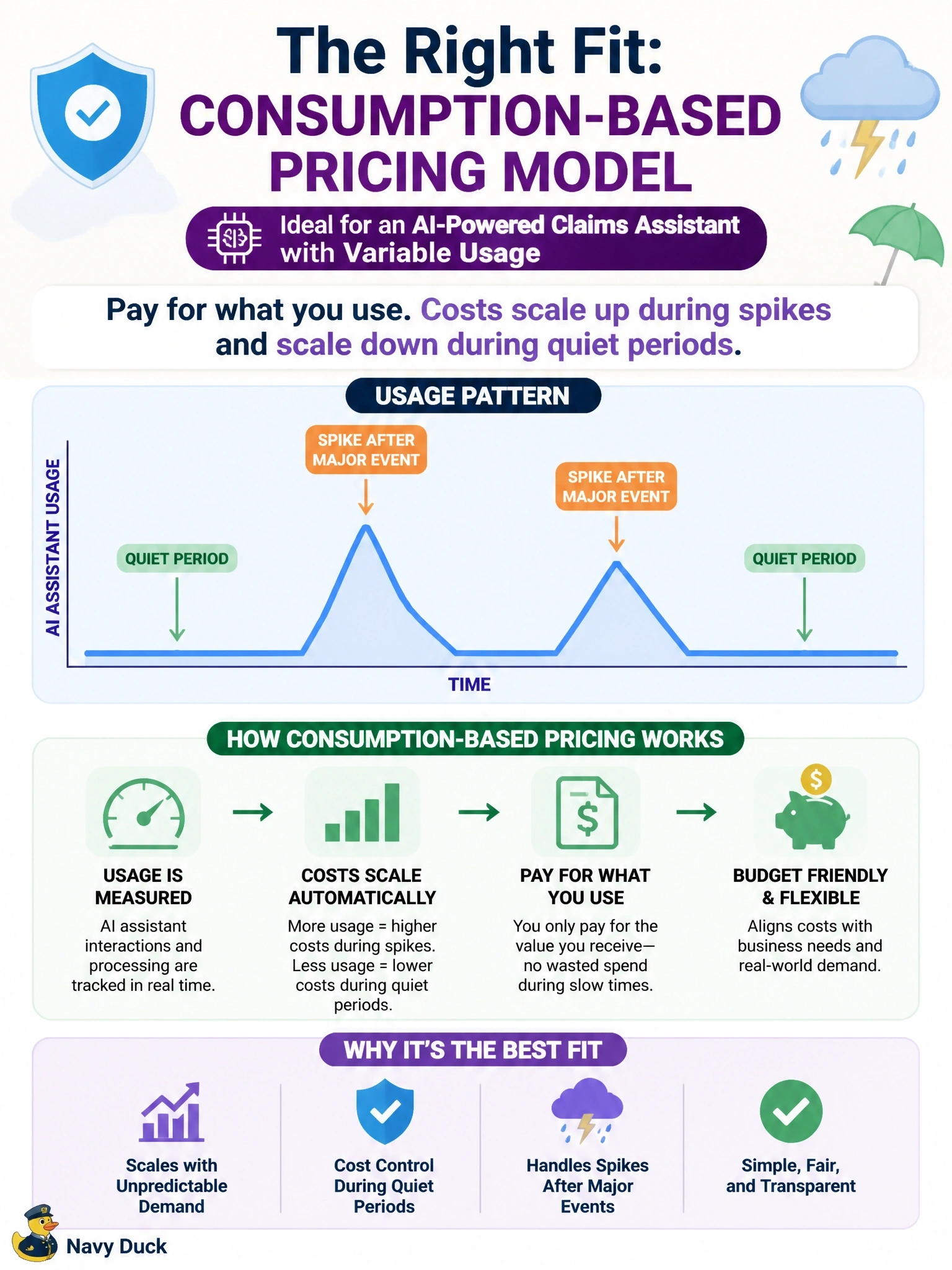
A utility bill charges you for the electricity you actually use, not a flat rate whether you run the AC all summer or leave the house empty. Consumption-based pricing works the same way for a workload that spikes after storms and goes quiet otherwise—cost tracks demand instead of sitting fixed.
Full Explanation
Consumption-based pricing ties cost directly to actual usage, so the insurer pays more only during a spike after a major weather event and pays less during the quiet stretches in between — the bill naturally follows the workload's shape. A per-adjuster seat fee charges the same amount whether the assistant is idle for weeks or slammed after a hurricane, which mismatches a workload that is anything but steady. Keeping a fixed set of dedicated resources running continuously is built for predictable, constant demand; applied here, it means paying full price for capacity that sits mostly unused between events. A single flat annual fee negotiated once and never revisited locks in a number that can't adapt as the company learns more about its real usage pattern over time, leaving no room to correct course. The underlying principle: match the pricing model to the shape of the workload. Spiky, unpredictable demand calls for a model where spend scales with usage; steady, predictable demand is where fixed-capacity or per-seat pricing actually makes sense. As a practical check, if a model would leave the company paying full price during a quiet month, it's the wrong fit for this workload.