
An auto dealership network launches an AI assistant that recommends service appointment slots to customers. In the pilot's first two weeks, which signal should the program owner watch most closely?
Select an answer to reveal the explanation.
Short Explanation
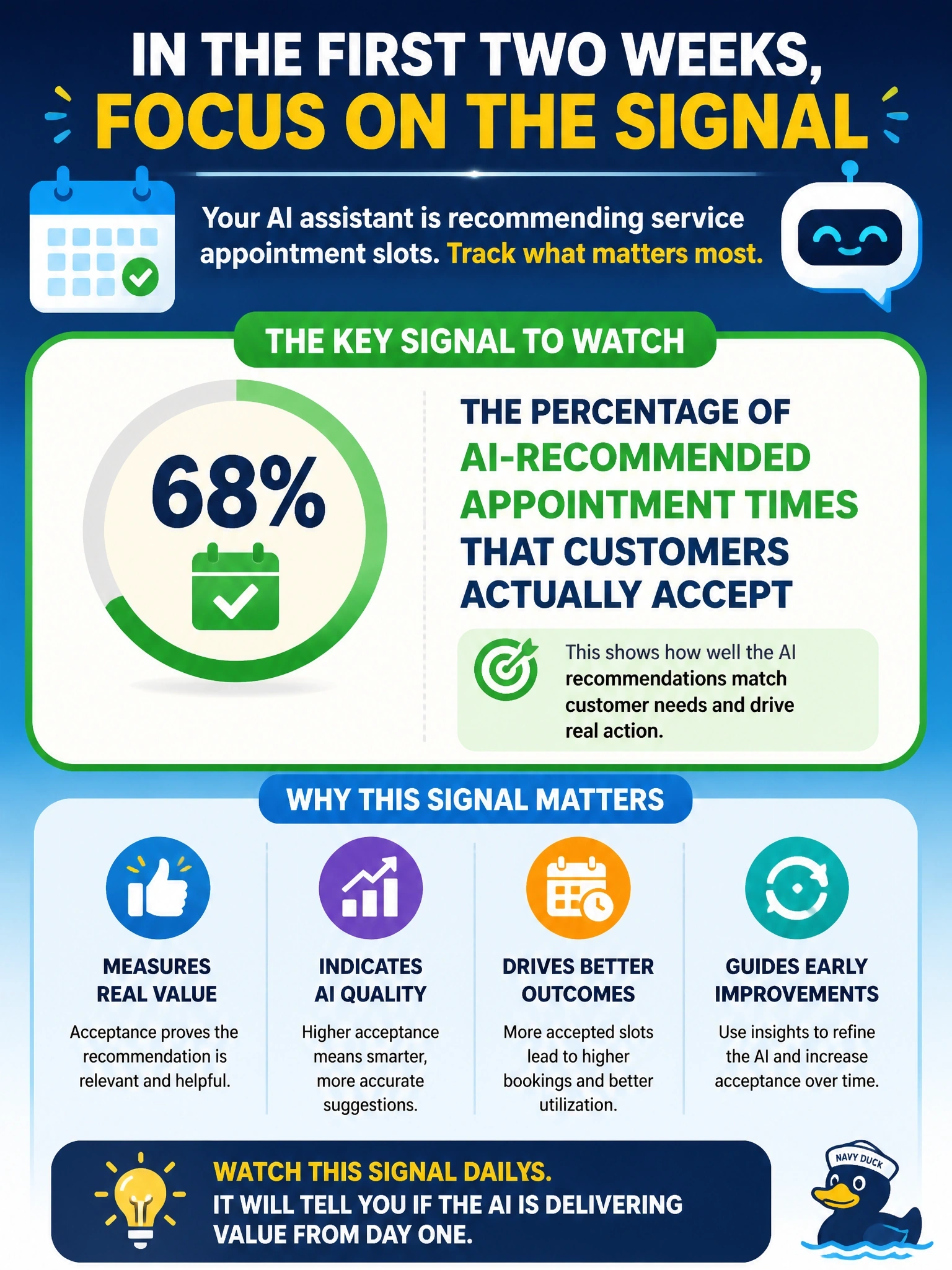
Think of it like this: a pilot lives or dies on whether real people actually use what you built, and that shows up fast. Watching the acceptance rate of the AI's suggested appointment times tells you immediately whether customers find the recommendations genuinely useful — long before revenue or satisfaction scores would ever catch up.
Full Explanation
Customer acceptance of the AI-recommended appointment times is a leading indicator — it's observable within the first two weeks and it directly reflects whether the recommendations are useful, which is the single best predictor of whether the tool will succeed once rolled out network-wide. Total quarterly revenue is a lagging measure shaped by dozens of factors outside this pilot, and two weeks isn't nearly enough time for it to move in any meaningful way. The size of the dealership network is a static organizational fact that has nothing to do with how well this specific tool is performing. A customer satisfaction score pulled from before the AI assistant even existed can't tell you anything about how the new tool is landing with customers today — it's stale data being asked to answer a fresh question. The pattern to recognize: in the earliest days of any pilot, the signal worth watching is direct, immediate behavior toward the tool's output — did people take the recommendation or not — rather than delayed financial results, fixed organizational facts, or historical numbers that predate the change. As a practical check, if acceptance climbs while underlying booking friction like no-shows or reschedules doesn't spike, that's early proof the tool is adding real value.